Relic point Vietnam
Việt Nam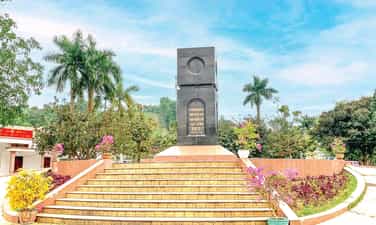
Milestone 0 of the HCM Trail
Milestone 0 on the Ho Chi Minh Trail is located next to the banks of the Con River, at the foot of Truong Dong cave, hidden in the vast range of Bo Bo - Ba Xanh, Cau Cave in the old Trai Lat, now Lat town, Tan Ky district, Nghe An province. On April 27, 1990, Milestone 0 was recognized as a National Historical Site. Built in a beautiful campus, with a stream flowing around, in front of you is the old Truong Son road passing through the district's martyrs cemetery. The traditional house is currently displaying many precious artifacts: The first unnumbered granite milestone, to the carved wooden milestone "Ho Chi Minh Road Km 0". This place has names that you can hear and see as sacred such as: Dong Tho, Khe Than, Trai Lat, Tap Ma. Adjacent to semi-mountainous districts such as Yen Thanh, Do Luong, Quynh Luu, Dien Chau, Anh Son. That land has entered the nation's history associated with many glorious victories of General Le Loi and the Lam Son insurgent army, as in Nguyen Trai's poem: "The Tra Lan region splits flying ash with bamboo." That upper Tra Lan region today belongs to Tan Ky district and part of Anh Son district, Nghe An province. Wherever the enemy enters, there will be a dilemma, because the four sides are high mountains and abysses. The ancient Lam Son insurgent army chose this land to set up camp (Trai Lat); practicing soldiers and horses (Tap Ma). Military provisions are stationed in secret valleys (Don village)... rich in supplies. They set up self-sufficient food farms on the spot, waiting for the opportunity to expel the invaders. In early 1969, President Nixon, who had just come to power, gave the signal to repeat the war of sabotage in North Vietnam and launched the "Throat Campaign" to stop the legendary trail and its branch routes. into the South. Road 15A - the strategic route along which Nguyen Hue quickly marched to Thang Long in the past, is now a key focus for fierce attacks by American aircraft, they bombarded day and night, and repeatedly raided by air force. , artillery from the 7th fleet fired at death gates such as Bo Lan, Doc Lui, Truong En, Pha Sen, Truong Bon, Pha Linh Cam... Faced with that situation, the Politburo and the Central Military Commission decided to defeat the enemy's plots and strategies. General - Commander-in-Chief Vo Nguyen Giap directly directed Truong Son Command, Military Region 4, Air Defense - Air Force to cooperate in combating the enemy's "Throat Campaign". As fate would have it, Trai Lat was once again chosen as the headquarters to deploy troops to liberate the South. On February 5, 1973, the Standing Committee of the Central Military Commission summoned Commander Dong Sy Nguyen and Political Commissar Dang Tinh to assign Truong Son soldiers the task of: Building a strategic road system, paying special attention to basic construction. Truong Son road from Tan Ky - Nghe An to Chon Thanh - Binh Phuoc becomes a national highway through North and South...". After the Paris Agreement, taking advantage of favorable opportunities on the diplomatic front, Command 559 focused on implementing the tasks of surveying and designing, which were given importance, technical staff needed knowledge, and units had Modern equipment. Four engineering divisions including F470, F472, F565, F473 directly performed the construction. Truong Son Road became a vibrant construction site with direct construction forces including engineers and youth volunteers. The Cuban government helped us equip modern construction machinery worth 6 million USD; Advising architects, engineers, and technicians every inch of the way. Thanks to that, the strategic line was close to the enemy's posts, bases of corps and military regions. On May 13, 1973, Commander Dong Sy Nguyen reported to the Standing Committee of the Central Military Commission, the Ministry of National Defense and Deputy Prime Ministers Do Muoi and Phan Trong Tue on the plan to build the Truong Son route running throughout the North - Male. The trail goes under the canopy of the old forest, weaving through shallow ravines to avoid enemy bombs. A long, wide valley from the Southeast of Phu Quy running along the banks of the Hieu River (also known as the Con River) down the "new 15A" road is an unexpected secret gathering point. Tens of thousands of engineers, fire line civilians, and young volunteers were mobilized here to dig trenches to hide military equipment and supplies; sheltering trucks, tanks, artillery, and missiles, protecting dozens of main army divisions. The poisonous water sacred forest, from Ga village, Nghia Binh commune to Dong Tho, Trai Lat, is more than 20km long. There are three roads here, one connecting to road 15B, one is road 15A running to Do Luong, one is the strategic transport road running to the South. Major General Vo So Nguyen - Political Director of Group 559 is the person who directly surveyed and built the gathering point at km 0. This became the ideal base for troops preparing to go to the South to fight. Also from here, the children of the South gathered to go to the North in 1954. They were officers and employees at state-owned military farms: May 1, Dong Hieu, Tay Hieu, February 3 Farm, River I... have a wish to return home to fight; is the key cadre force for the southern revolution. And also from here, soldiers can avoid death gates such as Si station, Cam bridge, Vinh station, Truong Bon, Ben Thuy ferry, Linh Cam ferry, Dong Loc intersection to march on the road to battle, avoiding bombs. bombardment, avoiding huge pockets of fire day and night on the Zone 4 fire line. Today, Ho Chi Minh Road has been upgraded and expanded with flat Asphalt asphalt. Milestone No. 0 has also been restored and recognized as a special national historical site. Source: Nghe An province electronic information portal
Nghe An
7424 view
Rating : Special national monument
Truong Bon Nghe An
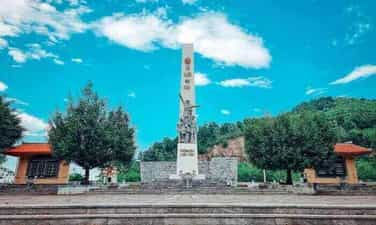
Truong Bon is a steep pass with a length of 5km, an altitude of nearly 70m on the Thung Nua mountain range with the highest peak 450m above sea level, located on strategic route 15A passing through My Son commune, Do district. Luong, Nghe An province. During the resistance war against the Americans, Truong Bon's unique road had a particularly important strategic position, because it was the place connecting our traffic arteries from the great northern rear to support human and material resources for the battlefield in the region. Male. This place is considered the most fierce fire line on strategic route 15A. Grasping the strategic position of Truong Bon, the US imperialists spread destructive bombs and bullets, trying to cut off our traffic arteries. Just from 1964 to 1968, they dropped nearly 20 thousand bombs of all kinds and tens of thousands of missiles here. On average, each kilometer suffered more than 4,000 bombs. Truong Bon was originally a mountain peak 70m above sea level. After many years of fierce raiding, Truong Bon has become flat land, the height is only more than 30m above sea level. With such a terrible number of bombs and bullets, Truong Bon is considered a bomb crater in the North. In the middle of a land of bombs and bullets, when death is always close by, tens of thousands of people here have overcome bombs and bullets, struggled with hardship, and stuck to the battlefield day and night. With the iron determination "the heart can stop beating but the road cannot be clogged", we have maintained traffic arteries, excavated millions of m³ of soil and rock, transported more than 94 thousand motor vehicles, transported and cleared More than 1 million tons of goods passed through Truong Bon, closely following the troops entering the Southern battlefield. In this life and death battle, 1,240 officers and soldiers bravely fought and heroically sacrificed, typically the sacrifice of 13 youth volunteer soldiers from Company 317 on October 31, 1968. It was a special morning, the units received a secret order to ensure the road was clear for the military convoy to pass Truong Bon before dawn, everyone was excited and excited to go to the battlefield. When the work was about to be completed, suddenly, groups of planes roared and rushed to bomb Truong Bon, explosions tore through the sky, the ground shook, the squad of Squad 2 could not retreat to the shelter in time. hidden, was immediately buried under the intense bombardment. Before his teammates could respond, series of bombs continued to fall. On this road only 120m long, it suffered 170 devastating bombs. . Despite the thick smoke of bombs and the ground on fire, teammates rushed out to search, layers of soil and rocks were overturned. Luckily, Ms. Tran Thi Thong was buried deep next to the bomb crater and still had a chance to survive. , the remaining 13 soldiers' bodies had mixed into the soil, rocks, grass and trees. All that was found were parts of their bodies whose shapes were not intact. Wiping away tears, teammates gathered together pieces of flesh and bone mixed with mud. Not knowing who belonged to them, they sadly covered the sisters and brothers with a common grave. Painful not only because of that terrible and devastating bombing that took the lives of 11 girls and 2 boys when with only a few hours left, the US announced a halt to bombing throughout the North, with only a few hours left. Then they will step towards peace with many plans for the future. The 5 sisters were about to enter the lecture hall, their admission notices were still wrapped in each handkerchief; And in just 1 hour, Ms. Tam and Mr. Hoa will take each other home for their engagement ceremony. There are pains that cannot be put into words, there are sacrifices that no history books can record. They have put aside so many tears, nostalgia, and love to live and fight for the common ideals of the entire nation. took his blood, bones, and noble youth to sacrifice for the Fatherland. It is the most beautiful crystallization of patriotism, of the will to win against foreign invaders, of courage, dignity, conscience and desire for peace, to write a legend of Truong Bon in the twentieth century. . Recognizing the place name Truong Bon, recognizing the heroic dedication and sacrifice of Truong Bon soldiers, typically the heroic dedication and sacrifice of 13 TNXP soldiers "Steel Platoon", January 12 /1996, the Minister of Culture and Information recognized Truong Bon National Historical Site. On September 23, 2008, the President issued a Decision to confer the title of Hero of the People's Armed Forces on a collective of 14 Truong Bon Youth Volunteer soldiers of Company 317, Team 65, Youth Volunteers Against America. to save the country, Nghe An province, - including, 11 female soldiers and 2 male soldiers who heroically sacrificed their lives. Source: People's Police Online Newspaper
Nghe An
5509 view
Rating : National monument

Nghe Tinh Soviet Museum
Nghe Tinh Soviet Museum was established on January 15, 1960, located in the Nghe An Ancient Citadel area, at 10 Dao Tan Street, Cua Nam Ward, Vinh City. The Nghe Tinh Soviet Museum is located on the floor of Vinh prison, where previously, from 1929 to 1931, thousands of revolutionary soldiers participating in the movement against the French colonialists were imprisoned. Nghe Tinh Soviet Museum is a museum that specializes in displaying a typical historical event of the nation when our Party was first born, which was the Nghe Tinh Soviet climax of 1930 - 1931. This is also one of three The museum was established the earliest in the Vietnamese museum system. The museum is built on 2 floors, on a 2-hectare land area, the Xo Viet Nghe Tinh museum has both beautiful, ancient, modern architecture and bold national identity. This is a unique cultural work that preserves over 5,000 original artifacts and revolutionary documents of the people of Nghe An during the Soviet climax of 1930 - 1931. In the museum campus of more than 15,000 square meters, in addition to the permanent exhibition house, there are also two cultural and religious works, which are: "Memorial to patriotic and revolutionary soldiers imprisoned at Vinh prison." ” and “The Nghe Tinh Soviet Martyrs Memorial House 1930-1931”. The permanent exhibition hall includes 9 rooms introducing the entire process of the Nghe Tinh Soviet movement. In addition, the museum also has two thematic galleries: The life and career of leader Lenin; President Kay-Son Phom-Vi-Han and Vietnam - Laos friendship. Gallery number 1 is the stateroom Gallery No. 2 displays and decorates many artifacts related to the Dong Du movement of Mr. Phan Boi Chau and the Can Vuong Movement, which are two movements that created the premise for the Soviet Union - Nghe Tinh to take place. Gallery No. 3 records the establishment process and typical activities of Nghe An Provincial Party Committee. Gallery No. 4 has a replica of the Soviet-Nghe Tinh struggle and many valuable propaganda pictures. Galleries No. 5, No. 6, No. 7 include documentary paintings recording the developments, the process of fighting against enemy terrorism and the results of the Soviet - Nghe Tinh movement in different periods. together. Gallery No. 8 is a miniature model of Lao Vinh House - the place where people who worked in the Can Vuong movement, the Soviet - Nghe Tinh movement were imprisoned with many brutal torture tools. In addition, the stork has a miniature model of Vinh ancient citadel. Gallery No. 9 includes documents about the influence of the Nghe Tinh Soviet movement. After more than half a century of operation, the Nghe Tinh Xo Viet Museum has strived continuously and matured in all aspects, becoming an outstanding cultural institution in preserving and promoting Nghe Tinh's cultural heritage. . Nghe Tinh Soviet Museum was ranked as a national historical and cultural relic in 1997. Source: Compilation of electronic information portal of Nghe An province
Nghe An
8513 view
Rating : National monument

Vinh ancient citadel
Vinh City - the heart of Nghe An - a land with a history of hundreds of years, where King Quang Trung - Nguyen Hue chose to build the capital in 1788. From then on, it was also called Phuong. Hoang Trung Do. Thanh Vinh in the past belonged to Vinh Yen commune, Yen Truong district, Nghe An province. Now it is Cua Nam ward - Vinh city, Nghe An province. The citadel's old name is Nghe An Citadel, and in folk culture it is also known as Turtle Citadel (turtle citadel). The reason it is called the turtle citadel is because the citadel was built in a 6-sided shape. Standing on Quyet mountain, looking down, it looks like the shape of a turtle. The citadel was built in the Nguyen Dynasty, during the reign of King Gia Long. In 1802, the Nguyen dynasty seized power from the Tay Son dynasty. Although he hated Nguyen Hue - Quang Trung, Gia Long could not ignore the outstanding vision of the military genius Quang Trung - Nguyen Hue that: Quyet Mountain and Vinh River have the stature of an imperial capital. So why is it not worth building a provincial headquarters? That's why, in 1804, Gia Long started building the citadel. However, because he wanted to erase traces of the Tay Son dynasty, Gia Long did not build the citadel on Dung Quyet mountain but built it in area 2, Vinh Yen commune, Yen Truong district, where traces of the citadel still remain. until now. The citadel was built of earth. King Gia Long's court mobilized 1,000 Thanh Hoa soldiers and 4,000 Nghe An soldiers to build the citadel. During the reign of King Minh Mang, in 1831 the citadel was built of laterite on a larger and more solid scale. During Tu Duc's reign, when upgrading, he took 8,599 stone slabs from Dien Chau and laterite from Nam Dan, 4,848 pounds of lime, 155 pounds of molasses, with a total cost of 3,688 francs - a huge amount of money at that time. to build. So we can see that the scale of citadel construction and the position of the citadel are very important. The citadel was built with the strength of the people, even with the blood and tears of the people. The citadel has a hexagonal structure, with an area of about 420,000m2 and a circumference of 2,520m. includes 2 walls: inner wall and outer wall. Along with the high citadel system is a deep moat system. The trench was dug close to the edge of the citadel to get land to build the citadel and also served as a protection system, increasing the difficulty when the enemy attacked the citadel. The ditch system is also annually planted with lotus seeds to collect seeds to pay tribute to the court. The citadel has 3 entrances: Front gate, Left gate, Right gate. Cua Tien is the main door facing south with a sense of direction towards the capital Hue, and is the door for the king to sit in. The king was solemnly welcomed here, and the mandarins in the imperial ministry and the governor who came in and out were also welcomed here. The Left Gate opens to the east. In the middle above the gate arch are engraved two Chinese characters: "Left Gate". The gate's foundation is now covered because this road was paved in 1990. Huu Gate is opened to the west. The intermediate foundation also reveals polished blue stone slabs of many different sizes. Compared to the Front gate and the left gate, the body of Huu gong is still more intact. The gates are designed with domes. Standing in the middle of the city gate, we both feel like standing in the middle of a small solid house and also feel like standing in a solid blockhouse. It can be said that Nghe An citadel was designed as a military fortress, with high defensive capabilities. On the way to the city gates, across a deep moat, a bridge was built for travel. The bridge is built in a rolling arch style. The stone foundation is very solid. The bridge is 4.42 m wide, 2.5 m high, the bridge is 3.5 m wide, boats can easily pass under the bridge arch. During the Nguyen Dynasty, inside the citadel, the largest building was the palace. Along with that are agencies such as the governor's palace, the governor's palace, the military commander's palace, the governor's palace, the barracks and the prison. The entire citadel is equipped with 65 cannons, 47 of which are placed in guard posts, the rest are concentrated in the palace and the governor's palace. Thanh Vinh was born to create a political and military center, as well as a defense project of Nghe An province. In 1885, the French colonialists opened fire to invade our country. The feudal regime of the Nguyen dynasty resisted weakly, so Vinh citadel quickly fell into the hands of the French colonialists. Since then, Thanh Vinh has become a testament to a tragic but heroic period of the Nghe An people. This place witnessed the brave struggle of Uncle Ho's beloved sister - Mrs. Nguyen Thi Thanh. She organized the theft of guns from the barracks so that the insurgents would have enough weapons to attack the citadel, but when the matter was revealed, she was arrested and taken to Lao Vinh's house, where she was brutally tortured. The trial on June 4, 1918 sentenced her to 100 strokes and 9 years of hard labor. Next was the period of boiling spirit of the revolutionary climax of the 30th and 31st. Thanh Vinh became the place to witness extremely fierce struggles, witnessing the courageous spirit of sacrifice of the people of Nghe An to create a Soviet peak. By 1941, Vinh citadel again witnessed the sacrifice of the Palace Team and patriotic soldiers standing in the ranks of the French army. Through the process of history, the dust of time and the devastation of war have left the Citadel no longer intact. Only 3 city gates still retain their basic structures, still standing tall between the roads leading to the inner city. Vinh Ancient Citadel is an ancient vestige, a unique architectural work with enormous historical and cultural value. In 1998, Vinh Citadel was ranked as a National Monument by the Ministry of Culture and Information. Source: Nghe An Relics Management Board
Nghe An
8879 view
Rating : National monument
Cam Duong revolutionary base area
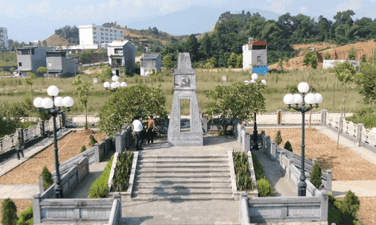
Cam Duong base area is located in Da 1 village, Cam Duong commune, Lao Cai city, Lao Cai province. Cam Duong and the surrounding communes of Xuan Giao and Gia Phu are lands rich in patriotic traditions and resistance to foreign invaders. The Cam Duong - Xuan Giao - Gia Phu guerrilla area played a very important role in the resistance war against the French in Lao Cai. That is the first resilient base, the direction point for implementing the Resolutions of the Lao Cai Provincial Party Committee on Party building, establishing party cells, establishing resistance administrative committees, and building unions. patriotic, formed a guerrilla team. Cam Duong was the site of the earliest armed uprising in Lao Cai. Cam Duong revolutionary base was born during the extremely difficult period of the resistance war against the French period (1948-1950). Built in the middle of the enemy's rear area and located in an important strategic position, the Cam Duong guerrilla zone became a springboard for expanding the construction of other guerrilla zones. Delegations of cadres from the rear (Luc Yen-Yen Bai region) returning to Lao Cai used Cam Duong as a secret gathering place to sneak deep into Lao Cai town, up to Muong Bo, Binh Lu, Phong Tho or to Nam Pung, Bat Xat, built base areas, built an anti-French movement in the enemy's rear area. In particular, Cam Duong is truly a belt and buffer zone close to the enemy's headquarters in Lao Cai town. During the Le Hong Phong Campaign to liberate Lao Cai, reconnaissance forces, military intelligence and the 148th Regiment all departed from Cam Duong. Cam Duong - Xuan Giao - Gia Phu guerrilla area for a long time was also the location for the leadership agency of the Provincial Party Committee and Lao Cai Provincial Team, many important meetings of the province were held here. Cam Duong revolutionary base area was recognized as a national revolutionary historical relic in 1995. This is where Cam Duong Party Cell, the first rural Party cell, was established on October 10, 1948. The Cam Duong base area is also preserved by the people and the Commune People's Committee, such as the stilt house - where the first rural cell was established; gathering shack; gunpowder mortar; alarm drums and many guns and ammunition; swords and self-made mines of Cam Duong guerrillas. Currently, the Cam Duong revolutionary relic site has been renovated and a traditional gallery built in Cam Duong commune associated with the name of the relic to meet the people's wishes, as a place to educate about historical traditions. heroic history of fighting against foreign invaders to win national independence for the younger generation. Source: Military Region 2 Newspaper
Lao Cai
8284 view
Rating : National monument
Bac Ha Temple
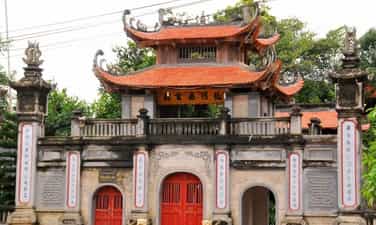
Bac Ha Temple was built in the late 19th century to worship two brothers Vu Van Uyen and Vu Van Mat - natives of Gia Loc - Hai Duong. In the past, the two men went to Ngoc Uyen cave (present-day Bac Ha region) to build a military base and stabilize the population's life in a large border area. History books record: "In the 7th year of King Tu Duc's reign (1855), he ordained the Bau lords (brothers Vu Van Uyen and Vu Van Mat) as national heroes of Bac Ha, making this land prosperous. densely populated". The history of the Nguyen dynasty recorded, "The prestige of the Le dynasty was due to the strength of the Vu brothers who fought the enemy, the land was peaceful, and the people were happy." The Nguyen Dynasty also ordained the heroic spirits of Bau lords to be general soldiers defending Tuyen Quang. In the first year of Gia Long's national merit review, national hero Vu Van Mat was listed among the meritorious gods of Le Trung Hung's reign. To commemorate the hero who made contributions to this land, the people here together built this temple to annually commemorate the hero who made contributions to the country, once stabilizing the southern border region. Northwest of our Fatherland. Bac Ha Temple has a profound historical significance and influence on the political, cultural and social life of the ethnic people of Lao Cai province in the late 19th and early 20th centuries. The main festival of Bac Ha temple is held every year on the 7th day of the 7th lunar month at the temple right in Bac Ha town, to commemorate the death of National Duke Vu Van Uyen, who had the merit of quelling the rebellion and calming the people. in the Northwest region in the 16th-17th centuries. Since then, the temple has been a place for people in the region and tourists from all over to admire those who have contributed to the people and the country. During the festival, in addition to the ceremonies, many rich cultural and sports activities imbued with local national identity are organized such as: Performing arts, Xoe dancing, cockfighting, tug of war, Chinese chess. .. Bac Ha Temple was recognized by the state as a National Historical and Cultural Relic on October 29, 2003. Source: Lao Cai Province Electronic Information Portal
Lao Cai
5034 view
Rating : National monument

Qua Son Temple
Qua Son Temple is located at the foot of Qua Mountain, now in Boi Son commune (Do Luong district, Nghe An province) more than 70km northwest of Vinh city. This large-scale, famous and sacred temple is nearly a thousand years old and is the place to worship Uy Minh Vuong Ly Nhat Quang - Tri Chau Nghe An. According to historical records, Ly Nhat Quang was the 8th son of King Ly Cong Uan (also known as King Ly Thai To). In 1039, Ly Nhat Quang was appointed by the king to oversee tax collection in Nghe An with the title "Uy Minh Crown Prince". In 1041, Ly Nhat Quang was appointed governor of Nghe An with the title "Uy Minh Marquis Ly Nhat Quang". This is an important milestone affirming the great role and influence of Ly Nhat Quang on the land of Nghe An. 3 years later, King Ly Thai Tong promoted Ly Nhat Quang from the title of "Marquis" to the title of "King" to Uy Minh Vuong Ly Nhat Quang and gave him the right to "Tiet Viet" (ie the right to represent the king, to be The king trusts and delegates the right to decide all political matters in Nghe An). During his 16 years as Tri Chau in Nghe An, Ly Nhat Quang demonstrated great economic talent. With the way of the King and pro-people, he was instrumental in consolidating and building Nghe An from a "borderland" and "phen dau" land into a strong town and fortress both in military, economic, and cultural not only for the Ly dynasty but also for later dynasties. During his reign here, he had many great victories in economics, politics, culture, society, security and defense such as: Establishing Ba Hoa camp, providing military food for King Thai Tong. Opened the South, built roads, dug canals, built dikes, opened 52 continents, 22 camps, 56 books, helped people stabilize their lives, borders were maintained, and neighboring countries admired them. In 1057, Uy Minh Vuong Ly Nhat Quang converted and became a saint at the foot of Qua mountain and the people of Nghe An established a temple called Qua Son temple. It is also recorded that after the conversion, Ly Nhat Quang became a saint and always blessed the court to defeat many invading enemies, so later dynasties, every time they sent troops to fight the enemy, they returned to Qua Son temple to light the fire. He prayed for his blessing and after winning the battle, he returned to the temple to burn incense and pay tribute. Therefore, people say, Ly Nhat Quang lived to fight the enemy, and died heroically fighting the enemy. Currently, his sacred tomb at Qua Son temple relics is always cared for, worshiped, and smoked by people. Qua Son Temple was built in the early 11th century, is listed as "international, national creation", then restored many times in the Later Le and Nguyen dynasties. By the early 20th century, the temple became a large-scale complex, consisting of seven buildings, one of the "four great achievements" of Nghe An. Qua Son Temple is an ancient, massive architectural work, a convergence of creative and new thinking: The frames of the temple's works were taken from places and brought back and rebuilt. The temple includes many items, typically: The public-shaped building includes the Upper Palace, Middle Palace and Lower Palace connected consecutively - worshiping Uy Minh Vuong Ly Nhat Quang, Ta Vu worshiping Dong Chinh Vuong, Huu Vu worshiping Duc Holy King, tomb of Uy Minh King Ly Nhat Quang, stele house, horse house and horse man... Through many events, ups and downs of history, due to time and war, Qua Son Temple today no longer retains its former scale and stature. In 1952, bombs caused serious damage to the temple. Only the ancient stone stele and his tomb remain in the temple. By 1996, implementing the policy of preserving, restoring and embellishing national historical and cultural relics, the temple was restored by the government and people. On February 12, 1999, Qua Son Temple was ranked a national "historical and cultural relic" by the Ministry of Culture and Information (now the Ministry of Culture, Sports and Tourism). In 2019, Qua Son Temple Festival was recognized as a National Intangible Cultural Heritage, a tourist destination of Nghe An province. Source: Electronic information portal of Do Luong district, Nghe An
Nghe An
8421 view
Rating : National monument
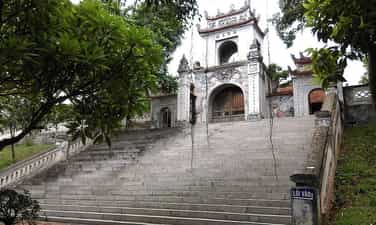
Cuong Temple
Cuong Temple is located on Mo Da mountain, Dien Trung commune, Dien Chau district, Nghe An and is a temple worshiping Thuc Phan An Duong Vuong. From the documents of Cuong temple, the temple is also known as Cong temple, because in the past there were many peacocks living here. In particular, this mountain has the shape of a giant peacock, the peacock's head is where the temple is located. Cuong Temple is associated with a king in the nation's history of fighting foreign invaders. The temple is also associated with the legend of the magic crossbow and the love affair between My Chau and Trong Thuy. After the 18th King Hung ceded the throne, Thuc Phan united the strength of the entire army, defeated the Qin army and ascended the throne, taking the title An Duong Vuong. When he ascended the throne, King An Duong changed the name of Van Lang to Au Lac, moved the capital from Phong Chau to Co Loa, and ruled the country for 50 years (from 257 to 208 BC). Legend has it that when the god Kim Quy helped him build the citadel and make the magic crossbow, An Duong Vuong was caught off guard and fell for Trieu Da's trick. In 208 BC, after capturing the magic crossbow, Trieu Da sent his army to suddenly attack Au Lac country, forcing An Duong Vuong to retreat to the South. When he arrived here, on the same road (in front was the mountain, in the east was the sea, behind was the enemy), An Duong Vuong drew his sword to slash My Chau and then committed suicide at Cua Hien, north of the foot of Mo Da mountain. To commemorate An Duong Vuong, after the king's death, the people of this area built a temple to worship the king here. The temple has existed for a long time. Up to now, there are no documents that have determined the exact time the temple was built. However, during the Nguyen dynasty, Cuong temple was restored many times, especially in the year of the Rat (1864), King Tu Duc issued a decree to rebuild the temple on the scale it is today. Cuong Temple is a beautiful, solid architectural work, suitable for natural conditions, surrounded by many green trees. The temple has Tam-style architecture, including three gates, three upper, middle and lower buildings. Cuong Temple Festival is held on the 14th, 15th and 16th of the second lunar month every year. Cuong Temple Festival is a famous large-scale festival in Nghe An, attracting the attention of many locals and tourists from all over the country. On January 16, 2023, the Minister of Culture, Sports and Tourism decided to officially register the Dong Cuong Temple Traditional Festival on the National Intangible Cultural Heritage List. Source: Nghe An Department of Tourism
Nghe An
6449 view
Rating : National monument

Hue Tri Communal House
Hue Tri communal house has a place called Hue Tri, located in Hue Tri village, An Phu ward, Kinh Mon town, Hai Duong province. Hue Tri Communal House is the place to worship the village's two Tutelary Gods, Thien Nhan and Thien Khanh, who were twin sisters - female generals of Hai Ba Trung during the uprising against To Dinh invaders and died here. The communal house was built in the post-Le period and restored in the Nguyen dynasty. Previously, the communal house was made of wood and thatched. The current communal house has a 二Nhi-shaped layout, consisting of 2 buildings with 5 compartments and 4 consecutive roofs, nearly square, 26m long, 24m wide, total area is 624m2. The communal house faces south, with 3 large doors, the rest are closed with overlapping thresholds, up to 1m high, with convenient bars on top. The summer pavilion is made of stone blocks, with panels up to 4 meters long. Around the communal house there is a yard and many old trees. The northwest side is often used for markets. In the communal house, there are still many valuable antiques such as great paintings, parallel sentences, dongs, bowls, altars and 7 stone steles. According to legend and recorded inscriptions, Hue Tri communal house was built during the Ly dynasty. At that time, it was small and roofed with thatch. It was later restored many times, made of ironwood and tiled, although the location is still in Old place but the layout is different from before, now the architecture is in the shape of a Quoc letter, the layout is almost square. The two communal houses (priest + harem) both have 5 rooms close to each other, the gables are connected to form the roof like the front, the columns, rafters, piles of posts are not elaborately carved, most of them are smooth and sharp. The communal house currently has 7 stone steles, 6 steles belong to the communal house, 1 stele belongs to the literature. There are also a number of palanquins, palanquins, dragon temples, precious bowls... According to legends still at the site, Hue Tri communal house worships Thien Nhan and Thien Khanh, who together with the Trung Sisters fought the enemy during the Eastern Han Dynasty (To Dinh - Ma Vien). Thien Nhan and Thien Khanh are the children of Mrs. Nha Nuong and the grandchildren of Mr. Nguyen Cong. Both women were born on January 7, year of the Tiger. Around 13 or 14 years old, Thien Nhan and Thien Khanh were very smart, well-educated, highly talented, exceptionally moral, and had great beauty. At the age of 17, her mother died, which was also the year Hai Ba Trung launched an army to attack To Dinh. Willing to be patriotic, Thien Nhan - Thien Khanh came to the Hai Ba Trung area and was drafted into the army, appointed princess of the left and right, and at the same time assigned to Thien Nhan and Thien Khanh to control the border areas of Hai Dong. , now Hai Hung land. Thien Nhan and Thien Khanh raised troops and fought bravely with Hai Ba Trung to defeat the To Dinh enemy. Returning victorious from the battle, Thien Nhan and Thien Khanh were awarded the title: "Introducing Princess". The Han Dynasty king again ordered the three generals of Ma Vien to send troops to attack our country, the Trung Sisters once again decided to live comfortably with the enemy. Thien Nhan and Thien Khanh were originally two female generals, so this time they also joined the army. But because the enemy was too strong, our army could not resist, Hai Ba Trung jumped into the Hat Giang River and committed suicide. Thien Nhan and Thien Khanh were also unable to resist and ran to Hue Tri Trang and died there. Every year there are two festivals. 1 is January 7, the birthday of two sisters Thien Nhan and Thien Khanh. The festival opens for many days, with a procession of gods from the communal house to the pagoda. 2 is the 10th - March of the spring festival. Bring the god from the village to the communal house, then hold a sacrifice. Duration from 5 to 10 days. Source: Hai Duong electronic information portal
Hai Phong
5234 view
Rating : National monument

Dinh Trinh Xuyen
Trinh Xuyen communal house is located in Trinh Xuyen village, Nghia An commune (Ninh Giang), Hai Duong. worships Buddhist layman Vu Duc Phong, originally from Mo Trach village, now in Tan Hong commune (Binh Giang), who had meritorious service against the Champa invaders during the Tran dynasty and died on the battlefield. The communal house was built around the 17th and 18th centuries, in the early and later style, and is quite massive in scale. The usable area alone is 580.25 m2, including items such as the main altar, the central hall, the harem, the waiting room and 2 dance halls. The great hall is built in an airy manner, without surrounding walls, and is 13m long and 8.5m wide. On the entire roof, the roof edge is shaped like a lemon flower. The blades and guillotines are shaped like soft dragon heads. Trung Tu consists of 3 compartments designed in the style of husband and wife fighting lotus. On the rafters and trapezes are carved stylized shapes of phoenixes, phoenixes, flowers and leaves. Next is the grand pavilion. This building is 20m long, 11m wide, and includes 5 compartments. Like the great altar, in the middle court, all the roofs and roofs are decorated with lemon flower shapes. The roof blades are shaped like dragon heads. The temples here are also made in the husband's style. The two middle pillars are carved more carefully, the 4 extra heads on these two pillars were made during the Nguyen Dynasty. The other two pillars are less carved, based on the remaining heads and carving art, these two pillars were made in the 17th and 18th centuries. On the crossbar of the central space hangs a carving of "Two dragons flanking the moon", on the left side. Below is a hammock door decorated with the word "seal". Continuing with the central part are 3 compartments with simpler architectural techniques. Below is an altar, two palanquins and tribute bowls. Next to the 3 morning glory rooms is a harem room. Regarding architecture, the central part places a high altar. Above is a 1.8 m high altar, painted brightly with gilded vermilion. Inside the examination is a statue of the Tutelary God, 0.9 m high, with a balanced and harmonious body. Right in front of the cemetery is a 1.4 m high wooden statue of two soldiers holding weapons. In addition to the above items, there are also two rows of ballrooms, each row of 3 rooms, forming a closed and synchronous building. The communal house also has an ancient statue of Vu Duc Phong and many worship objects. The annual communal house festival is held from the 9th to 12th of the second lunar month with many folk games such as clay cannon competition and puppet shows. The communal house was ranked as a national monument in 1992. Source: Hai Duong Electronic Newspaper
Hai Phong
4476 view
Rating : National monument