Relic point Vietnam
Việt Nam
Dak Tuar cave
Historical relic Stone Cave in Dack Tuar village (Dak Tuor) is located in Cu Pui commune, Krong Bong district, about 80 km southeast of Buon Ma Thuot city center. The total area zoned for relic protection areas is 5.6 hectares. The cave is made up of uneven, concave, cubic rocks, located deep in the heart of the mountains of the Cu Yang Sin range. The location is dangerous and difficult to travel, so it has become a place to work and stay. Hidden, discreet, safe and secret revolutionary activities of officers and soldiers of some departments of Dak Lak province and M'nong people of Krong Bong district during the years of resistance against the US to save the country. Dak Tuar cave was once the base of the main force of the Southern Liberation Army of Vietnam and housed the Dak Lak Provincial Party Committee of the Communist Party of Vietnam during many years of the Vietnam War. Accordingly, here is the residence and working place of Mr. Huynh Van Can (secretary of the Communist Party Provincial Party Committee in Dak Lak), the Provincial Party Committee Hall and from here, the Provincial Party Committee of the Communist Party of Vietnam in Dak Lak leads the people. Ethnic group, mostly M Nong people from H9 base area (Dak Tuar village) occupied a large area of land to the East of the province in 1965, now in Krong Bong district and "The US military repeatedly bombed and marched swept but all failed." The historical relic of Dack Tuar Stone Cave (Dak Tuor) has entered the heroic history of the army and people of all ethnic groups in Dak Lak province, closely associated with the Party's direction, contributing to smashing plots and strategic strategies. special war of American imperialism, further affirming that the People's War policy is completely wise. The relic became a red address, reflecting the faithful tradition of ethnic minorities in Dak Lak province in general, and the noble sacrifices of M'nong revolutionary soldiers in particular, typically Comrade Y On - who heroically sacrificed his life before the enemy's brutal bayonet. Today, the Monument has become a historical address that carries the meaning of educating revolutionary traditions for generations, especially the younger generation. On major holidays of the year, organizations, unions, and people of Dak Lak province regularly organize "returning to the source" activities, revisiting the old battlefields and holding ceremonies to admit members of the Ho Chi Minh Communist Youth Union. Chi Minh at the Monument. Dack Tuar stone cave (Dak Tuor) was ranked as a national historical relic on August 3, 1991. Source: Collection of Dak Lak province tourism newspaper
Dak Lak
4670 view
Rating : National monument

Ban Me Thuot Bishop's Palace
Buon Ma Thuot Bishop's Palace is an ancient religious building located at 104 Phan Chu Trinh, right near the center of Buon Ma Thuot city (Dak Lak province). This is the address for religious activities of parishioners and also a famous tourist attraction of the city. This facility was originally a monastery built by Benedictine nuns in 1956. Later, this monastery was purchased by Bishop Paul Seitz Kim and a new diocese was established. In 1967, the Diocese of Buon Ma Thuot was established and the monastery had a new name, Buon Ma Thuot Bishop's Palace. Buon Ma Thuot Bishop's Palace is a complex of many buildings such as a chapel, guest house, management house, housing and activities... located in a spacious campus with many trees. The works are all designed and built in the architectural style of the Central Highlands ethnic groups, of which the chapel is the largest and most unique. The building is built entirely of wood, with a fish-scale tiled roof. The main part of the cathedral is inspired by the floor plan of a long house, the roof has communal house architecture. The construction site is higher than the natural ground, in the style of a stilt house to avoid moisture and termites. Accordingly, the chapel's floor plan is arranged with the main staircase and main hall facing from the gable end of the building adjacent to the entrance from the gate. Inside the chapel is divided into two parts, the front is the ceremony area for parishioners, the back is the ceremony area for nuns. Separating the two areas is an altar placed in the middle of the space. The cross is hung high so that it can be viewed from two opposite directions. The wooden structural frame system is scientifically designed and rich in aesthetics, creating a sturdy roof frame that supports the large tile roof, and also brings sophistication and flexibility to the interior space. Building light is exploited from both sides of the long wall with high wooden glass windows from the floor to the end of the roof. The structures in the Bishop's Palace are interconnected, in harmony with the gardens and trees. There is also a bell tower here designed in the image of a communal roof in the Central Highlands. Buon Ma Thuot Bishop's Palace is the common home of Buon Ma Thuot Diocese. Every day, a mass is celebrated in the chapel. On major holidays such as Easter and Christmas, Mass will be celebrated more often. This is also a tourist attraction of Buon Ma Thuot city. Source: Catholic Board, Buon Ma Thuot diocese
Dak Lak
4784 view
Rating : Provincial level relics

Sac Tu Khai Doan Pagoda
Sac Tu Khai Doan Pagoda is located at 117 Phan Boi Chau Street, Thong Nhat Ward, Buon Ma Thuot City, Dak Lak Province. The pagoda is often called Lon Pagoda or Province Pagoda, facing southwest, overlooking Doc Hoc stream. Khai Doan is the last Sac Tu pagoda of the Nguyen Dynasty, the first pagoda of the Buddhist organization during the Revival of Vietnamese Buddhism in the Central Highlands, the land of the Imperial Dynasty during Bao Dai's reign. The pagoda was directly managed by Doan Huy Hoang, Queen Mother Hoang Thi Cuc (King Khai Dinh's concubine), King Bao Dai's mother, and Queen Nam Phuong, along with a number of dedicated Buddhists, to build for the Central Vietnamese Sangha. . Venerable Thich Tri Thu appointed his eldest son, monk Thich Duc Thieu, to direct the construction of the pagoda on a land area of nearly 7 acres, 8 acres, 28 square meters and to be the first abbot. In 1951, the pagoda built the rear and lecture hall, and in 1953, the main hall was built. The name Khai Doan is a combination of two words Khai Dinh - Doan Huy. On June 29, 1953 (May 19, Year of the Snake), Mr. Narada Thera (Ceylon) requested the Buddha's relics to present to Tu Cung in Buon Ma Thuot. Attending the ceremony were Venerable Thich Tinh Khiet, President of the Vietnam General Buddhist Association, along with monks, Buddhists and a large number of people worshiping the Buddha's relics and praying for peace in the country. The pagoda was built by the skillful hands of workers in the ancient capital of Hue, so it has Hue communal house architecture mixed with local architecture. The main gate faces southwest, overlooking Quang Trung street, towards the 'Suoi Doc Hoc' valley. In front and behind the gate are written 'Khai Doan Tu'. The main hall is the main building of the pagoda with an area of 320m2 divided into two parts. The front half has the appearance of a Central Highlands long house, but the rafters structure is in the style of a Huong house. The second half is built in a modern style. The most notable in the main hall is the statue of Shakyamuni Buddha in the middle and the bronze bell placed in the room on the right. The 1.1m high bronze Buddha statue, 0.35m high wooden lotus with elaborate decoration, 1.15m high bronze bell, 2.7m base circumference, weighing 380kg were cast in January 1954 (i.e. December of the year of the Snake). In 1953, on the occasion of the Hau To's peaceful citadel ceremony, the pagoda was ordained as "Sac tu Khai Doan" - during the reign of King Bao Dai. In 1953, although the Nguyen Dynasty had ended, Bao Dai was still the Head of State of the State of Vietnam (the South) and with the institution of the Imperial Dynasty in the Central Highlands (Central Highlands), Bao Dai is still the Emperor of this land. And this is the last decree of a Vietnamese king bestowed on a Buddhist temple. Over more than half a century, the pagoda has succeeded seven generations of abbots. The current abbot is Venerable Thich Chau Quang, current Head of the Buddhist Administration Committee of Dak Lak province. In 1986, the Provincial Buddhist Executive Committee was established. The pagoda has been chosen to house the province's Buddhist office to date. Khai Doan Pagoda is the most famous temple in the Central Highlands. Source: Collection of Dak Lak province tourism newspaper
Dak Lak
5104 view
Rating : National monument
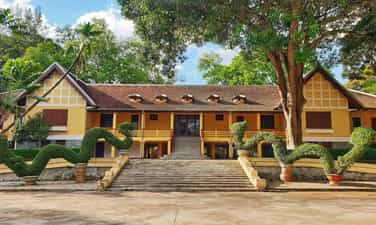
Bao Dai Palace
Bao Dai Palace historical relic is located at 2 Y Ngong street, Tan Tien ward, Buon Ma Thuot city. Before 1905, this place was Maison Lefévre restaurant - a disguised control station to control the exchanges and relationships of Kram - Buon Ma Thuot villagers with other villages and Kinh people from the delta. In 1914, Minister Sabatier chose this location to build an office called the District Attorney's Court. In 1926, after replacing Ambassador Sabatier, Ambassador Giran renovated and built the current building and called it the Residence, locals called it Sang Ae Prong (the big man's house). . In November 1947, after being sponsored by the French Government to return home as Head of State, Bao Dai worked in this area for nearly 8 months (from November 1947 to about May 1948). In the years 1949 - 1954, every year at the beginning of the rainy season, he often came here to rest and hunt, so this house was also called Bao Dai Villa. Back in the past, at this relic in 1925, ethnic minority intellectuals led by teacher Y Jut surrounded and attacked the Legation, with the main goal of destroying Sabatier. It was also this struggle that was the direct reason for the French government to make concessions to the ethnic people in Buon Ma Thuot - Dak Lak, bringing in Giran to replace them. In March 1945, when the Japanese fascists invaded Buon Ma Thuot, Minister Levo handed over the house as well as the entire Dak Lak government to the Japanese fascists. Also in this year, this monument witnessed many historical events of the country in general and the Central Highlands - Dak Lak in particular. Since the historic event on August 24, 1945, the building became the headquarters of the Revolutionary Advisory Council, where meetings were held to discuss and direct all work to protect and build the government of the province and the State. in every aspect. Another important event that also took place at this relic was that on December 1, 1945, while the French colonialists were relying on allied troops, plotting to annex our country for the second time, an important meeting was held to discuss the matter. on the issue of the election of the First National Assembly of the Democratic Republic of Vietnam chaired by comrade Bui San (Former member of the revolutionary advisory council in 1945). The meeting proposed plans for the election of the National Assembly throughout the province, using all means to win even while the French colonialists may have been present throughout the province. The meeting was underway when suddenly the French attacked Buon Ma Thuot. Viet Minh forces fought back fiercely, with many examples of fighting and sacrificing for the Fatherland, illuminating revolutionary heroism for generations to come. After 1975, the Relic was the first headquarters of the Dak Lak Provincial Party Committee - the center directing all political, economic and social activities of the province in the new days of liberation. Part of the relic is used as a guest house of the Dak Lak Provincial Party Committee, which has had the honor of welcoming senior leaders of the Party and State every time they visit and work in Dak Lak: The relic was ranked as a National Monument by the Ministry of Culture and Information (now the Ministry of Culture, Sports and Tourism), on January 26, 1999, until February 28, 2023, Minister of Culture, Sports and Tourism changed its name to Bao Dai Palace Historical Relic. Source: Department of Culture, Sports and Tourism of Dak Lak province
Dak Lak
5224 view
Rating : National monument
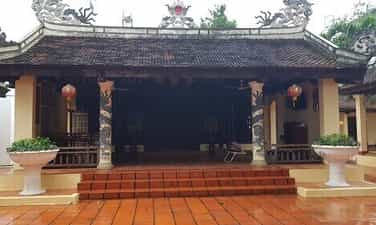
Dinh Lac Giao
Lac Giao communal house is at 67 Phan Boi Chau street, Buon Ma Thuot city, Dak Lak province. Lac Giao Communal House is a communal house, worshiping the Thanh Hoang according to Vietnamese customs and is a historical relic that has been ranked for the land reclamation work of the first Kinh people on the Buon Ma Thuot plateau. This is considered an important gathering place and a curse for Vietnamese people from all over the world who have migrated to live in Buon Ma Thuot. The communal house is a place for spiritual cultural activities, spring and autumn ceremonies, a place to worship Dao Duy Tu, the local Emperor God, and to worship Phan Ho, the predecessor, who was instrumental in initiating the establishment of Lac Giao village. . During the years 1928 - 1930, the French tried every way to prevent Kinh people from going to Buon Ma Thuot and the Central Highlands. But Mr. Phan Ho, from Dai Cat village, Ninh Phung commune, Ninh Hoa district, Khanh Hoa province and a number of traders, sometimes on horseback, sometimes on elephants, still find ways to travel, trade and exchange goods with the Ede people. . Through meeting and interacting with the Ede village elders and with the help of Mr. Ama Thuot, Mr. Phan Ho became acquainted with many people and gained good sympathies. A special point is that Buon Ma Thuot is a large, flat, fertile land, very convenient for raising livestock, growing crops, and developing life. In 1928, he returned to Khanh Hoa and invited nearly a dozen more people, brothers, relatives, and descendants, to Buon Ma Thuot to establish a village and build a communal house named Lac Giao. To remember this love of solidarity, Mr. Phan Ho, head of Lac Giao commune at that time, was allowed to divide the land to a number of people to reclaim land, set up gardens, and build houses within Lac Giao village, and he also reserved a portion of the land. Let the villagers build a communal house. Today, according to folk documents and documents of Dinh Lac Giao, the name Lac Giao is the curse of the agreement to settle down and settle down between the Kinh people and local people, working together to build a new land. This. Every spring and autumn period, Lac Giao villagers come here to pray for health and prosperity for themselves and the villagers. Lac Giao Communal House is also a place to preserve the revolutionary traditions of ethnic minorities in Dak Lak province during the anti-French colonial period. When the August Revolution succeeded, Lac Giao Communal House was the place where the town's revolutionary government was launched. Buon Ma Thuot. On December 1, 1945 (October 27, At Dau) at the current location of the Provincial Cultural Center, the French colonialists suddenly attacked a platoon advancing south of Le Trung Dinh, killing more than 100 soldiers, at the same time. During this time, at the three-light lamp post (present-day Nga Sau), the French enemy killed a number of our compatriots. Every year, on October 27 of the lunar calendar, the people of Buon Ma Thuot organize commemoration of the fallen soldiers and compatriots who died at Lac Giao Communal House in a very solemn way. Lac Giao communal house is located in Thong Nhat ward, Buon Ma Thuot city, Dak Lak province. The communal house was first built in 1928 with materials of thatch, bamboo, and leaves. The original area of the Dinh area is about 700m2, the South borders Y Jut street, the West and North border Buon Ma Thuot market, the East borders Phan Boi Chau street. The communal house has 2 doors opening onto Phan Boi Chau and Dien Bien Phu streets. In 1932, Lac Giao Communal House was rebuilt with bricks and tiles in the shape of a gate, with a dragon boat architecture with pillars, gables, a dove roof, on the door carved four sacred animals and four precious animals, and the roof was covered with two dragon jaws. In fact, the middle roof is covered with two stylized patterns of Vong Nguyet clouds, the base of the roof is continuously covered with stylized patterns. The entrance to the main hall is decorated with two parallel sentences. Hau Dinh worships the God Emperor and those who have contributed to the country. On both sides of the main hall are two rows of houses: the left house worships male and female spirits and the right house is a place to receive guests and display evidence. In front there is a three-door entrance gate, behind the gate is a screen with tiger carvings. altar, followed by a large incense burner, the communal house has been restored many times. Dinh Lac was recognized as a historical relic by the Ministry of Culture, Sports and Tourism on March 2, 1990. Source: Dak Lak province electronic information portal
Dak Lak
5031 view
Rating : National monument
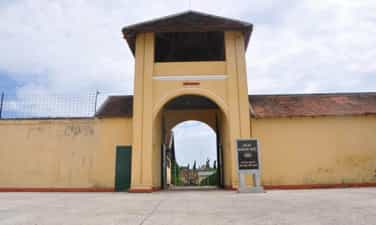
Banished House in Buon Ma Thuot
Buon Ma Thuot exile house is located at 17 Tan Thuat street - Tu An ward - Buon Ma Thuot city. Built in the years 1930 - 1931, the House of Exile is a place to detain and exile political prisoners mainly in the Central provinces. The name Buon Ma Thuot Exile House, on the one hand, originates from the name given by the French colonialists: Pénitencier de Ban Me Thuot, and on the other hand, is due to the nature and type of prisons of the French colonialists. The exile house was built with a total area of nearly 2 hectares, with 4 surrounding walls 4m high, 40cm thick, all 4 corners have guard posts and guards 24/24 hours. Inside there are 6 rows of collective prisons, rows of cells... this is the place to imprison, exile and kill revolutionary soldiers with an extremely harsh and brutal regime. In Central Vietnam, the Dak Lak Plateau at that time was surrounded by mountains and forests on all four sides, dense and full of wild animals. The climate is harsh, with erratic hot and cold conditions, high humidity, and many dangerous pathogens such as malaria, dysentery, and cholera easily arise. With a wide plateau terrain, interspersed with many dense forests surrounded by many high mountains, on one side is the border with foreign countries, on the other hand divided by many valleys, rivers and streams, with few roads, bridges and culverts. Around 1900, a prison was built by the French to house political prisoners. Here, the land is desolate, the climate is toxic, few people visit, the difference in language and culture with the Ede ethnic people, forming prisons makes it difficult for prisoners to escape. In the late 1920s and early 1930s, the anti-colonial movement in Indochina increased as the indigenous people absorbed Western revolutionary ideas. The number of political prisoners is increasing. The government continuously had to expand and build new prisons and exile houses to serve as places of exile and detention for indigenous national revolutionaries who were sentenced to heavy sentences in the territory of Indochina. Initially, the Ambassador of Central Vietnam chose to build the exile house in Lak district, about 50 km from Buon Ma Thuot town. However, the governor of Dak Lak province at that time proposed building a prison right in Buon Ma Thuot town on the basis of expanding the old prison, on the grounds that building a new prison requires a large cost while At that time, France was in an economic crisis in 1929; At the same time, if built in Lak, transporting prisoners would take a long distance and take a lot of time. From those reasons, the Central Ambassador decided to choose Buon Ma Thuot town as the place to build the exile house. The Buon Ma Thuot exile house was set up by the French colonialists during the period 1930 - 1931 to exile and detain patriots, communist party members who were arrested and severely sentenced in the Central provinces, and those who went to Vietnam. leader in the struggles of the Nghe Tinh Soviet movement. A special point different from other prisons and exile houses is that prisoners have to make their own prisons to detain themselves, which is the most prominent way the French colonialists carried out the Buon Ma Thuot exile prison. The exile house is located on a campus of nearly 2 hectares, this location is near the legation, green loincloth barracks, and provincial prison. This is a hill with few large trees, allowing trucks to easily access and transport materials. The design and plan were drafted by the chief engineer and director of public works at Trung Ky. Since 1930, Buon Ma Thuot Prison has detained activists such as: Ho Tung Mau, Phan Dang Luu, Nguyen Chi Thanh, To Huu, Hong Chuong, Bui San, Tran Van Quang, Ngo Duc Do, Ngo Xuan Ham. .. The historical relic of Buon Ma Thuot's exile house is also known as the punishment house. This place is like many prisons across Vietnam, not only is it the clearest proof of the cruel crimes of the Empire - Colonization, but this place is also considered a great school that has created great loyal revolutionary soldier for the country. The Buon Ma Thuot House of Exile is a historical site in Dak Lak, with the structure being a relic of the old prison system (exile house) from the French colonial period. On July 10, 1980, the House of Exile was recognized by the Ministry of Culture and Information as a national monument. Source: Dak Lak province electronic information portal
Dak Lak
8189 view
Rating : Special national monument

Duc Hoang Temple
Duc Hoang Temple is located in Phuc Thanh commune (Yen Thanh, Nghe An). Legend has it that during the reign of King Tran Nhan Tong, in the year Thien Bao, 1285, our country was invaded by the Yuan - Mongol invaders. Hoang Ta Thon was from Van Phan village, (Dien Van commune, Dien Chau district today), heeding the court's call to save the country and set out to fight the enemy. Due to his intelligence, cunning and swimming talent, he was recommended by a commander to Hung Dao Vuong and was accepted into the Tran Dynasty's battle-hardened navy. After a period of training, seeing that Hoang Ta Thon had talent, virtue, and unusual appearance, just like the legend, Tran Hung Dao took him to be his apprentice and trained him further in the book of war and the art of war. He had many great contributions in fighting foreign invaders, the most famous being the war on the Bach Dang River in the year of Mau Ty 1288. After the country was cleared of enemies, Hoang Ta Thon still regularly trained his soldiers and many times personally went to inspect and organize a system of fortifications in the coastal areas of Hai Phong, Thanh Hoa, Nghe An to suppress the enemy. oppress the pirates. Also during this time, Hoang Ta Thon returned to visit his hometown and saw the devastated villages and the people struggling and hungry because of the enemy and storms. He felt very sorry for them. Faced with that situation, he spent his money and gave it to his eldest son to find new land that was easy to do business in, so he could bring villagers to establish a new village. Then during a patrol, he fell ill and died suddenly at Trao gate, Hoang Hoa district (Thanh Hoa). When the court heard the news, they were extremely sorry and sent a dragon boat to carry his coffin back to his hometown for burial. They built a temple and named him Sat Hai Chang Lai great general, Thien Bong Marshal Chi Chi, also known as Sat. Hai Dai King Hoang Ta Ton. Duc Hoang Temple was built during the Tran Dynasty on a high, airy, shady terrain, with the temple door overlooking Dieu Oc Lake. Initially it was just a small, simple temple, but in 1505 the upper palace was built with walls and tiles. More than 300 years later, in 1882, the central palace was built and in 1936, the lower palace was built. Through many ups and downs of history, the temple has been renovated many times. Up to now, the old landscape of the temple has many changes but still retains the original architecture. In particular, the art of decoration, bas-reliefs, and sculpting of statues at temples has reached a high level in creating art where the appearance, demeanor, and costumes of the images are described and expressed specifically. Vivid, elegant colors and elegant shapes create a sacred beauty for the temple. Especially the statues of elephants and horses in front of the temple yard, the decorative panels of the three mountains, the animals in front of the royal palace and the stack of matches, and the statues of martial arts officials in front of the harem are elaborate works of art. In addition to worshiping Hoang Ta Thon, Duc Hoang temple also worships Princess Bach Y, the daughter of King Ho Quy Ly; worship Shakyamuni Buddha, Princess Lieu Hanh and worship the snake god. The worship in the temple between ancestors who have contributed to preserving the country with Buddha and the Holy Mother creates "three religions of the same origin", as a harmony between heaven, earth, mountains and rivers, between spirituality and the earthly world. The highlight of Duc Hoang Temple is Dieu Oc lotus pond, one of the eight famous beautiful scenes of the ancient Dong Thanh land. In the early summer, tourists come to enjoy Duc Hoang Temple when the lotus blooms, the fragrant lotus scent, the pink of the flowers, the green of the leaves weave a giant lotus carpet winding around the village, very poetic. Behind Duc Hoang Temple is a primeval forest with many types of precious wood, so the air here is cool all year round, filled with the sound of birds singing and squirrels jumping. The annual Duc Hoang Temple Festival takes place for 3 days, starting from January 29 and the 1st and 2nd day of the 2nd lunar month. Divided into 2 main parts: Ceremony part and festival part. The ceremony is solemn and respectful, preserving the beauty of the ceremony. The festival has a variety of cultural and sports activities such as volleyball, traditional wrestling, stick pushing, tug of war, ceremonial drum competition between clans, boat racing, cockfighting, wrestling, human chess fighting, Swinging fairies, catching fish, catching ducks, jumping rope, cooking rice, going to pray... With the mass art movement serving the festival, there have also emerged many vi miles singers who have been recruited and trained by many places. create wealth. Source: Nghe An Tourism
Nghe An
6218 view
Rating : National monument
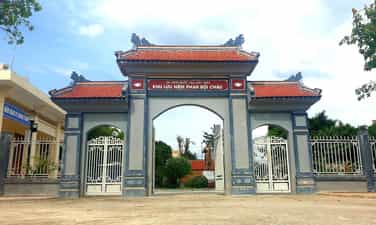
Phan Boi Chau Memorial Area
Phan Boi Chau memorial relic site in Nam Dan includes two locations, about 1.5km apart: paternal hometown in hamlet 2, Xuan Hoa commune, Nam Dan district and maternal hometown in Nam Dan town, Nam Dan district, Nam Dan province. Nghe An. Phan Boi Chau's real name is Phan Van San, alias Sao Nam, born on December 26, 1867 in a Han family, in Sa Nam village, Nam Dan district, Nghe An province; He is a great cultural figure and representative of the Vietnamese national liberation movement in the early years of the twentieth century. In the dark night of slavery, on the journey to find a way to save the country with nearly thirty years of hard work, Phan Boi Chau's footsteps passed through many places: in Quang province, in Hoan Don, in Tuyen. Quang, Dong Kinh, Than Ho, Shanghai, Que Viet, sometimes in Japan, sometimes in China, sometimes back in Thailand... Patriotic movements launched by Mr. Phan such as Duy Tan Hoi, Dong Du, Vietnam Quang Phuc Association, Vietnam Nationalist Party... are always responded to by people from all walks of life. Especially the youth, they see Phan Boi Chau as an idol and ideal to strive for the cause of national liberation. On June 30, 1925, Phan Boi Chau was kidnapped by the French colonialists in Shanghai (China), brought back to the country, tried at the Hanoi Penitentiary Court, and then brought to rest in Hue. On the morning of October 29, 1940 (September 29, Canh Thin year), he breathed his last breath at the thatched house on Ben Ngu slope (Hue). The Phan Boi Chau memorial relic area in Nam Dan is a place associated with Phan Boi Chau's life from the time he cried into the world, until the time he left to find a way to save the country. Phan Boi Chau's house used to be a gathering place for "heroes from all directions" - patriotic literati, intellectuals, members of Can Vuong's party, guests from the continent who lost their lives... everywhere discussed together. water affairs. Among them is Deputy Nguyen Sinh Sac - President Ho Chi Minh's father. The days when he was a child, following his father to visit Uncle Phan, listening to his ancestors discuss the country's affairs, contributed to forming the ideology of saving the country and loving the people in Ho Chi Minh. During the years of working at home and abroad until he was arrested and sent to house arrest in Hue, Mr. Phan returned to visit his hometown and family several times. The last time he visited home was in the spring of the Year of the Tiger - 1926. Phan Boi Chau memorial relic area is a place to educate revolutionary traditions for the young generation, demonstrating the nation's morality of drinking water, remembering its source. The works are arranged harmoniously and have appropriate architecture, forming a unified whole that both serves the function of souvenirs and gratitude to famous people, and at the same time exudes elegance and grace like the essence of Mr. Phan. 1. Father's hometown: Uncle Phan's house in his father's hometown is located outside Ta Lam dike, looking far away is the majestic Dai Hue range, behind is the Lam river. To the northwest is the majestic Ru Dun, once the headquarters of the Mai Hac De in the past. Currently, the relic's campus is 754m2 wide, including items: gates, walls, memorial stele house, garden... 2. Maternal hometown: is the birthplace and associated with Phan Boi Chau's childhood, the total relic area is 4878m2, including 2 main areas: the memorial area including the cottage and the garden of his family. Phan Boi Chau; The memorial area includes a display of artifacts related to the life and revolutionary career of Uncle Phan and auxiliary works. Currently, at the site, there are still 134 documents and artifacts (51 antiques, 83 relics), including materials such as paper, wood, stone, bronze, bamboo, etc., which are sacred souvenirs. attached to the life and revolutionary activities of Phan Boi Chau. Every year, two solemn ceremonies take place at the relic, which are the anniversary of Phan Boi Chau's death on the 29th day of the 9th lunar month and the anniversary of the birth of Phan Boi Chau on the 26th day of the 12th lunar month, autumn. Attracting a large number of officials, local people, all levels and sectors to attend. In addition, on holidays, according to local traditions such as Lunar New Year, Thuong Nguyen, Trung Nguyen... and the lunar new year day every month, local people come to offer incense in large numbers to commemorate. With particularly outstanding value, the historical relic Phan Boi Chau Memorial Area in Nam Dan was ranked by the Prime Minister as a Special National Monument on December 22, 2016). Source: Department of Cultural Heritage
Nghe An
8547 view
Rating : Special national monument

Temple of Emperor Quang Trung
Emperor Quang Trung Temple is located on Dung Quyet Mountain - a place considered a green pearl that nature has bestowed on Nghe An and Vinh city. Dung Quyet Mountain has 4 branches: Long Thu (dragon head), Phuong Duc (Phoenix wings), Quy Boi (Turtle dune) and Ky Lan. The ancients called the terrain here the land of four spirits, because there are enough Dragon, Ly, and Quy Phuong. This is considered the position of the pharynx during the process of building and defending the country on the natural path through Vietnam. After consulting with La Son Phu Tu Nguyen Thiep, Nguyen Hue chose the Dung Quyet mountain area as a prime location, with bright meteorology and spacious terrain to locate the capital for long-term planning. On September 3, the year of Mau Than (October 1, 1788), Nguyen Hue Quang Trung issued an edict assigning Tran Thu Than and La Son's husband Nguyen Thiep to organize the construction of Phuong Hoang Trung Do in the land between Dung Quyet mountain and Dung Quyet mountain. Unicorn. Therefore, October 1, 1788 was chosen as the anniversary of the Phoenix Trung Do. To commemorate the great contributions of the cloth hero, preserving the close bond between Emperor Quang Trung and his fatherland Nghe An, on August 15, 2005, the People's Committee of Nghe An province commenced construction. Build a temple to worship Emperor Quang Trung. After more than 1,000 days of construction, the temple was inaugurated on May 7, 2008. The temple includes the following structures: The four-pillar ritual gate is designed in a two-story, eight-roof architecture. Next are the auxiliary works: Left vu and right vu houses where delegates are welcomed and exhibits of artifacts. The center of the entire temple architecture is the front hall consisting of 3 houses: lower hall, middle palace, upper palace, designed in the shape of a Tam gradually increasing. All three houses are made of ironwood, carved with motifs in the style of the Nguyen Dynasty. The Lower House has an altar arranged according to Vietnamese worship beliefs - First Buddha, later saints. The Central Palace consists of three worship spaces: In the middle of the Council altar - worshiping generals and mandarins of the Tay Son period; The left and right sides worship civil and martial mandarins of the Tay Son dynasty. The Upper Palace is the place to worship Emperor Quang Trung and his father - Mr. Ho Phi Phuc and his mother - Ms. Nguyen Thi Dong. Every year, the Upper Palace is opened on two major holidays: July 29 of the lunar calendar - the death anniversary of Emperor Quang Trung and January 5 - the anniversary of the Ngoc Hoi - Dong Da victory. Emperor Quang Trung Temple and Trung Do Phoenix relic were recognized as tourist destinations by Nghe An Provincial People's Committee on December 21, 2017. Source: Electronic information portal of Nghe An province tourism department
Nghe An
8778 view
Rating : National monument
Sen Village, Uncle Ho's hometown
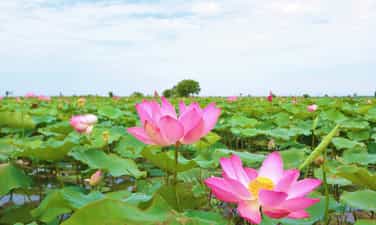
Sen Village in Kim Lien commune, Nam Dan district (Nghe An) is the birthplace of President Ho Chi Minh and also the place where Uncle Ho lived during his childhood. This place also preserves rustic cottages, lotus ponds, and sacred memories associated with Uncle Ho's family and childhood. Sen Village has a rustic, peaceful beauty, typical of the North Central Plains, like the souls of the people here. You can feel that atmosphere when you step on the small dirt road leading to Uncle Ho's house in the past. The bamboo banks rustled in the wind, the rows of hibiscus swayed gently, the areca flowers and grapefruit flowers were fragrant, my heart felt strangely peaceful... From Vinh city, follow Highway 46 about 15km to reach Sen village, this is also one of the four most important monuments in the country about the beloved President of the nation and is the pride of the people of Nghe An region. The land of "the land of outstanding people" is where many talented people are born, closely tied to the destiny of the country. Visiting the relic, visitors can feel more fully about a Vietnamese village, a Nghe village, and visit the houses of Uncle Ho's close neighbors at that time such as: Co Dien Forge; Mr. Vuong Thuc Quy's house; Nguyen Sinh family church; Mr. Nguyen Sinh Nham's house - Uncle's grandfather. Banyan tree relics, Coc well, artifact display area, Uncle Ho's memorial house documents... The familiar landscapes and artifacts associated with Uncle Ho's image seem to still linger a little. It's warm around here. On the back of Dong Tranh mountain in the Dai Hue range (Nam Giang-Nam Dan commune) is the burial place of Mrs. Hoang Thi Loan - Uncle Ho's mother. Her grave is located halfway up a mountain range about 100m above sea level. On May 10, 2012, Kim Lien Relic Area was honored to be recognized as a special national historical site. This is truly the joy and honor of the people of Nghe An - the proud hometown of the great President Ho Chi Minh. Every year, people from all walks of life, overseas Vietnamese and international visitors flock to Uncle Ho's hometown to contemplate the noble cultural and humanistic values. Source: Nghe An Tourism Newspaper
Nghe An
6529 view
Rating : Special national monument