
 vn
vn en
en ja
ja ko
ko zh
zh


















List of tourist attractions (1417)

Keo Lom Pass
Keo Lom Dien Bien Pass is one of the beautiful passes in the northern mountains of our country, possessing majestic scenery and especially being an ideal place to hunt clouds. For many tourists, perhaps Keo Lom Dien Bien Pass is still a fairly new destination. Because when mentioning the northern mountain passes, people often think of O Quy Ho, Khau Pha, Pha Din or Ma Pi Leng. But did you know, Keo Lom is also a pass with impressive beauty, located in Na Son commune, Dien Bien province. To get to this pass, visitors can depart from Hanoi, move to Dien Bien city, follow Highway 279 for about 12km, then turn towards Dien Bien Dong. From here, you will go through difficult roads before reaching the beautiful Keo Lom pass, standing proudly between heaven and earth. Keo Lom Dien Bien Pass has a length of about 20 km, is a typical pass of the North. The entire pass is a winding road, winding and depending on the terrain here. The higher you go, the more you will feel the cool air of the mountains and the desolate, desolate beauty of the Northwest. From the foot of the pass to the top is a beautiful journey as you pass through many impressive landscapes here. It is a majestic and magnificent picture of mountains and hills in the distance, the scene is endless, dim and poetic, so poetic and beautiful. At any part of the pass you can stop to admire the scenery and take some souvenir photos. If you go to Keo Lom Dien Bien Pass in October - December every year, you will also be able to travel on a beautiful road with the bright yellow color of wild sunflowers blooming on both sides of the road. No need to take careful care, yet the flowers bloom brightly, beautifying the Keo Lom pass road more sweetly and attractively. Reaching the top of the pass, you are even more captivated by the beauty of this place. In the distance is the green color of the mountains and forests, and white clouds are floating, adding to the poetic beauty of the picture. Compared to passes like O Quy Ho, Thung Khe,..., Keo Lom Pass is somewhat more wild and deserted. There are no noisy trading activities here, only strangely peaceful silence. Keo Lom Pass is also famous as a great cloud hunting spot in Dien Bien that you should stop at once. Right at the top of Chop Ly of this pass is where young people and backpackers often stop to watch the sea of white, floating and magical clouds. Many tourists share that from April to September every year is the most ideal time to hunt clouds on Keo Lom Pass. And if you don't have time to travel to Dien Bien during this time, you can still explore the pass and see other beautiful scenes of this place. Mountains, clouds, or peaceful villages at the foot of the pass also contribute to creating an extremely impressive and attractive Keo Lom. So don't miss these valuable experiences when you return to Dien Bien. From the top of the pass, you continue to return to Dien Bien Dong town, continuing your journey to discover newer, more impressive lands of Dien Bien province. Then, you will come to the place where three streams come together to form the origin of the famous Ma River. The trip of youth therefore becomes more memorable than ever. Keo Lom Dien Bien Pass is one of the beautiful coordinates that you cannot miss if you want to see the majestic and magnificent picture of this province. Exploring the pass is a journey for you to experience the beautiful scenery, an opportunity to hunt clouds or enjoy the beautiful picture of the sunset. If you are looking for a tourist destination in the Northwest, don't forget to visit Keo Lom Pass! 12121
Dien Bien
1827 view


Truc Lam Tue Duc Zen Monastery
Truc Lam Tue Duc Zen Monastery is a spiritual and cultural tourist destination in the Tam Dao area, Phu Tho province. This monastery possesses a peaceful and gentle tone, suitable for those who want to find peace of mind. Truc Lam Tue Duc Zen Monastery is a peaceful meditation place built on the foundation of the ancient Kim Ton pagoda. The monastery sits at an altitude of 300 meters above sea level and is located on Hinh Nhan mountain, in the Sang Son range in Thanh Tu village, Tam Son commune, Phu Tho province. This is the place where the atmosphere of heaven and earth converges and the source of spiritual culture has been preserved and spread through many generations. Truc Lam Tue Duc Zen Monastery was built based on the Vietnamese pagoda architectural style. All works here are preserved in harmony with the surrounding landscape, creating an impressive space worth exploring. Truc Lam Tue Duc Zen Monastery has profound core cultural values for Buddhism. This Zen monastery was born to dedicate the noble values of Buddhism from the path of compassion and wisdom as well as to inherit and promote the quintessence of the Truc Lam Yen Tu Zen Sect in particular. From those cultural values, the image of the temple easily helps you think about the close connection between Buddhist ideology and the independence and self-reliance of the nation. The architecture of Truc Lam Tue Duc Zen Monastery bears the typical imprint of temples in Vietnam. The overall space of the monastery is divided into inner and outer areas with many different functional items. Currently, the architectural overview of Truc Lam Tue Duc Zen Monastery includes areas such as the main hall, ancestral hall, meditation hall, monk hall, boy hall, lecture hall, library, meditation area, nun area, flower garden... The architectural items in this project are all arranged harmoniously and elegantly, creating an impressive landscape space in the heart of nature. The landscape surrounding Truc Lam Tue Duc Zen Monastery is filled with radiant natural colors. The monastery is a prominent feature in the charming landscape of Tam Dao mountains and forests. From the center of the monastery, you can admire the brilliant natural space with the gentle Lo River and the magnificent Hinh Nhan mountain. The works are built based on the terrain of Hinh Nhan mountain, taking advantage of the height and land position to create grandeur without losing the pristine beauty of the mountains and forests. Red tiled roofs, wooden columns and traditional patterns blend with the green space of trees, small streams and rolling mountains. The monastery is also surrounded by three large mountains, like a giant lotus blooming between heaven and earth - an image imbued with Buddhism and Vietnamese culture. This harmony not only enhances the aesthetic value but also demonstrates the philosophy of living close to nature of the Truc Lam Zen sect. The organization of retreats as well as major Buddhist ceremonies is quite familiar at Truc Lam Tue Duc Zen Monastery. You can participate in monthly retreats such as One Day of Peace or major ceremonies such as Buddha's Birthday and Vu Lan Ceremony. The monastery is usually open from early morning to late evening, but specific times may vary depending on the monk's schedule. The ideal time to visit the monastery is early morning or late afternoon to avoid the midday heat and enjoy the fresh air of the mountains and forests. Major holidays such as Lunar New Year, January Full Moon, and Vu Lan are often crowded, so if you like quiet, you can choose weekdays. After visiting Truc Lam Tue Duc Zen Monastery, you can explore nearby attractive destinations to fully enjoy the natural beauty and culture of Phu Tho such as: Bo Lac lake, Binh Son tower.... Truc Lam Tue Duc Zen Monastery is a sacred and peaceful place that you should visit when exploring Phu Tho province. The beauty of the Zen temple and the fresh space here will make you feel comfortable, relaxed and at peace in your soul. This is a tourist destination that you definitely should not miss when you have the opportunity to travel to Phu Tho province in the near future.
Phu Tho
1881 view


Ho Thanh Lanh
If you are looking for a peaceful destination, where nature blends between mountains and forests and a calm lake surface, Thanh Lanh Phu Tho Lake is a charming invitation. Nestled at the foot of the Tam Dao mountain range, only about 70km from Hanoi, Thanh Lanh Lake has a pristine, dreamy beauty but still has enough amenities for those who love to explore. Thanh Lanh Lake is located in Binh Tuyen commune, Phu Tho province. This place is likened to a miniature "Tuyet Tinh Coc" because of the beautiful lake landscape, the clear blue water surface is like a giant mirror reflecting the sky and rows of green trees. This Phu Tho tourist destination is increasingly attracting a large number of tourists, especially young people who love traveling to Phu Tho and want to explore new tourist destinations near Hanoi. Thanh Lanh Lake not only has a beautiful lake but also has many interesting places to visit around, promising to bring you diverse experiences. Lake center area: This is where you can fully admire the natural beauty of Thanh Lanh Lake. You can rent a boat to enjoy the scenery, enjoy fishing or simply walk along the lake to enjoy the peaceful space. Pine Hill: Located right next to Thanh Lanh Lake, Pine Hill is an ideal place to relax. The fresh air and the sound of the wind blowing through the pine trees will help you forget all your troubles. Lakeside cafes and homestays: Here, you can sip a delicious cup of coffee while admiring the romantic lake landscape. These are also great accommodation services if you want to relax at Thanh Lanh Lake. If you have time, you can explore other tourist destinations in Phu Tho such as Tam Dao, Truc Lam Tay Thien Zen Monastery, or Dai Lai eco-tourism area. Thanh Lanh Lake's weather is typical of the Northern climate with four distinct seasons. Spring (March - May): The weather is warm, trees are budding, very suitable for sightseeing and picnic activities. Summer (June - August): The weather is hot and humid, but Thanh Lanh Lake is still an ideal relaxing place to avoid the heat. You can enjoy swimming or participating in water activities. Fall (September - November): This is the most beautiful season in Thanh Lanh Lake. The cool weather and charming scenery with rows of trees changing yellow leaves create a romantic scene. Winter (December - February): The weather is cold, but if you love peace and want to enjoy a quiet space, this is not a bad choice. Fall is the most ideal time to explore Thanh Lanh Lake because of the pleasant weather and beautiful scenery. Coming to Thanh Lanh Lake, you will not only admire the beautiful landscape of Thanh Lanh Lake but also have the opportunity to enjoy Phu Tho's specialties: Hill chicken: Chicken is raised on the hills so the meat is firm and delicious. Dishes from hill chicken such as grilled chicken, boiled chicken, and salt-roasted chicken are all very attractive. Catfish: Thanh Lanh Lake has many delicious fresh catfish. You can enjoy dishes such as lentil fish hotpot, grilled lentil fish, and lentil fish salad. Dishes such as fried chayote with garlic, boiled chayote dipped in sesame salt are all very refreshing and nutritious. Roasted rice cake: A rustic dish but with the typical flavor of this land. If you are looking for a peaceful destination, where nature harmonizes between mountains and forests and a calm lake surface, Thanh Lanh Lake Phu Tho is a memorable destination for you to visit!
Phu Tho
1667 view



Silver Rock Toad Cave
Coc Da Bac Cave, one of the wonderful natural wonders of Phu Tho, offers visitors an exciting and mysterious journey of discovery. With a beautiful stalactite system and magical space, this place is an ideal destination for those who love immersing themselves in pristine nature. Coc Da Bac Cave, located in Lien Hoa commune, Phu Tho province, is one of the natural wonders of Vietnam, carrying wild and mysterious beauty. Located in the heart of Pai Day mountain, also known as Hang Beo mountain, the cave was formed completely naturally, with limestone blocks crystallized over millions of years. Although discovered in 1990, the cave has become a prominent destination thanks to the magnificence of its stalactite system, with soft, artistic curving lines, giving the feeling of a living sculpture of nature. According to folk legend, Coc Da Bac cave is also known as "Fairy Cave" because it is associated with the story of fairies from heaven coming to earth to play. Lost in the cave, the fairies were infatuated with the mysterious beauty here and did not want to return, making the Jade Emperor angry and closing the door to heaven, forbidding them to return. From there, the fairies transformed into the cliffs in the cave, creating unique shapes that visitors can see when visiting. With a long history and mysterious beauty, Coc Da Bac cave has become a tourist attraction, ranked as a national scenic monument in 2000. With a length of 65m and natural stalactites formed over millions of years, Da Bac cave is divided into three main areas: Co Tien cave, Long Tien cave and Mau cave. Each cave has a unique beauty, attracting visitors with the mystery and splendor of nature. When setting foot in Co Tien cave, visitors will immediately feel overwhelmed by the vast space and majestic ceiling domes. The stalactites here come in many different shapes, from sharp spear tips to stone clusters resembling blooming flowers, creating a beautiful scene like in a fairy tale. The light shining on the stalactites makes them shimmer, transforming Co Tien into a mysterious festival of colors. In particular, the winding stone system below also forms miniature terraced fields. When the rainy season comes, the water fields become more lively, making visitors surprised. Leaving Co Tien cave, visitors will come to Long Tien cave, where there are unique carved stone arches, creating a space like entering an underwater palace. The stalactites here not only shape ancient castles but also have the ability to emit resonant sounds when tapped, such as the sound of gongs, bronze drums or the sound of silk strings. This is the highlight that makes Long Tien cave an ideal place for those who love to explore natural sounds and art. In particular, a side door in the cave also allows natural light to shine in, creating a magical space like neon lights, further increasing the magical beauty of this place. Finally, Mau Cave gives visitors a quiet and impressive space. This place is covered with stalactites with strange shapes, such as gac bunches, durian bunches, or ancient flower vases hanging in space. In particular, underground, nature has skillfully carved images such as mountains of gold and silver trees, flowing waterfalls, or characters in fairy tales such as Thanh Giong riding an iron horse, Thach Sanh sitting under a banyan tree. These images not only bring beautiful beauty but also remind profound legendary stories, making visitors feel lost in a mythical world, unforgettable. Another special feature of Coc Da Bac cave is the Udumbara flower. This flower is said to bloom only once every 3,000 years, carrying a sacred meaning and being a good omen from Heaven. The flowers are pure white, with tiny white filaments like small glowing pearls. This flower often blooms at special times, making visitors lucky enough to witness this moment feel blessed. Although the exact time the flower blooms has not been determined, every time visitors come to Da Bac cave, visitors look forward to admiring this magical flower. Da Bac Toad Cave is open all year round, but the ideal time to visit is during the dry season (from November to April). During this time, you will easily move through the caves without having to worry about rain, wind or slippery roads. Not only that, you will also admire the beautiful natural scenery of the area when the vegetation around the cave has a fresh and vibrant beauty. Exploring Coc Da Bac cave is not only an underground adventure but also an opportunity for you to immerse yourself in the majestic beauty of Phu Tho nature. The beautiful stalactites, quiet space and clean environment will be unforgettable memories on your journey. Plan now to come to Coc Da Bac cave and enjoy relaxing moments, learning about the unique natural beauty of this land.
Phu Tho
1819 view


Mo Luong Cave.
Mo Luong Cave, one of the beautiful natural wonders in the heart of Mai Chau, is an ideal destination for those who love to explore. With its wild, majestic beauty and magical stalactites, Mo Luong cave promises to bring visitors unforgettable experiences. Let's explore the mysterious beauty and appeal of this cave, where nature and people blend together to create a vivid and colorful picture. Mo Luong Cave is one of the most magnificent natural caves in Vietnam, located in Mai Chau town, Phu Tho province. Located deep in the heart of the majestic Pu Kha mountain range, this cave is like a beautiful watercolor painting, attracting many tourists to explore. With a convenient location, only about 2.5 km from Mai Chau town center, Mo Luong cave has become an attractive destination for tourists when exploring the Northwest region. Visitors can combine visiting the cave with exploring the village, enjoying culinary specialties, and immersing themselves in the daily life of local people. Mo Luong Cave is one of the natural wonders of the Northwest region, famous not only for the magical beauty of the cave system but also for its mysterious legends. According to the people here, the cave's name "Mo Luong" comes from the fact that the stalactites in the cave are shaped like the beaks of a Luong bird, a rare bird in legend. In addition, the cave also has another name, "Bo Luong". In Thai, "Bo Luong" means large water vein. According to legend, Mo Luong cave is the source of an underground water source that supplies water to a large area. People believe that this water is their source of life, bringing prosperity and luck. Mo Luong Cave is located in a limestone mountain area. Over thousands of years of water erosion, the cave has a unique appearance with many stalactites of various shapes, so this is a must-see attraction when coming to Mai Chau. Not only that, it is also associated with many extremely meaningful historical stories from ancient times of the indigenous Thai people. First cave: 60m long, 16m wide, with 20m high domed ceiling. The cave looks like a large living room, on both sides of the walls are clusters of stalactites like decorative ceiling lamps carved by nature. Second cave: after visiting the first cave, you can take the stairs to the second cave. Be very careful to avoid hitting your head or back as the entrance to the second cave is quite low and narrow. However, stepping through the cave entrance you will be amazed by the beauty of this place. Being about 10m higher than the first cave, it looks more impressive. The two opposite sides of the wall have many stalactites with many different extremely interesting shapes. The third cave: has an extremely large area, accommodating up to a hundred people, like the symphony hall of Mo Luong cave in Mai Chau. The domed ceiling has a classic beauty like European designs. The falling rocks form like a giant ceiling lamp, illuminating the entire impressive cave. 4th cave: This last cave has the smallest area but its charming beauty makes anyone excited. The stalactites have been eroded by the stream water over the years, creating strange, sparkling animal shapes. Together with the stone pillars, it creates thousands of sparkling and ravishing colors. Ideal time to visit Mo Luong: The best time to explore Mo Luong cave is in the dry season, from October to May of the following year. During this period, the weather is cool and pleasant, the roads are less slippery, making it convenient for moving and exploring. In addition, you can combine exploring tourist attractions near Mo Luong cave such as Lac village, Go Lao waterfall, Mai Chau flagpole... Mai Chau Mo Luong Cave not only has impressive artifact beauty, but this location also regularly holds many interesting cultural and musical events inside the cave. If you travel to Phu Tho to this beautiful valley, remember to take the time to admire and feel the magnificence of this top destination.
Phu Tho
1639 view


Muong Cultural Space Museum
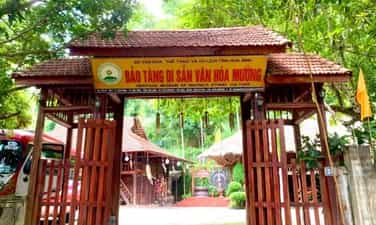
Muong Phu Tho Cultural Space Museum is like a work of art located on a romantic hill. This place seems to recreate the living space and breathe life into Muong culture to help it not fade away. Today, join us to explore the unique features of the Muong cultural space museum. Muong Cultural Space Museum is located on a small hill in a limestone valley in Phu Tho. With an area of about 5 hectares, this place was once inhabited by the Muong people in ancient times and is also the first private museum in Vietnam. Muong Ethnic Cultural Space Museum is not like other museums. Here the artifacts are displayed naturally and simply in a cool green space with blooming flowers and lush green trees. Besides, by decorating the water wheel right at the entrance, the museum vividly recreates the living environment of the Muong ethnic people. Gongs and wooden statues are also delicately decorated to help highlight the culture and lifestyle of the ancient Muong people. Not only that, the 4 stilt houses made from bamboo and palm leaves are also a special feature that many people love when coming to the Muong Phu Tho Cultural Space Museum. Each house represents a class in Muong society. The most prominent architectural highlight is the system of four original stilt houses. These are buildings that were accurately restored according to traditional structures and represent each class of ancient Muong society: Lang House: The largest and tallest house, representing the ruling class. The house structure is spacious with many rooms, moss-tiled roof, large wooden columns, and double stairs. The inside is solemnly decorated with a worship area, precious gongs and symbols of power of the Lang people. Au House: The residence of servants or trusted people in the management system of the Lang people. The architecture still retains its durability but is simpler, without a main worship space. Rooftop House: Represents the common class. The structure is more modest, using naturally available materials such as bamboo and palm leaf roofs. Inside is the living place of multi-generational families. Rooftop House: A house of the lowest class, often the simplest, with bamboo walls, straw roof, small area, but still following a typical floor structure to avoid humidity. The arrangement of 4 types of houses in order from high to low (according to the valley topography) creates a coherent complex. This is a factor that clearly reflects the social stratification system of the Muong people, a characteristic feature of indigenous culture. All works in the museum use traditional materials such as ironwood, bamboo, straw, palm leaves, mountain stones... Each house is the result of the process of dismantling, transporting from the original Muong village here and being manually restored according to the old original. This is a process that takes many years of effort, demonstrating the dedication and effort of the investor and construction team. Every detail from purlins, columns, roofs, stairs, kitchen to door frames are kept in the original spirit. This helps the space not only resemble "in appearance" but also "true in soul", evoking a new and more enjoyable feeling for everyone. Not stopping at recreating houses, the museum also cleverly integrates contemporary art into the space layout. Among them, Muong Studio is a typical space that clearly demonstrates this element. This is a modern house built with natural materials located in the heart of the jungle. Muong Studio is also a place where contemporary art exhibitions and cultural exchange events regularly take place. The combination of traditional architecture and modern breath creates a lively, multi-layered whole. This helps each person coming here feel "like returning to the past and also like discovering the future". What makes the Muong Cultural Space Museum different lies in its treasure trove of more than 3,000 artifacts. These are artifacts collected by artist Vu Duc Hieu himself during more than 10 years of traveling around Muong villages in Son La, Thanh Hoa, Phu Tho... The artifacts here are displayed in the original living space, making each item seem to be "revived" in real life. The most outstanding artifacts can be mentioned as: Traditional musical instruments such as Muong gongs, flutes, bronze drums, Muong ethnic costumes from ao dai of noble women to simple working clothes of commoners, ancient agricultural tools such as hoes, stone axes, animal traps, machetes... In addition, visitors can also enjoy delicious dishes near the Muong cultural space museum such as: heritage hot pot, spring rolls with grapefruit leaves,... Muong Cultural Space Museum is a portal to the past. This is where you can see, touch and feel a breathing culture. If you are looking for a place in the Northwest highlands where you can "pack your backpack and go" and visit the museum!
Phu Tho
1685 view


Moon Falls
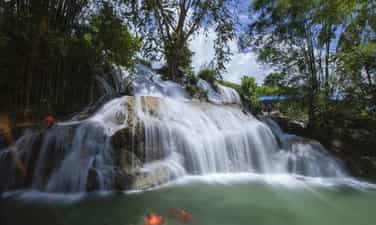
Phu Tho Moon Waterfall is a beautiful, fresh waterfall located in Tan Lac commune. This is the ideal destination to explore in the hot summer, experiencing a cool and peaceful place. Moon Waterfall in Phu Tho is known for its poetic and wild beauty, standing out among the green fields and dense forests. The heights of the different waterfall levels bring a variety of flows and gurgling water sounds, creating a lively and attractive natural picture. First floor: This is about 3 meters high, with a strong stream of water falling down creating white foam, bringing a majestic scene right at the entrance to the waterfall. Second and third floors: These floors have a more gentle slope with bumpy stone steps. In particular, the water flow in this area is more gentle, suitable for you to admire the scenery and relax. The fourth and fifth floors: These floors are characterized by a water flow divided into many small branches, winding through each stone slab, creating a poetic scene, like white silk strips between mountains and forests. Each level of Moon Falls not only provides a unique perspective on the power and natural beauty of the water but is also an ideal stopping place for you to take photos, admire the scenery or relax in the cool water. The landscape around Moon Waterfall in Phu Tho also contributes to the wild and poetic beauty of this place. Surrounding the waterfalls are green rice fields and dense forests, creating a beautiful natural picture. When sunlight shines down, the water in the small lakes at the foot of the waterfalls reflects the image of the sky and green canopy, bringing a feeling of peace and freshness. In particular, the large, sturdy stone slabs around the waterfall also create natural steps so you can rest, enjoy the scenery or immerse yourself in the cool water. The fresh air and the sound of gurgling water and birdsong resounding from the ancient trees soothe people's hearts, bringing visitors into a relaxing and quiet space. When visiting Moon Falls you can participate in many interesting activities to fully enjoy the natural beauty and explore local culture. Bathing in waterfalls and swimming are among the activities not to be missed when you come here during the season. The natural pools at the base of the waterfalls provide an ideal space for you to immerse yourself in cool water, away from the heat of summer. The water here is not only clear and cool but also very clean, allowing you to see the bottom of the lake, where the stones are covered with green moss, creating an attractive natural scene. Besides, these lakes are also very safe for both children and adults, with moderate depth, making them an ideal place for family and friends to organize outdoor activities such as picnics and swimming. This is also a great opportunity for you to relax, admire the surrounding magnificent mountain landscape and listen to the sound of gurgling water, bringing a feeling of peace and relaxation. Climbing and exploring the waterfalls at Moon Falls is a challenging and exciting experience for those who love adventure and exploring nature. Each waterfall level of Moon Waterfall has its own beauty, from the strong flow on the first level to the gentler water flows on the higher levels. Visitors can start their journey from the foot of the waterfall, gradually climb higher, exploring each floor. Although the road is somewhat slippery and requires caution, it will be extremely rewarding when you admire the breathtaking landscapes from many different angles. During the climb, you will see the clear water reflecting the blue sky and panoramic views of the surrounding forests. The sound of falling water, birds singing and the fresh air of the mountains and forests will soothe your soul, helping you feel closer to nature. Enjoying local cuisine at Moon Falls is an indispensable part of the adventure to explore the culture and nature here. When coming to Hoa Binh, you have the opportunity to try traditional Muong dishes, famous for their simplicity but full of flavor such as: bamboo-tube rice, grilled stream fish, wild boar meat, can wine and wild vegetables, etc. Around Trang Thac, there are scattered villages of the Muong ethnic group, bringing a unique and profound culture to this area. You can come to visit the traditional craft villages of the people here such as brocade weaving, crafting handicraft products from bamboo, or participate in traditional music and dance performances, imbued with Muong cultural identity. The ideal time to go to Moon Falls is from March to July of the lunar calendar every year. This is the time when the waterfall has the most abundant and fresh water, creating favorable conditions for sightseeing and bathing activities, helping you avoid the hot summer sun in the North. Moon Waterfall is a beautiful waterfall in Tan Lac commune with wild scenery, suitable for exploring on hot summer days. If you have the opportunity to travel to Tan Lac, please spend a little time Come to this waterfall to have fun, take souvenir photos and bathe in the waterfall, enjoy happy moments with relatives and friends.
Phu Tho
1638 view


Bu Hill
Bu Hill, with its wild natural beauty and interesting experiences, is an ideal destination for those who want to find peace, temporarily away from the hustle and bustle of the city. This place not only has a large space with white reed grasslands but is also an ideal place to participate in adventure activities or explore the wonderful beauty of nature. Bu Hill is a prominent landmark located only about 40 km from the center of Hanoi. Bu Hill stands out with a mountain range about 1.5 km long, with gentle hillsides, blending with the beautiful natural landscape. The wild beauty of this place has attracted many tourists, especially those who love adventure sports like paragliding. In recent years, Bu Hill has become a popular destination, not only because of its natural landscape but also because of its unique tourist activities. Bu Hill, with its characteristic beauty of reed grass, is an attractive destination every fall and winter. The ideal time to travel to Bu Hill depends on the change of reed grass season, and each period brings a distinct beauty. If you love the gentle, elegant beauty of budding reeds on a background of fresh green leaves, then late October to early November is the ideal time. At this time, the reeds are just starting to sprout, creating a fresh, cool landscape, very suitable for those who want to enjoy the fresh, peaceful air of Bu hill. However, if you want to witness the beautiful scenery of Bu hill when the reeds bloom, covering the entire hillside, then the period from mid-November to the first half of December is the most ideal time. The lush reeds covering the hillside create a beautiful natural picture that cannot be missed. Bu Hill not only stands out with its beautiful natural scenery, but is also an ideal destination for those who love exploration and adventure activities. The experiences here will bring visitors memorable memories and a wonderful feeling of relaxation. With gentle terrain, Doi Bu becomes an ideal destination for those who are passionate about the adventure sport of paragliding. Thanks to the strong and steady North wind, the monsoon season is the ideal time to participate in this activity. Paragliding flights here can reach heights of more than 1500m, giving you the opportunity to admire the panoramic beauty of the white reed grass hills and the peaceful space of nature. If you are looking for a quiet space to relax and enjoy fresh air, picnicking or camping overnight at Bu hill is a great choice. With its large space and wild beauty, Bu hill is an ideal destination for picnics, especially during the blooming reed grass season. Here, you can enjoy outdoor meals, chat and enjoy the peace in nature with your family and friends. Camping overnight on the hillside, sleeping under the stars and waking up to the cool air will give you an unforgettable feeling of relaxation. The scenery here, especially when the reeds are in bloom, is more poetic and romantic, a great opportunity for you to capture beautiful moments with your loved ones. With these exciting experiences, Bu Hill is not only a place to admire the natural beauty but also an ideal destination for those who want to immerse themselves in a peaceful space, explore and relax. Enjoying local cuisine at Doi Bu gives you the opportunity to discover the typical flavors of the region through traditional dishes and folk cakes. Against the peaceful backdrop of nature, you can try cakes such as banh te or banh chung. Besides, outdoor grilled dishes are also very popular, from grilled meat to vegetables prepared and processed on the spot, fragrant over an open fire. Traveling to Doi Bu is not only a vacation but also an opportunity for you to immerse yourself in nature, challenge yourself with adventurous activities and enjoy a peaceful, quiet space. With beautiful landscapes and diverse activities, Bu Hill will definitely be a destination not to be missed in the journey to explore new lands. Plan your trip and don't forget to capture memorable moments here.
Phu Tho
1567 view


Yen Duc village tourism
Are you looking for a new tourist destination, different from the hustle and bustle of the city? Come with us to Yen Duc - a peaceful, rustic village, where you can experience traditional Vietnamese village culture in the most authentic way. Traveling to Yen Duc village is an opportunity for you to escape the worries and sorrows of daily life, to find the peace and serenity of the Vietnamese countryside. Located about 20km from the center of Dong Trieu town, Yen Duc village tourist area is located in Yen Khanh village, Yen Duc commune, providing visitors with a peaceful space, completely separate from the hustle and bustle of the city. The tourist area has a large area of up to 72.26 hectares, where visitors can freely explore and experience the simple beauty of Vietnamese villages. This place possesses a charming landscape, with green rice fields and towering areca palm trees silhouetted against the water surface, creating a beautiful ink painting. In particular, during the flood season, Yen Duc becomes even more poetic with roads submerged in the sea, giving visitors a strange feeling of peace. Houses bearing the mark of time, with moss-tiled roofs and rough brick walls, create the ancient and idyllic beauty of Vietnamese villages. The people here are famous for their gentleness and hospitality, always ready to welcome tourists to visit and experience local culture. Yen Duc village is hidden among lush green rice fields, endless green bamboo groves and ancient roofs, giving visitors a feeling of peace and serenity. This place is not only attracted by its simple beauty but also by the friendliness and hospitality of the local people. It is these factors that create the attraction for the Yen Duc village tourism model. Coming to Yen Duc, visitors will experience peaceful moments when cycling leisurely on village roads, inhaling fresh air and admiring the poetic natural scenery. On the journey of discovery, visitors will have the opportunity to meet friendly local people, always with bright smiles on their faces. Ready to share stories about Vietnamese culture and customs, introduce an ancient house more than 100 years old or lead visitors to visit famous historical and cultural relics such as Canh Mountain, Dong Thuy Mountain, Con Mouse - Con Meo Mountain, Cave 73, Canh Huong Pagoda... Coming to Yen Duc village, visitors will not only be able to immerse themselves in peaceful nature, experience agricultural life, but also have the opportunity to explore unique folk culture and art. of Vietnamese people. What especially attracts tourists are the art performances performed by amateur "artists" - honest farmers after a hard day of work in the fields. With brilliant traditional costumes, bright smiles and enthusiasm, the farmer "artists" bring visitors smooth, passionate Quan Ho melodies, or captivating cheo and adoration dances. Each performance is a legendary story, a cultural beauty conveyed through lyrics and singing, giving visitors authentic and unforgettable emotions. Besides, visitors can also enjoy a unique water puppet show. The performance stage is arranged outdoors, in a spacious and airy space, creating a comfortable feeling for visitors. Meticulously crafted puppets, along with music and lively narration, bring visitors to familiar folk stories and excerpts associated with Vietnamese village life. The most impressive highlight in Yen Duc village is the opportunity for visitors to transform into real farmers. Under the enthusiastic guidance of local people, visitors will start an exciting "working day" with familiar jobs of Vietnamese villages. Tourists will be guided in cultivating rice, harvesting rice, catching fish, growing vegetables, and producing rice using traditional methods. Each grain of rice sown, each branch of vegetable cultivated carries the enthusiasm and meticulousness of the people here. The special thing that attracts tourists when coming to Yen Duc village is the opportunity to experience living with local people. Instead of staying at regular hotels and motels, visitors will be immersed in the simple, rustic rhythm of Vietnamese village life. Visitors can experience the simple and rustic lifestyle of the people here. Participate in daily labor activities such as cooking, cleaning the house, chatting, and playing with children. Thanks to that, visitors have the opportunity to better understand the lives of local people and appreciate traditional cultural values. Yen Duc village is an attractive tourist destination with many interesting activities, suitable for those who want to find peace, relaxation and experience traditional Vietnamese village culture. Come to Yen Duc to keep unforgettable memories in your journey to discover the beauty of Vietnamese countryside!
Quang Ninh
1695 view


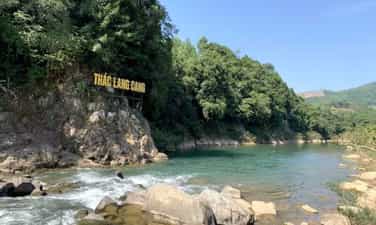
Lang Cang Waterfall
Lang Cang Waterfall in Quang Ninh attracts tourists because of its wild, dreamy natural beauty amidst the mountains and forests. Coming here, you will have time to enjoy peace and relaxation in your soul. Lang Cang Waterfall is the ideal check-in location for nature lovers when traveling to Quang Ninh. With fresh air and a large blue lake, this place is suitable for organizing picnic activities, or experiencing swimming, boating... The topographic feature of Lang Cang waterfall is not a cascading waterfall, but a gentle waterfall with a moderate slope. The length of the main waterfall is about 200m and the buffer lake is nearly 2km long. The waterfall is surrounded by rich vegetation, green mountains and hills, and brilliant flowers. At the foot of the waterfall there is a lake 20 square meters wide, about 1 meter deep, at adult shoulder level. This is a natural lake formed after water poured down from the waterfall. The lake water has a clear blue color, like a jade in the middle of the mountains and forests. With cool temperatures all year round, Lang Cang waterfall becomes an ideal destination for tourists to admire the scenery, bathe in streams and experience many interesting activities. At each time of the year, the beauty of Lang Cang waterfall in Quang Ninh is like "changing new clothes". During the winter, which is also the dry season, the stream has a gentle appearance, the water flows gently and gurgling. But during the rainy season, the strong water flows rapidly through the rocks, creating white foam. Therefore, no matter what season you go, you can admire the beauty of Lang Cang. Lang Cang Waterfall possesses the advantages of natural conditions, along with a mild and cool climate all year round. Therefore, visitors can enjoy sightseeing, swimming, boating... when visiting this place. Over time, nature at Lang Cang waterfall remains intact. The charming scenery of mountains, rivers and streams is as beautiful as a watercolor painting that captivates every tourist. Therefore, immersing yourself in the wild and open nature in Lang Cang becomes an unforgettable experience for visitors. With a large lake at the foot of the waterfall and a depth of only about 1m, Lang Cang waterfall is suitable for activities such as boating, SUP... You can freely sail on the clear blue water, enjoying the feeling of relaxation and comfort in the mountains and forests. Lang Cang Waterfall is the ideal place for people to enjoy the feeling of being immersed in nature. On weekends or holidays, you can go with your family and friends to the waterfall to have fun and picnic. Organizing a BBQ party together, singing songs, participating in group games will strengthen the bond between family and friends. During a picnic by Lang Cang waterfall, you can enjoy local products in Ba Che district such as stream fish, hill chicken, black geese, eggplant... At the same time, don't forget to enjoy the specialty yellow flower tea picked directly from the vast tea gardens of the district. Lang Cang Waterfall is an ideal stop for tourists on their journey to conquer the majestic nature of Quang Ninh province. Nestled in the middle of the jungle, the waterfall possesses beautiful beauty and many exciting activities for visitors to experience. The journey back to the pristine nature in Lang Cang will help visitors find peace after the hustle and bustle of life. If you are looking for a relaxing destination near Hanoi, then stop by Lang Cang Ba Che waterfall!
Quang Ninh
1738 view


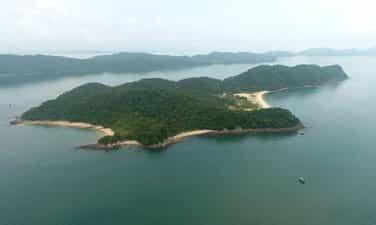
Erecting Stone Island
Nestled in the Bai Tu Long Bay complex, Da Dung Island in Dam Ha commune, is considered the "sleeping princess" not only of Quang Ninh but also of Northern sea tourism. This place stands out with its towering limestone blocks, diverse marine ecosystems, primeval mangrove forests and long white sand beaches, still retaining its rare wild beauty. The small island is located in the heart of Quang Ninh's waters, possessing poetic natural beauty. Here, the jade green of the sea blends with the green of the trees and the pure white of the sand, creating a beautiful picture. On the island, undulating limestone mountains and steep cliffs look like massive walls, contributing to the unique and majestic landscape. It is these steep cliffs that explain the name of the island. Located about 5km from the mainland, Da Dung island is one of the pristine islands, rich in potential for exploiting marine eco-tourism in Dam Ha district. With an area of about 23 hectares, the island possesses a unique terrain, including steep cliffs, interesting shapes, surrounded by clear blue water and a diverse mangrove ecosystem. In addition to breathtaking scenery, Da Dung Island is also home to many species of rare seabirds and aquatic products and is an ideal destination for camping, nature exploration, kayaking or diving to see coral. The pristine, quiet and unique landscape are the advantages that help the island become a potential tourist experience and resort destination. The gentle sunshine, gentle sea breeze, and whispering waves dispel all fatigue after the journey. The beach is about 800 meters long, curved like a crescent moon, covered with smooth white sand, sparkling in the sun. The rocks are covered with green moss, creating a magical scene, attracting the curiosity of visitors. The sea water here has a unique jade green color, so clear that you can see through it to clearly see the sea creatures hidden at the bottom or the colorful coral reefs. Not only possessing a poetic landscape, Da Dung also attracts us with exciting experiential activities such as: fishing, squid fishing, sea snail catching, crab catching, etc. If you are lucky enough to set foot on the island during the blooming flower season, you will be lost in a beautiful scenery. Purple flowers cover the entire mountain top, a sight that you have probably only seen in pictures before. Da Dung Island has a wild, original beauty. From sea snails with thorny shells to primeval forests that are green all year round, everything exudes pure natural beauty. Dam Ha tourist destination Quang Ninh has fresh, quiet air, making people's souls relax, as if liberated from the hustle and bustle of urban life. The wild and beautiful beauty of this place is covered by clear sea water, smooth white sand beaches stretching across the island and unique rocky outcrops with strange shapes. This is one of the tourist destinations not to be missed when visiting Dam Ha, which brings visitors wonderful and unforgettable experiences.
Quang Ninh
1688 view


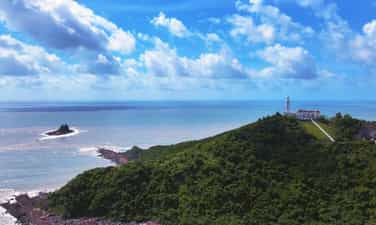
Vinh Thuc Island
The pristine and peaceful Vinh Thuc Island is an ideal destination for a vibrant summer in the sunny and windy land of Quang Ninh. Set out to explore this exciting destination with countless exciting and unique experiences. Vinh Thuc is also known as the "muse" of the Northeast coast with its peaceful, wild beauty. The island has an area of about 5,000 hectares, including two communes: Vinh Thuc and Vinh Trung. Separated from the mainland, Vinh Thuc wears a fresh natural mantle with long beaches, smooth white sand, and clear jade-colored sea water. Rows of green casuarinas rustle in the wind, embracing the entire coastline like a charming watercolor painting. Not only does it have blue sea and white sand, Vinh Thuc also possesses a diverse ecosystem. The vast primeval cajuput forests, shaded with green trees, are home to many rare species of birds and animals. During the blooming myrtle season, the whole island seems to be dyed purple in a romantic color, creating a poetic natural scene that fascinates anyone traveling to Quang Ninh. Vinh Thuc Island has its own beauty all year round. However, the most ideal time to come here is from April to October. Summer here has warm sunny weather, calm sea, calm waves, suitable for swimming activities, playing on the sand and participating in unique underwater games. In addition, around September and October is also the season for fishermen to catch seafood. You can join the fishermen going out to sea, experience fishing work and enjoy fresh dishes made from directly caught seafood. In addition, March and November are also good choices because the weather is relatively cool, the sea is calm and not too crowded. Upon arriving on the island, visitors can first choose to explore two beautiful beaches: Dau Dong beach and Ben Hen beach. At these two beaches, you will experience the wonderful feeling of immersing yourself in cool, clear blue water. Or you can swim around, play with the gentle waves, and enjoy the gentleness of the sea. With a pristine and peaceful beach, you will feel like you are lost in a quiet space, have fun and immerse yourself in the majestic natural picture. Vinh Thuc Lighthouse is one of the destinations that tourists should not miss when arriving on Vinh Thuc Island. On the journey to Vinh Thuc lighthouse, visitors will have to travel a distance of about 15km, passing through mountains, lakes and peaceful houses. Although you have to go a distance of 15km, in return you will be able to admire the panoramic view of the vast sea surrounding the island. The lighthouse is designed in French architectural style, with a height of up to 18m. Vinh Thuc lighthouse stands quietly in the middle of the Northeast sea and sky and has always fulfilled its mission in the face of dangers and hardships. Checking in at the top of the light tower, you will see a picturesque scene with Dau Dong beach on one side and Sa Vi Cape on the other. In addition to admiring the majestic and poetic natural beauty, coming to Vinh Thuc island, visitors can also experience the life of fishermen on the island. People on the island live mainly by seafaring and farming. You can participate in fishing with fishermen to better understand the lives and work of fishermen here. Coming to Vinh Thuc, the journey of discovery will not be complete if you miss fresh seafood dishes with bold flavors of the sea. All year round, the sea around the island provides an abundant source of seafood, which is the main ingredient for local people to process into special dishes. The aroma of seafood grilled over charcoal blends with the cool sea breeze, stimulating the taste buds. This is also an opportunity for you to enjoy rustic dishes with typical flavors of the sea such as fish cake, crab soup, sour clam soup... Vinh Thuc Island is one of the beautiful and pristine islands that you should not miss during your trip to Quang Ninh. This island is suitable for tourists who are looking for a peaceful, quiet place to mingle with nature and the sea.
Quang Ninh
1724 view


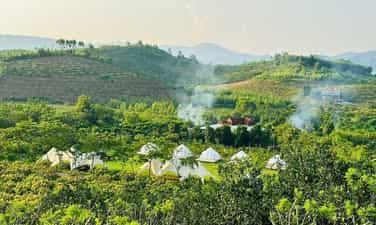
Ho Bau Tien eco-tourism area
Ho Bau Tien ecological area in Bac Ninh is located only about an hour's drive from Hanoi from the city center. Visitors can freely enjoy fresh air, live slowly and experience many interesting outdoor activities on holidays and weekends. Bac Ninh province is a famous fruit production region in the North. With mountainous terrain, mild climate, abundant water resources and fertile soil, this is a favorable place for tourism. Ho Bau Tien eco-tourism area is under the management of Dong Giao Tourism cooperative in Quy Son commune, established to serve tourists with many unique experiences; so you can relax and enjoy the natural beauty, temporarily forgetting your daily worries. Bau Tien Lake tourist area is 26 hectares wide with a peaceful landscape located only 5km from Chu town, surrounded by vast fruit gardens, next to a hundreds of hectares of lake with great potential for developing community eco-tourism to attract tourists. There are many fruit trees around, such as oranges, grapefruits, and lychees. In addition, there is Bau Lay Lake with an area of more than 80 hectares, connected to Khuon Than Lake, which is a cultural convergence point of many ethnic groups such as Tay, Nung, Hoa, San Diu, San Chi,... creating diversity and richness for you to explore when traveling to Bac Ninh. The appropriate time to go to Bau Tien Lake tourist area is from September to April every year. At this time, the weather is cool and the climate is mild, fruit trees are abundant and suitable for picnicking, exploring fruit gardens and camping outdoors to enjoy the fresh air. People can also come from May to June to harvest lychees and enjoy the beauty of the bright red lychee hills and special lychee harvesting activities. This ecological area is likened to a land of lush green gardens. Come here to experience harvesting and enjoying typical local fruits. Experience traveling to Bac Ninh, you will have the opportunity to immerse yourself in the lake and enjoy the fresh natural scenery with vast hills of fruit trees. This beautiful landscape will surely make visitors unforgettable. Besides, Bau Tien Lake ecological area in Bac Ninh also has many interesting experiential activities to make your vacation and your family more meaningful. You can participate in harvesting fruit trees such as: lychee, longan, grapefruit, grapefruit, orange, tangerine,... and enjoy those delicious fresh fruits right in the garden. Don't forget to visit the livestock farm to have fun with animals such as goats, sheep, horses, rabbits... Bac Ninh is one of the birthplaces of many leading traditional craft villages such as noodle village, wicker making, pottery making,... For those who love to explore and are passionate about art, visiting these places is an extremely interesting activity. Visit and learn about the work of local people and experience making your own products yourself. Bau Tien Lake is large, the water surface is clear and calm, so when coming to this Bac Ninh tourist destination, not only can you enjoy the feeling of relaxation but you can also participate in many recreational activities on the lake such as: SUP boating, kayaking, banana boat riding, duck riding or renting a boat to take you to visit the lake,... Bau Tien Lake eco-tourism area has wooden huts stretching out into the lake, with thatched roofs that look like beautiful little bird's nests from above. After sightseeing and having fun, you can go there to rest, the bungalow with lake view is super romantic. Or bring a tent to camp and picnic among the vast grass hills. Gather together to enjoy delicious dishes with local flavors. In the evening, we had fun singing and dancing, and we forgot about time. You can combine visits to nearby tourist attractions such as Khuon Than Lake, Cam Son Lake, Kien Thanh Market... Although Ho Bau Tien Ecological Area has just been invested and exploited, with its natural potential and attractive tourism services, this location promises to be an ideal sightseeing and picnic spot near Hanoi. No need to go too far so you can immerse yourself in the fresh landscape and enjoy the delicious specialties of Bac Ninh.
Bac Ninh
1725 view


Van Hoa Ho Va eco-tourism area.
This eco-tourism area is located only about 30km from the city center. It is known that this is a newly opened community tourism destination and has attracted the attention of tourists, becoming one of the important highlights of Bac Ninh tourism. Van Hoa Ho Va community eco-tourism site was invested and built by Van Hoa Ho Va Cooperative. The tourist destination has an area of about 400 hectares, including a valley and lake bed surrounded by overlapping low hills and mountains, creating a charming landscape, helping to relax and heal after a stressful working week. Although it just came into operation in early 2024, Van Hoa Ho Va community ecotourism site has quickly become a favorite tourist destination for people inside and outside the province, bringing visitors many interesting experiences, thereby becoming a highlight of Bac Ninh tourism. The space here is green and fresh with charming mountains, hills and lakes. Tourists coming here can mingle with nature and immerse themselves in colorful flowers. At the tourist area, there are currently dining, entertainment, and resort services with a chain of restaurants, coffee shops, community houses, bungalows... The space here is not only suitable for families and groups of friends to have fun, rest, and relax, but is also suitable for groups of up to dozens or hundreds of people to organize events and group bonding activities. Coming to Van Hoa Lake Va tourist destination, visitors can enjoy swimming in the spacious swimming pool, speed canoeing on the lake, duck riding, boating and the rainbow carpet skating area. In addition, Van Hoa Ho Va tourist destination has a separate play area for children with a variety of games such as ferris wheel, electric car, roller coaster, duck pedal, farming area, animal husbandry... Van Hoa Ho Va community tourist destination promises to increasingly attract a large number of tourists inside and outside the province to visit, experience and rest. What are you waiting for? Come visit this place to enjoy the fresh air and relax on the weekend!
Bac Ninh
1734 view


Dong Thong
Visiting Dong Thong Bac Ninh is an ideal eco-tourism journey for those who want to return to nature, explore unique culture and relax in a peaceful space. With a combination of natural beauty and cultural values, Dong Thong promises to bring visitors wonderful and unforgettable experiences. Join us to discover what is so special about this place that everyone loves so much! Dong Thong is a famous ecotourism destination located in Tuan Mau commune, Bac Ninh province. This place possesses wild beauty, pure nature and the typical cultural richness of the people of the Northeast mountainous region. With a diverse ecosystem and charming landscape, Dong Thong in Bac Ninh is not only an ideal place to relax but also a place to discover unique cultural and historical values. Located in the West Yen Tu tourist route, this area is considered an ideal stop before conquering Phu Van Yen Tu peak from the West. Dong Thong offers the experience of immersing yourself in nature, where you can feel the peace and quiet different from the pace of urban life. Located in a mountainous area, Dong Thong is surrounded by lush green forests and vast grasslands. In addition to the beautiful natural landscape, this place is also a place to preserve many rare species of animals and plants, some of which are on the strictly protected list. Dong Thong is an eco-tourism area, so the most ideal time to visit is during the dry season from March to September. This is when the weather is cool, mild sunshine, very suitable for nature exploration, camping and picnic activities. In particular, in the summer from June to July, visitors have the opportunity to enjoy the ripe red lychee season, one of the specialties of the Bac Giang region. In autumn, the scenery here becomes more romantic than ever, with the forests turning yellow and the air chilly. This is an attractive destination with wild natural beauty, unique cultural features and the peace of the Northern countryside. Located in Bac Ninh province, Dong Thong is not only an ideal place for those who love to explore nature, but also a destination to learn about the lives of local people and traditional customs. Dong Thong area in Bac Ninh is considered a natural treasure with more than 760 species of plants and 400 species of animals, including many rare species. The green pine forest combined with diverse vegetation creates a beautiful natural picture, attracting those who love to explore. When you come here, you will feel the fresh air, different from the stuffiness of the city. Stretching green grasslands combined with surrounding mountains and forests bring a feeling of relaxation and gentleness. This is also an ideal place for weekend picnics or camping with family and friends. At Dong Thong, visitors can participate in many interesting activities such as mountain climbing, walking through the forest, sightseeing, and taking check-in photos in nature. The trails leading to the top of the mountain help you fully enjoy the wild beauty of this land. Dong Thong in Bac Ninh not only stands out with its beautiful natural landscape, but also with its unique and special features that visitors can hardly find in other places. Here are some interesting things only found in Dong Thong Bac Ninh: Dong Pagoda, located on the top of Yen Tu mountain, is a highlight not to be missed when coming to Dong Thong. The pagoda is made entirely of bronze, built by King Tran Nhan Tong and is considered the largest bronze pagoda in Southeast Asia. Dong Thong is also home to the Dao ethnic group. You can visit Non market to enjoy the specialties of leaf yeast wine and pure forest honey. In addition, this is also an opportunity to learn about unique rituals such as the rain praying ceremony, the new rice offering ceremony and the Dao people's ceremony. Don't forget to enjoy Bac Ninh's specialty dishes such as buffalo meat, grilled hill chicken, and Ke rice paper. Each dish has a rich, unforgettable flavor. If you have the opportunity to visit Bac Ninh, don't forget to set foot in Dong Thong to have the opportunity to fully enjoy the beauty of Dong Thong Bac Ninh, immerse yourself in the beautiful natural space and immerse yourself in the rich and unique culture of the locality!
Bac Ninh
1645 view


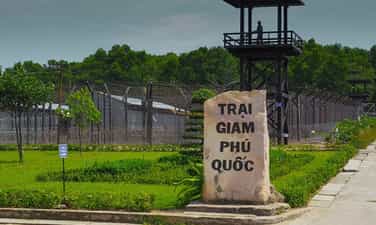
Phu Quoc Prison
If you set foot on Pearl Island, don't forget to visit the historical Phu Quoc prison - a place that witnessed many tragedies and heartbreaking events in the history of the Vietnamese people. Come explore with us! Phu Quoc Prison, formerly known as Cay Dua Prison, was a detention center for more than 40,000 political prisoners during the Indochina war. Coming here, you will feel the patriotism, resilience and mental and physical pain of the soldiers when detained and tortured here through the restored statues. Within 6 years, from 1967 to 1973, more than 4,000 people here were tortured to death, and tens of thousands of others were injured and disabled for life. In 1995, the prison was recognized as a national historical site and opened its doors to visitors to create conditions for them to learn and commemorate the events and heroes who died here. Located 28km from the center of Duong Dong Town, the prison is located at 350 Nguyen Van Cu Street, Phu Quoc Special Zone, An Giang province. Each season in Phu Quoc has its own beauty. In the dry season, Phu Quoc's weather is dry, cool, and the outdoor temperature is low, so this is the golden time for you to visit the monuments and travel outdoors. However, it should be noted that this is the peak tourist season so it may be very crowded. On the contrary, in the rainy season, the number of tourists will be less and prices are often lower. Although the weather is cool and the air is fresh, there can be sudden rains. If you come to the monument during the rainy season, you need to prepare dark clothes, sandals (to limit stains that give you a headache) and an umbrella. Entering the ruins, you will be impressed by the massive barbed wire fences and pristine prison camps. Phu Quoc Prison has a total of 12 areas divided into regular cells and solitary confinement areas. The solitary confinement areas have an area of about 30 square meters, but during peak season they can accommodate up to 180 people. POWs have to take turns sitting and lying down in this cramped space. Besides, the models reconstructing scenes of imprisonment and brutal torture here may make you unable to hold back your tears. Models that recreate torture can include: Nailing models, tiger cage models, barrel knock models, chisel models, teeth breaking models, etc. After witnessing and hearing about the painful history, don't forget to visit the memorial to light incense sticks for more than 500 soldiers who died by brutal torture here. The memorial was built in 2013, designed with a symbol of a wave over 5m high on one side, and in the middle is a pointed block with a hollowed-out human figure with the meaning in the middle of "people who left from that place". Division B2 of Phu Quoc Prison, also known as the solitary confinement area, is a reconstructed area of more than 17,000 square meters to most realistically recreate the lives of political prisoners during the Vietnam War. Restored items such as: prison gate, guard tower, fence, kitchen, dining room,... Here you will discover items from the war period and better understand the life of prisoners of war here. Phu Quoc Prison consists of 12 zones, each zone is 100m apart. Each zone has 11 houses with 9 cells, tiger cages and 4 zones with solitary confinement houses. The buildings here are mostly solidly built with tin and cement and many interlaced barbed wires, completely separate from the outside. After visiting Phu Quoc prison relics, visitors can enjoy local specialties to recharge for the next journey. Below are suggestions for 3 delicious dishes you should try: Phu Quoc mixed vermicelli; Herring salad; Squid noodle soup... Near the Phu Quoc prison area, there are many famous tourist areas such as: Bai Sao; Quoc Ho Pagoda; Phu Quoc pepper garden.. If you set foot in Phu Quoc, don't forget to visit Phu Quoc Prison so you can have unforgettable emotional experiences in the once "hell on earth" at sea!
An Giang
1939 view


Ba Chua Xu Temple at Sam Mountain
Chau Doc, a place associated with sacredness; with the feng shui of the pre-three rivers, the post-that and mysterious mountains and many religious beliefs that have existed for a long time. Speaking of this land; People cannot help but remember Ba Chua Xu Temple in Sam Mountain as the most famous spiritual Western tourist destination in the region; that even Vietnamese people abroad still know about. Ba Chua Xu Temple is located at the foot of Sam Mountain in Sam Mountain ward; Chau Doc city, An Giang province. Ba Chua Xu Temple has many mysterious legends surrounding the birth of the temple; passed down from generation to generation. With holiness and fulfillment; The wish is expected to make Ba Temple attract millions of visitors every year to visit and pay their respects. Especially every time Tet comes and Spring comes. Ba Chua Xu Temple in Sam Mountain, Chau Doc, in the past, was just a simple wooden house with thatched walls for worship, but now it has become an architectural work bearing the mark of Eastern culture. Ba Chua Xu Temple in Sam Mountain Chau Doc is a destination that you can visit at any time of the year. However, many people still choose to visit her on Lunar New Year to pray for peace in life. In addition, visitors often choose to visit her on the 24th to 27th day of the 4th lunar month. This is the time when the Ba Chua Xu Festival of Sam Mountain takes place. Therefore, at this time, Ba Temple is extremely crowded and bustling, especially on the 25th because this is the main astral day. Ba Chua Xu Temple in Sam Mountain, Chau Doc, was started construction by Mr. Thoai Ngoc Hau in the past. Initially, the temple was built with a wooden structure and a quite simple design. Later, people were grateful to Ba Chua Xu for helping the locality have good weather and protecting the village, so they donated and built a quite spacious and neat temple to worship her in 1870. The architecture of the temple to worship her has cultural and artistic qualities. High above the main hall, there are extremely powerful and majestic statues of gods holding out their arms to support the ends of the rafters. The frame, door and details of the temple are carved, engraved, and decorated with utmost sophistication and splendor. By 1976, Ba Temple was almost completed in construction. The architecture of Mieu Ba Temple looks like the word Quoc from above, with tower blocks surrounded like a blooming lotus flower. The main hall of Ba Temple consists of two layers, with the innermost layer being a place of worship with a statue of her sitting on a high pedestal, next to which are placed two white cranes symbolizing her ancestral spirit. The incense altar on the right side of the Lady statue is a stone linga, called the Cau altar. On the other side is an incense altar worshiping a wooden statue carved in the shape of a yoni (female vitality), called the Co altar. The second layer, next to the two phoenix statues, is the Council altar. On the left and right sides of the Council altar is the altar of Early Sages on the left and on the other side is the altar of Later Sages on the left. The campus is extremely spacious and airy with shady green trees and many beautifully shaped scenes. The highlight for the space is the bright colors of flowers. In the evening when the lights come on; The space of the ancient temple is even more sparkling. Visiting the temple; Light incense to pray for peace and good things for yourself and your family; You can climb to the upper floors of the temple; admire the scenery from above; turn your eyes to the distance; You can see the whole corner of the city. Ba Chua Xu Temple in Sam Mountain, Chau Doc is not only a spiritual destination but also a cultural symbol of An Giang. Coming here, visitors will not only experience the sacred space and pray for good things, but also have the opportunity to learn about the history, culture and people of the Mekong Delta. One day, if you have the opportunity to come to the rich land of An Giang, come here to visit and pray for the best things in life.
An Giang
1807 view


Rach Gam - Xoai Mut historical relic site
Besides famous attractions such as Cai Be Floating Market, Tan Thanh Beach or Truc Lam Chanh Giac Zen Monastery... Dong Thap also has a long-standing historical site that few people know about, which is the Rach Gam Xoai Mut Relic Area. Rach Gam Xoai Mut victory relic site is located in Kim Son commune, Dong Thap. This place is located on the banks of the Tien River and about 12km from My Tho city. This is a commemorative work marking our people's victory against foreign invaders. Currently, this relic is located in a quite beautiful location, suitable for tourists to visit with a total area of more than 2 hectares. Don't miss this place in your Travel Guide! Rach Gam Xoai Mut victory relic area has the following areas: Exhibition house No. 1: of the Rach Gam Xoai Mut Victory Relic Area has an area of about 135 square meters. This is the place to display ceramic paintings and many artifacts related to the battle such as weapons of the Tay Son army and the Siamese army. Most of these artifacts were found below the riverbed where the fierce battle took place. Pavilion No. 2 is about 132 square meters and is home to a collection of 546 artifacts including weapons and vehicles used by both sides. Southern ancient house: This house is divided into 3 rooms, 2 wings, 48 wooden columns, yin and yang tiled roof. This place has an area of 225 square meters. The space inside the ancient house is used to recreate the lives of rich farmers in the South in the past. This ancient house has been restored and moved intact from Go Cong district. Monument to Nguyen Hue at Rach Gam Xoai Mut Victory Relic Area: At Rach Gam Xoai Mut Victory Relic Area, there is also a monument to national hero Nguyen Hue located right in the central area. The statue is made of bronze, weighs 20 tons, is 8 meters high and is placed on a pedestal simulating the shape of a warship. The statue is designed in a heroic sword-drawing posture. Not only that, next to the statue there is also a soldier holding a bow and an indigenous person rowing a boat, forming a perfect unity. The Rach Gam Xoai Mut victory relic site was also ranked as a national monument by the Ministry of Culture and Information on December 2, 1992 and by the Ministry of Culture, Sports and Tourism as a special national monument. In addition, after visiting this place, you can also visit many other extremely hot places such as Cu Lao Tan Phong, Con Quy... Don't forget to buy some Dong Thap specialties such as Ngu Hiep Durian, Trung Luong Plum or fish sauce as gifts for friends and relatives. If you are looking for a historical tourist destination, don't hesitate any longer and pack your suitcase to visit Rach Gam - Xoai Mut Dong Thap Historical Relic Area to experience it!
Dong Thap
1867 view


