Relic point Vietnam
Việt Nam
Cang and Nghia Lo Fort
Nghia Lo Cang and Fort relic area is located on the main road of Dien Bien road (National Highway 32). This is the center point of Nghia Lo town and the Muong Lo field basin. When mentioning the history of Cang and Nghia Lo Fort, we refer to the place Van Chan and the history of this place during the resistance war against the French in the 40s of the twentieth century. With the intention of extinguishing our revolutionary movement, the French colonialists set up "special labor" camps to capture patriots and put them in concentration camps. After Cang Ba Van (Thai Nguyen) was dissolved, the French colonialists brought imprisoned patriots to Nghia Lo. In the summer of 1944, governor Van Chan mobilized the governors and communes to arrest husbands and submit materials to build the Cang. The French colonialists also sent Dinh Van Dung and Lam - Be from the district secret police department to urgently inspect day and night. By January 1945, construction was completed. Looking at the overall scene at this time, Nghia Lo Cang looks like a vertical cabinet with three long rows of houses. "Two rows are where political prisoners are detained for men, the inside is where political prisoners are detained for women, the outside is a permanent place and the outside is a place to detain political prisoners. Next to it is the guard station of green loincloth soldiers. Surrounding the entire Cang - Don area is a barbed wire fence, outside the fence is a deep tunnel with spikes, the Cang corner tank has a towering hut, carefully guarded day and night. The fierce fighting of our army and people with the incident of destroying Cang - Nghia Lo Fort, liberating Van Chan for the first time in 1945, are truly extremely heroic pages in history. Van Chan is a large district, located in the west of Yen Bai province, the terrain is a mountainous and forested area, with many high mountains and caves, and is a strategically important military position. retreat and take a defensive position". Therefore, the French enemy set a goal to conquer Van Chan. To carry out that intention, on October 2, 1947, they led troops to retake Van Chan, with the intention of attacking quickly and using strong military force and advanced weapons. The French colonialists wanted to subjugate the people of the Van Chan ethnic groups by shooting and killing in an extremely barbaric manner. Capturing Van Chan, the enemy relied on his henchmen to establish a governing apparatus from district to commune; At the same time, Nghia Lo station was established as the strongest military subdivision among the four subdivisions in the Northwest region of Vietnam. After setting up posts and setting up a governing apparatus, the French enemy carried out a plot to divide and rule, using people from one ethnic group to kill people from another ethnic group, using war to feed war; They turned the puppet army and puppet government system into a tool to oppress and exploit people of all ethnicities. They beheaded, disemboweled, and gutted some of our officers and soldiers. Then they used the stone mound on Ngoi Lao as an execution ground to execute 76 officers and soldiers in the middle of the rushing water. During nearly 5 years (1947 - 1952) of occupying Van Chan, the French killed and injured more than 300 people, leaving about 56 people missing. Thousands of children from all ethnic groups were forced to work as mercenaries for them, holding guns to shoot back at their compatriots and burning down their homeland's forests and mountains. In addition to shooting and killing, they also burned houses, destroyed rice, stole cattle and thousands of tons of food, and raped women and children. They forced the people to live right at the foot of the post to cut off contact with the Viet Minh and get them used to barbaric shooting and killing. Even more cruel, they also made fences with the bones and flesh of their compatriots to block the attacks of our troops. Small things like potatoes, cassava roots, rice bowls, rice bowls, and the most precious human things, the soul and body, are all snatched away by them and belong to the police station. Faced with the carnage of guns and bullets, the people of the Van Chan ethnic groups aroused deep resentment against the enemy, arousing faith, affection and patriotism, believing in the Viet Minh, believing in the resistance. Our people rose up with the spirit of determination to fight, determination to win and achieved victory at 5:30 a.m. on October 18, 1952. It was the support of our compatriots and the determination to win independence and freedom for the Fatherland that urged our army and people to fight, achieving a resounding victory in the fall of 1952, liberating Nghia Lo. To commemorate the heroic battles, on July 25, 1992, the People's Committee of Van Chan district built "Nghia Lo Cang Memorial". Currently, the Nghia Lo Cang - Fort relic area includes: Nghia Lo Cang Monument, Nghia Lo Victory Monument bearing the image of Uncle Ho's soldiers and people of all ethnic groups in the campaign to liberate Nghia Lo in October. in 1952, along with the stele inscribed with the names of martyrs. On September 27, 1996, the Minister of Culture and Information recognized Nghia Lo Cang and Fort relics as a National Historical Relic Area. Source: Yen Bai province electronic information portal
Lao Cai
5323 view
Rating : National monument
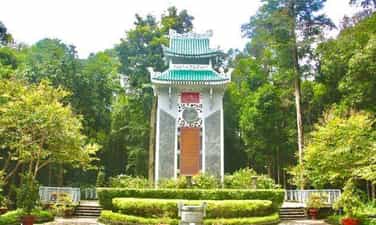
Northwest Party Committee
Location of the Northwest Party Committee is in Chanh village, Phu Nham commune, Van Chan district, Yen Bai province, 12km east of Van Chan district capital, 80km northeast of Yen Bai city. The headquarters of the Northwest Regional Party Committee from November 1953 to the end of 1954 was Chanh village, Phu Nham commune, Van Chan district. Previously, Chanh village was called Chanh Quan village, but due to the increasing population density, Chanh Quan village was split into two villages: Quan village and Chanh village. In the 19th century, around 1873, when the Yellow Flag invaders (remnants of the Thai Binh Thien Quoc - China peasant uprising movement) were attacked by Doi Tai (according to Thai reading, the official name is recorded in history books). Diep Tai) led the army to invade Muong Lo land, Phu Nham people heroically stood up at the call of the Thai leader Cam Ngoc Hanh against the Yellow Flag invaders. In 1875 - 1896, in response to King Ham Nghi's Can Vuong decree, the anti-French colonial movement led by Nguyen Quang Bich developed rapidly. In Yen Bai, operational centers of the insurgents were formed in the Dai Lich and Muong Lo basin areas... during that time, people of all ethnic groups in the above locations were united with the insurgents. against the invaders and the people of Phu Nham commune also enthusiastically participated in those activities. To prepare to liberate the Northwest region from French colonial occupation, in May 1952 the Party Central Committee and President Ho Chi Minh decided that the four provinces of Yen Bai, Lao Cai, Lai Chau and Son La separated from Viet Bac and Son La inter-regions. under the direct leadership and direction of Region XX (predecessor of the Northwest Region Party Committee). In mid-1953, the Central Committee mobilized Comrade Tran Quyet - Secretary of the Son La Provincial Party Committee to add to the Regional Party Committee, the Northwest region police director, Mr. Lo Van Muoi - Member of the Son La Provincial Resistance Administrative Committee to take over. work in the District. In May 1952, the headquarters of zone XX was located in Dong Ly village, Yen Binh district, Tuyen Quang province (now Yen Bai province). On October 14, 1952, the Northwest campaign began. In just ten days, we liberated a large area on the left bank of the Da River, including the districts of Van Chan, Than Uyen (Yen Bai), Phu Yen and one district. Quynh Nhai district (Son La); After that, our troops launched the second phase of the Northwest campaign, by the end of December 1952, liberating most of the Northwest (except for Na San base and Lai Chau town). To deepen the leadership, in November 1952, zone XX moved its headquarters to Hung Khanh commune, Tran Yen district, Yen Bai province (Thac Thien - km 28, road 13A). In early 1953, we opened road 13A from Ba Khe to connect with road 41 (Hanoi to Son La - Lai Chau) in Co Noi to prepare forces to attack the Na San stronghold group. Seeing the risk of being attacked, the French enemy secretly withdrew their Na San base (May 1953) to preserve their forces. In November 1953, the Northwest Party Committee transferred all agencies of the Party Committee to scattered locations in the villages of Phu Nham commune, Van Chan district. Up to now, due to the new demands of the revolution and the country, although the Northwest Party Committee no longer exists, the site of Chanh village, Phu Nham commune - where the Party Committee chose to have its headquarters and work, led the movement. The revolution of the four Northwest provinces has become a place deeply engraved in the minds and emotions of generations of officials and people who directly participated in activities and served the resistance. On August 27, 2012, the Ministry of Culture, Sports and Tourism recognized the site of the Northwest Party Committee, Phu Nham commune, Van Chan district as a national relic. Source: Yen Bai province electronic information portal
Lao Cai
4744 view
Rating : National monument
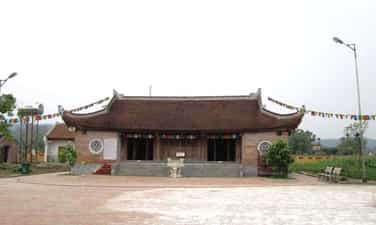
Van war zone
Van war zone is a fairly large area of land, located in the south of Tran Yen district and southeast of Van Chan district. Before 1945, Van War Zone was located in the areas of 3 cantons: Luong Ca, Gioi Phien (Tran Yen) and Dai Lich, Van Chan with a distance of 23km from North to South and 18km from East to West. The history of the war zone has undergone many changes over time, the place names and boundaries have changed. Previously this land belonged to Van Chan district, now belongs to Tran Yen district. In 1945, today's Van Hoi commune was called Minh Phu commune; On January 6, 1946, the Minh Phu - Dong Phu - Phu Thinh - Phu Luong commune was called Viet Cuong commune; On March 23, 1949, Viet Cuong commune was divided into two communes: Hong Duc and Viet Cuong; On January 1, 1951, 3 communes Viet Cuong, Hong Duc, Minh Quan were merged to be called Viet Hong commune; On January 4, 1954, Viet Cuong commune was divided into 3 communes: Viet Hong, Viet Cuong and Minh Quan; On June 6, 1988, the Council of Ministers divided Viet Hong commune into two communes: Viet Hong commune and Van Hoi commune. The boundaries may change, but the center of the War Zone is Minh Phu commune (Luong Ca district, Tran Yen district) which now includes 3 communes Viet Hong, Viet Cuong, Van Hoi, of which the typical 2 points are Lang Van, Viet Hong commune ( is the command center of the War Zone) and Dong Yen Village (in Van Hoi commune) is the military training center of the revolutionary base of the War Zone. Van Village: A valley surrounded by mountains with an average height of 200 to 500m, the valley is 4.5 km long, the road is difficult to travel, today it is structured by terraced fields. , after the revolution, it was explored by the people (with low variation) and is now called Dong Tro, Dong Cay Gao... with a Van stream running along the village. This is also the confluence of 3 small streams to create the Rhyme stream. The terrain is difficult, in the past there was only one road to the village and had to go through the pass. Both discreet and close to political centers (provincial capitals of Yen Bai and Phu Tho provinces), this area was chosen by the Northern Party Committee as a favorable place for establishing revolutionary bases that gradually developed and formed a model. War Zone style. Dong Yen village: About 4 km east of Van village and more than 3 km west of Hien Luong, is a village located between Van and Hien Luong. With a favorable location and raspberry-shaped hills, Dong Yen was chosen by the Au Co guerrilla team as a military training center to develop the armed forces to prepare for a general uprising to seize revolutionary power in Yen Bai. and Phu Tho. After assessing the geographical situation and people's spirit. Under the direct leadership of the Northern Party Committee, when establishing the Au Co guerrilla team, they moved to Dong Yen and then to Van village. Using Van as the command center, using Dong Yen as the military training center to form the War Zone. An important event took place here, on June 30, 1945, the Phu - Yen Inter-Provincial Affairs Committee (Phu Tho - Yen Bai) was established - an important historical milestone marking the formation of the War Zone. . The Van war zone relic is a milestone of historical events in Yen Bai in particular and of the vast Northwest region in general. The Van War Zone played a decisive role in preparing forces to fight for revolutionary power in the two provinces of Phu Tho - Yen Bai and Phu Yen district (Son La) and was also a base to ensure the locality in the war. preparation for the fierce resistance war against the French (1946 - 1954), where the inter-provincial Party Committee of Yen Bai - Phu Tho was established and was the forerunner of the Party Committees of the two provinces. On September 4, 1995, the Ministry of Culture and Information (now the Ministry of Culture, Sports and Tourism) recognized the Van War Zone as a National Historical Site. Source: Yen Bai province electronic information portal
Lao Cai
5186 view
Rating : National monument
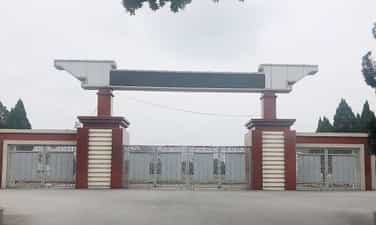
Yen Bai city stadium ceremony platform
Yen Bai City Stadium Stadium, Hong Ha Ward, Yen Bai City is where Uncle Ho stood and talked to the people of Yen Bai province on September 25, 1958. This is a National Historical Site recognized by the Ministry of Culture and Information on November 16, 1988. The original ceremony is the grandstand of the old town stadium. The courtyard and ceremony platform are located in a densely populated area, the center of the former provincial capital. The town stadium dates back to the French colonial period. After completing the conquest and establishment of Yen Bai province (1900), in 1905, France established a legion camp to protect their government. To serve the spiritual life of soldiers, especially cultural and sports activities. In 1927, France built this stadium to organize festivals and football activities, but around the stadium were only built into high mounds without any stands, and it was not completed until 1930. Since then, France has regularly organized fun and entertainment activities here, invited football teams from Hanoi, Phu Tho, Tuyen Quang to compete, and also organized many days of "Western festivals" at the stands. this town stadium. In 1954, when peace was restored, Yen Bai province advocated restoring the football field into a town stadium. In January 1957, the province built a grandstand (the current grandstand) and a wall surrounding the field in an oval shape. The most important historical event was on September 25, 1958, the Government delegation led by President Ho Chi Minh visited Yen Bai province. During his time working in the province, at the request of President Ho Chi Minh, the Provincial Administrative Committee chose the town stadium as a meeting place for Uncle Ho to talk to people of all ethnic groups in the province. At that time, Yen Bai province was one of the most difficult provinces in the North, having just gained independence, the war was heavily destructive, most of the terrain was mountainous, sparsely populated, low educational level, and many victims. Nomadic farming, superstitions still abound, life is still extremely poor. During the most difficult time, Uncle Ho visited Yen Bai. Early in the morning of September 25, 1958, nearly 5,000 officials and people of Yen Bai town's ethnic groups and people from neighboring areas eagerly flocked to the rally to see Uncle Ho and hear his voice. Coming out of the provincial team, Uncle Ho went to the stadium and stepped onto the ceremony platform amid the thunderous cheers of his compatriots. After everyone was silent, Uncle Ho started talking. He cordially visited officials and people, pointing out practical actions. He mentioned many issues from national unity, increasing production, and practicing thrift. After talking, Uncle Ho joined the entire Yen Bai people in singing the song "Unite". From the platform, he left to return to work amid the applause and majestic songs of the people of the province. On May 31, 1966, a bombing by a US aircraft collapsed a corner of the stadium. In 1977, the stadium was repaired, replacing the arched door with a square door, the entire architecture remained the same. . In 2016, the Ceremonial Monument area was renovated and upgraded. The monument and the entire architecture of Uncle Ho's memorial area are designed in traditional architectural style, simulating the memorial architecture of Uncle Ho in Kim Lien - Nghe An, Uncle Ho's hometown. With that cultural and historical significance, this place is a destination, an address for people and tourists to visit and burn incense to commemorate Uncle Ho, forever a place to preserve sacred memories of the Leader. Great - President Ho Chi Minh in the hearts of the people of Yen Bai province, is a traditional educational address for young generations today and tomorrow. Source: Yen Bai province electronic information portal
Lao Cai
8337 view
Rating : National monument
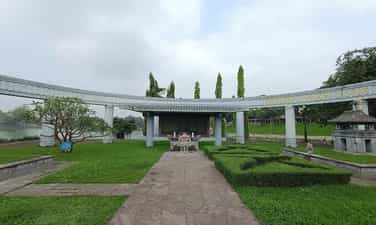
Nguyen Thai Hoc historical relic site
The grave site of Nguyen Thai Hoc and soldiers in the Yen Bai uprising in 1930, located in Yen Hoa park (30 hectares wide), Nguyen Thai Hoc ward, Yen Bai city, built in 2001 . Nguyen Thai Hoc was born on December 1, 1902 in Tho Tang, Vinh Tuong district, Vinh Phuc province. He was a patriot right from the time he was in a colonial school. He sent a letter to Governor General of Indochina Alexandre Varenne, a member of the French Socialist Party, calling for social reform in Vietnam. The Governor-General of Indochina did not pay attention to what Nguyen Thai Hoc suggested. On December 25, 1927, Nguyen Thai Hoc and his colleagues organized the establishment of the Vietnam Nationalist Party, and he was elected Chairman. The Vietnamese Nationalist Party was hunted down and arrested by the authorities. Faced with the risk of the Vietnamese Nationalist Party being broken up, Nguyen Thai Hoc, Nguyen Khac Nhu and Pho Duc Chinh decided to carry out a "general armed uprising". If you fail, it is also an example for the next generation to follow, "If you don't succeed, you will become a good person". The uprising force consisted of the Vietnam Nationalist Party, mainly red loincloth soldiers belonging to Companies 5, 6, 7, Battalion 2, 4th Tonkin Red Loincloth Soldier Regiment. Green loincloth soldiers did not participate in the uprising. On the night of February 9 to 10, 1930, the Yen Bai uprising broke out. The insurgent army killed most of the officers and non-commissioned officers in private houses, coordinating with the two-armed insurgent army and soldiers in the red loincloth station. 5 and 6 posts under rebellion. In front of the barracks yard, a representative of the Vietnam Nationalist Party read the article "Hit Uprising" with the slogans: "Drive the French enemy back to France. Bring the South back to the South. Let hundreds of them avoid suffering. More happy part". The flag of the Vietnam Nationalist Party flies above military camps and offices. Due to not being able to attract all the green loincloth soldiers No. 7 and No. 8 on the high station, the force was thin, so the insurgents were knocked out of their occupied positions, and the uprising was drowned in a sea of blood. Five days after the Yen Bai uprising, Nguyen Thai Hoc organized an uprising in Vinh Bao and Phu Duc, advocating to take over all of Hai Phong. The insurgents captured the district capital of Vinh Bao and killed district governor Hoang Gia Mo, a cruel and greedy mandarin. With a fierce counterattack by the French army with modern weapons, the insurgent army was destroyed. Nguyen Thai Hoc escaped due to the protection of the people. With a number of remaining prominent party members of the Vietnam Nationalist Party, Nguyen Thai Hoc discussed and planned to reform the Party and change the Party's strategic and operational direction. As soon as this policy was launched, on February 20, 1930, Nguyen Thai Hoc was arrested in Co Vit hamlet (Chi Linh, Hai Duong). On March 23, 1930, he was sentenced to death. On June 17, 1930, France sent Nguyen Thai Hoc and 12 other soldiers of the Vietnam Nationalist Party in Yen Bai to the guillotine. Stepping onto the scaffold, before putting his head into the guillotine, Nguyen Thai Hoc shouted: "Long live Vietnam!". France had to admit that the Yen Bai uprising had dealt a fatal blow to the colonial government. Nguyen Thai Hoc historical site marking the "Yen Bai Uprising" currently includes a mausoleum area, a monument area, a reception area, a memorial stele and a bonsai garden. Monument to Nguyen Thai Hoc and his associates during the Yen Bai uprising in 1930 at Yen Hoa Park, Yen Bai city. Most prominent in this area is the famous saying of Nguyen Thai Hoc, which became the main action motto and ideology of the Vietnam Nationalist Party, which is "If you are not successful, you will become a man", which was considered by the insurgents as a saying. swear to death. Although the Yen Bai uprising was not successful, patriotism is eternal. That's why, in our country, many places take the name Nguyen Thai Hoc to name avenues and schools. Mr. Phan Boi Chau wrote an oration about the Yen Bai uprising and the key figures of the uprising. Nguyen Thai Hoc historical relic site, Yen Bai city, Yen Bai province was recognized by the Ministry of Culture (now the Ministry of Culture, Sports and Tourism) as a national historical relic on March 5, 2019. 1990. Source: Yen Bai province electronic information portal
Lao Cai
9034 view
Rating : National monument
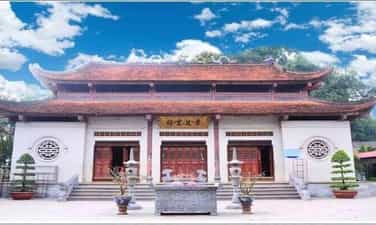
Dong Cuong Temple
Dong Cuong Temple is one of two large temples in the upper reaches of the Red River, which has existed for a long time, located in Dong Cuong commune, Van Yen district, Yen Bai province. Dong Cuong Temple is a relic cluster consisting of 4 points: In addition to the main Temple, there are also Co Temple, Cau Temple and Duc Ong Temple. The temple has been around for a long time. Through historical records, it is known that the temple was built at the latest in the Le dynasty, developed from an ancient temple (in the center of Quy Hoa camp during the Tran dynasty); Ancient bibliographies such as Kien Van Tieu Luc and Dai Nam Thong Nhat Chi all have records about this Dong Cuong Temple. The temple and temple area are related to Ngoc Thap Temple and Hung Temple (Phu Tho). Dong Cuong Temple was initially a temple to worship Princess Dong Quang, founded by the Ha and Hoang families, who were Tay Khao people, and took turns in charge of government duties, and was also the workplace of Tho Tu, translators, and mandarins. and functioned as "Dinh Tram" to serve two-way dispatches between the central court and the grassroots. During the Tran dynasty, the general headquarters of Quy Hoa - Ha Bong and Mr. Tu (Ngoc Thap - Quang Son) came to guard the border. Currently, formerly the Dinh, now the Ha family temple is run by the Ha family's ancestor, Ha Van, who once led the locality to fight the Nguyen - Mongol invaders during the Tran dynasty. History records that in the second month of Dinh Hoi year (1287), the Nguyen - Mongol king took 70,000 troops, 500 warships, 6,000 Yunnan troops and 10,000 5,000 troops in 4 continents outside the sea and sent crown prince Thoat Hoan to be the great marshal; A Bat Xich became the Left Vehicle; Ah Lo Xich pacified political affairs; O Ma Nhi, in charge of politics, brought more than 300,000 troops to attack the South. Faced with that situation, Emperor Tran Thanh Tong and King Tran Nhan Tong ordained Hung Dao Vuong Tran Quoc Tuan as a moderator to command the entire Dai Viet army and people in the resistance war against the Yuan-Mongol invaders. The Yuan - Mongol army led by Nat Toc La Dinh ran up the Lo River to Van Nam. When running through Phu Ninh territory (now Phong Chau district, Phu Tho province), they were attacked by local soldiers and people led by the Ha Dac brothers, Ha Chuong withdrew his troops to attack the base of Mount Chi (in Phu Tho province). From the mountain, he sent militiamen to storm the enemy's vanguard station, launching a surprise attack with many military strategies. Ha Dac and Ha Chuong's troops chased the enemy all the way to A La, then were blocked by the enemy's rear army. Ha Dac heroically sacrificed his life, and Ha Chuong was captured. The Yuan - Mongol army was broken and suffered heavy losses, the survivors fled to Yunnan. According to the genealogy of the Ha family, "the Tay Khao people originally belonged to the Ha Dac and Ha Chuong lineages during the Tran dynasty. Now residing in An Boi - Kien Xuong, Thai Binh: Ha Dac and Ha Chuong are two brothers. When fighting the enemy, Ha Chuong enthusiastically pursued the enemy to the Yen Bai area and died there. He was awarded the title "Binh Nguyen Thuong General Trung Dung Marquis". (According to Tran Hung Hoa's fairy tale section) after being killed in battle and the villagers built a shrine next to the throne rapid (in Ghenh Ngai village on the left bank of Tan commune). Hop, Van Yen district), his wife Le Thi and his son Hoang Bao, when they died, were also worshiped by the villagers at Ghenh Ngai and shortly after, the mother and child altar was moved to Dong Cuong communal house (where the temple is located). Dong Cuong today). The second victory over the Yuan-Mongol army was a glorious victory. The typical places of Ham Tu, Chuong Duong, Tay Ket, and Cu Da will forever be recorded in history books. Since the relocation, the communal house was expanded and converted to become the Temple of Mr. Le Quy Don in the Later Le Dynasty, which has records. The book "Dai Nam Nhat Thong Chi" is named "Temple of the Guardian God" after the ordination. The events of the Giap Dan uprising (1913-1914), in 1914, the insurgents of Man Bach, Man Dai Ban and the Tay and Nung people of Yen Bai province organized to gather forces and rose up in the year of Giap Dan to attack the army's posts. France in Yen Bai and Lao Cai provinces. At the same time, overseas Viet Kieu railway workers and businessmen in Yunnan province - China responded to the call of Phan Boi Chau and other Vietnamese people to celebrate and establish friendship and patriotic associations overseas. , secretly supported the anti-French movement in the country. Some French military posts along the Vietnam-China border and Lao Cai area were attacked by insurgents. The uprising failed. Due to lack of proper organization. The French ruling government established a special military court during the war... to try patriotic soldiers, most were sentenced to death, life in prison or forced exile, some were secretly executed. sneaky. In 2000, the temple was recognized by the People's Committee of Yen Bai province as a provincial-level historical and cultural relic. On January 22, 2009, the temple was recognized by the Ministry of Culture, Sports and Tourism as a national historical-cultural relic in Decision No. 296/QD-BVHTTDL. Source: Yen Bai Provincial Museum
Lao Cai
6950 view
Rating : National monument
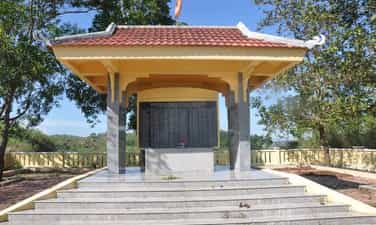
Historical site high point 519
Historical site High point 519 is about 72 km east of Buon Ma Thuot city center, in Eapil commune, M d rak district, Dak Lak province. During the years of resistance against the US, High Point 519 had an important strategic position, considered the eastern gateway connecting to Phuong Hoang Pass and the battlefield of the 25th Regiment, so there were often infantry and artillery units. soldiers stationed. Therefore, here there were very fierce battles between us and the enemy to protect the defense line, prevent the enemy from attacking from Nha Trang or blocking the enemy on the way to retreat. High point 519 is the place marking the glorious victories of the 25th Regiment of Command B3, Military Region 5, who stubbornly held on, not afraid to sacrifice, overcoming all difficulties and hardships, protecting key points, and winning. many consecutive battles in many positions, ensuring the defense line, blocking the front, blocking the tail and decisively attacking battle points, making an important contribution to liberating Buon Ma Thuot, moving towards completely liberating the South and reunifying the country. The 25th Mobile Infantry Regiment of B3 Command was established on September 15, 1972, stationed in area H5. On February 25, 1975, the unit received the important task of cutting Road 21 (now National Highway 26) at peak 519 in Khanh Duong district, Khanh Hoa (now M D rak district - Dak Lak). Faced with this urgent task, within a week, the Regiment joined forces and ethnic people of M'D rak district to strengthen fortifications and dig solid tunnels for important positions. On March 2, 1975, units approached Route 21 and arranged reconnaissance to follow the enemy and follow the road. At exactly 04:30 on March 5, 1975, Battalion 631 opened fire to destroy the enemy Security Company at Cu Se station. Battalion 2 destroyed the blockhouses at bridgehead No. 2. At the same time, engineering forces destroyed Bridge No. 5 and Road 26 were cut off, making it impossible for the enemy to move and respond. Battalion 3 quickly occupied peak 519 and controlled the area at the foot of Cu Pa mountain and together with other positions formed a defense line. : block the head, lock the tail and fight decisively. On the morning of March 6, 1975, the enemy opened fire and mobilized aircraft to bomb Cu Se station and peak 519, mobilized the 207th Artillery Battalion to fire first and then massively rushed straight into bridge position No. 2, our soldiers A surprise attack from three sides prevented them from withdrawing, destroying hundreds of enemies, capturing the battalion commander and capturing many weapons. On March 6, 1975, the puppet army sent a reconnaissance battalion to open the road. After 3 hours of fighting, Battalion 5, Regiment 25 destroyed the puppet reconnaissance battalion. During 3 days from March 7 to March 10, 1975, puppet troops sent Security Battalions 245 and 228 from Ninh Hoa to open the way to rescue Buon Ma Thuot but could not get there. On March 20, 1975, the 40th Regiment of puppets and paratroopers were deployed to Khanh Duong to save the situation and create a shield to block our troops here. However, they were destroyed by our 10th Infantry Division. The people of Khanh Duong together with the main force surrounded and threatened, destroyed 2 battalions 383 and 264b, searched, captured and surrendered nearly 500 puppets, coordinated with the main force to shoot down 5 aircraft on the spot. Collect 20 cannons. The people destroyed the hamlet and proactively raised the liberation flag before the main force launched its attack. On the other hand, the district forces coordinated to organize a siege and destroy the 40th regiment of the 22nd puppet division, attacking and liberating the district capital. Khanh Duong, the military posts surrounding the district capital, the masses rose up to liberate the remaining 18 hamlets and 45 villages of the district. This was the strongest uprising attack, making the enemy confused, confused, and unable to fight back in time. On March 22, 1975, M'D rak district was completely liberated. This was a great victory for the army and people of all ethnic groups in M'D rak district, who courageously persevered and held back the enemy. many places, coordinating fighting forces with the armed forces to attack the enemy during the historic days of March, contributing with the army and people of the province to a glorious victory, creating new position and strength for the regional revolution. Nam won. On December 6, 2016, the People's Committee of Dak Lak province ranked High Point 519 as a Provincial Historical Relic. Source: Dak Lak Provincial Museum
Dak Lak
4410 view
Rating : Provincial level relics

HISTORICAL RELIC OF THE TEMPLE OF THE HOLY TRAN
The Temple of Saint Tran is located at 291, Tran Hung Dao Street, An Lac Ward, Buon Ho Town, Dak Lak Province. In 1947, on a small piece of land in Buon Ho town, Krong Buk district (now Buon Ho town), people built the Temple of Saint Tran to show respect, gratitude and honor the national hero. Tran Hung Dao clan - the person who had great contributions in defeating the Nguyen - Mongol armies three times, went down in history, entered the legendary world, the spiritual world, became a sacred "Saint" respected by the entire people. Worshiped, is considered one of the "Four Immortals" of the Vietnamese people. Initially, the Temple was temporarily built from forest trees and plank walls, with a corrugated iron roof. In the middle of the Temple, an altar was placed and a paper painting of Tran Hung Dao was hung. Right from its inception, the people elected the Temple's Management Board to serve the management, sacrifices, and incense smoke monthly and yearly. In 1964, the Temple Management Board took the initiative, calling on the people of Buon Ho town to donate more money to buy land, materials and dismantle the old Temple, building the Temple of Saint Tran with brick walls and roof. roofing. To have the spacious campus and Temple as it is today, the Temple has undergone many restorations, embellishments, and area expansions such as: In 1972, the main hall was renovated and expanded; in 2004 bought more land; 2006 paving; 2012 floor construction. However, because it was built in a situation where the country was at war and the local socio-economic conditions were still difficult, the Temple could not be built in the traditional architectural style of some German temples. Thanh Tran in Hai Duong, Hanoi, Thanh Hoa, Ho Chi Minh City,... Currently, the Temple of Saint Tran is located in a large campus with a total area of 525.8 m2, with items: Temple Gate, front yard, Temple, back yard. The main place of worship of the Temple is the Inner Palace (harem), built protruding behind the Front Hall, not divided into many rooms and also not having closed doors like temples in the Northern provinces, but only includes a room that is directly connected to the middle room of the front hall. The inner hall does not have a closed door but is decorated with a wooden frame border with a cloud dragon pattern at the entrance, with two parallel sentences hanging on both sides: “Bach Dang Van Kiep, the Vietnamese people are grateful. Ham Tu Chuong Duong and the Yuan army were terrified." The horizontal panel is 60 cm high, 3.6 m wide, lacquered with 4 Chinese characters: "Tran Trieu Reveals the Saint" and is solemnly hung right above the door to the Inner Palace. The incense altar in the Inner Palace consists of 3 floors: The ground floor is the place to worship the Five Tigers (a symbol of the sacred power that can eliminate evil spirits, protect all directions, and is the guardian spirit of the temples) with two paintings. Five Tigers painting and a bronze top are placed in the middle of the altar, on both sides are two bronze candlesticks and a bronze Tiger statue to pray for prosperity and peace; The second floor of the Inner Palace incense altar is 50 cm high and 1.8 m wide. This is where the incense bowl and a Tran Temple Seal are placed in a glass frame with a width of 30 cm and a height of 60 cm. This is the Tran Temple seal that journalist Tran Quang Tuan requested from Tran Temple in Nam Dinh province to bring back to the Management Board of the Saint Tran Temple in Dak Lak on Tet 2016. On the altar page are also placed two candlesticks and a candle. The bronze incense burner is decorated with a Lion image symbolizing intelligence, strength, and controlling the soul of the person coming to the ceremony; The third floor - the highest floor of the incense altar is where the plaster statue of Tran Hung Dao is placed. The statue is about 1.1 m high, about 50 cm wide, placed on a 60 cm thick, 20 cm high statue base. The statue is cast in a sitting position on a Dragon chair, holding a sword, with a red outfit and majestic facial expression to show the strength, will, and spirit of fighting against foreign invaders of a Vietnamese military genius. To the left of the statue of Tran Hung Dao is placed a sword, a mandarin uniform along with a pair of cloth shoes embroidered with decorative patterns and a glass cabinet containing yellow ceremonial clothes. On both sides of the statue of Tran Hung Dao, there are also wooden statues of two unicorns (in Vietnamese culture, the unicorn is also an animal that signals good omen, a symbol of longevity, majesty and happiness). great blessing). In particular, on both sides of the incense altar, two bronze swords with dragon-shaped decorative patterns and about 1.8 m high are erected to add majesty and dignity to the shrine in the Inner Palace. The Temple of Saint Tran is a place of worship to commemorate the merits of national hero Tran Hung Dao. During the resistance war against the US, the Holy Tran Temple was a place to provide food, food, and medicine for the revolution, mainly supplying working teams along the H4 line (code name for the Buon Ho, Krong Nang, Krong Buk districts). In addition, the Temple Management Board led by Mr. Dang Van Dau, Nam Phung, Ha Hanh,... lobbied and called on the owner of Rossi coffee plantation to join forces with Bao An forces in area H4 to cover up the case. The provision of food, medicine, and ammunition at Tran Hung Dao Temple during the years of resistance against the US. With that meaning, on September 29, 2017, the People's Committee of Dak Lak province ranked the Temple of Saint Tran as a provincial-level historical relic. Source: Dak Lak Provincial Museum
Dak Lak
6886 view
Rating : Provincial level relics

CADA Plantation Historical Site
The historical ca da plantation site stretches from km 18 to km 47 along both sides of Highway 26 in Ea Kenh and Ea Yong communes, Krong Pak district. Ca da is the abbreviation for Asia Agricultural Company, built by the French in 1922 to grow coffee and tea. Ca da was the place where the French colonialists started the plundering of land to exploit resources on a large scale during the colonial exploitation process in Dak Lak, the establishment of plantations and the introduction of colonial capitalism destroyed disrupting the traditional economy of ethnic minorities here. The strongest exploitation process of the French colonialists at Ca Da Plantation began from 1925 to 1934, they exploited workers with low wages and extremely cruel treatment. It was during this time that the working class was born and developed strongly. In 1940, the first Communist Party cell was established at the Buon Ma Thuot Prison, where the fire and guidelines of the Communist Party of Vietnam were rekindled, serving as the core and spreading everywhere, playing an important role. great strength for the national liberation movement in Dak Lak. By the end of 1944, the Exile Party cell had built facilities in the green loincloth soldier station, established a number of semi-legal organizations to spread activities throughout the plantations, the strongest being the ca da plantation. In 1945, Ca Da - a place with a strong movement and organization - was chosen by the Provisional Executive Committee to assign the core task in the uprising. Ca da was also the place to train and gather forces to seize power first and was the base to continue fighting if the uprising was not successful. Secret organizations were also established, with loyal comrades such as: Tran Thu, Tran Phong, Mai Nguyen, Tran Coi, Nguyen Tam Thu and Tran Thi Thuy. It was also here that the French colonial ruling apparatus, after more than 40 years of construction, collapsed for the first time in Dak Lak. The birth and growth process of Ca da plantation workers affirmed the strong development of the Dak Lak revolutionary movement, which was extremely important to the victory of the August Revolution in 1945 and the General uprising offensive in Spring 1975 in Dak Lak province. After the country was unified, Ca da Plantation was assigned to Dak Lak Agriculture Company to manage, on that basis in 1977 Phuoc An Coffee Farm was established, then in May 1989, May Coffee Farm was established. 10 was born. These two farms have made many contributions to the construction and development of Dak Lak province in general and Krong Pak district in particular. With the historical value and current status of Ca Da Plantation, on January 26, 1999, the Minister of Culture and Information (now the Ministry of Culture, Sports and Tourism) issued Decision No. 02/1999 /QD-BVHTT ranked the Ca Da Historical Site, Ea Yong Commune, Krong Pak District, Dak Lak Province as a National Monument. Source: Dak Lak Provincial Museum
Dak Lak
7948 view
Rating : National monument

Historical site Memorial site for Nam Tien soldiers
Monument Memorial site for Southern soldiers, located at 5 Le Duan, Buon Ma Thuot city, is the place marking the event of December 1, 1945 (October 27, At Dau year). Nam Tien Detachment is the first liberation army unit established in Hanoi Capital. The force is mainly workers and young volunteers under the age of 30, working in factories and workshops, with the task of protecting the achievements of the Vietnamese revolution after September 2, 1945, and protecting the achievements of the Vietnamese revolution after September 2, 1945. Intensive training to supplement the cadre force for the South. Receiving the mission, the Nam Tien Detachment set out to advance to the South. After a period of strenuous marching, at about 10 o'clock on December 1, 1945, the Nam Tien Army arrived in Buon Ma Thuot town and rested at Bao An Binh station (now a historical site, a memorial site for Southern soldiers in Buon Ma Thuot). At about 3:00 p.m. on December 1, 1945 (October 27, At Dau year), the French colonialists attacked Buon Ma Thuot town, starting the reconquest of Dak Lak. The unprepared fighting of the army and people of Dak Lak took place on every road and street. Using every means and weapon at hand, our people and soldiers stubbornly fought to block the enemy's advance. Our forces at that time were only equipped with each soldier with a rifle and a few dozen bullets, but all of them fought back very tenaciously. Even though they were in a weak position, had a small force, and were passive in response, the soldiers were still very resilient and bravely fought until their last breath. After that, the French colonialists continued to march into the center of Buon Ma Thuot town and the roads of Lac Giao village at that time. Wherever they went, they used guns and mortars, causing casualties to many people who fled. especially women, the elderly and children of Lac Giao village. The event on December 1, 1945 (October 27, Year of the Rooster) was a huge loss and infinite grief for the whole country in general and Dak Lak province in particular. Admiring the brave fighting spirit and heroic sacrifice of more than 100 Nam Tien soldiers and mourning the deaths of the people of Lac Giao village, the people of Lac Giao village took the 27th day of the 10th lunar month every year as Memorial Day for the fallen Nam Tien soldiers and the people of Lac Giao village who died in 1945. The memorial site for Southern soldiers in Buon Ma Thuot is ranked as a national monument by the Ministry of Culture, Sports and Tourism, and is one of the red addresses for educating revolutionary traditions and the spirit of resistance. initiative, resilience, and heroism in the fight against foreign invaders of our ancestors for the young generations of today and tomorrow. Source: Dak Lak Museum
Dak Lak
5138 view
Rating : National monument