Relic point Vietnam
Việt Nam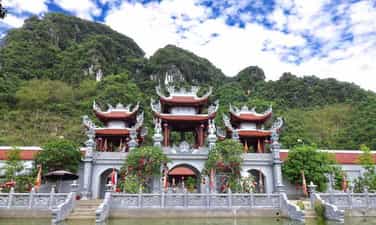
Co Tan An Temple
Co Tan An Temple, located in Tan An commune, Van Ban district, Lao Cai province (also known as Co Be Thuong Ngan Temple), was ranked as a national historical and cultural relic in 2016, and is a place to worship a goddess. Thuong Ngan's name is Nguyen Hoang Ba Xa, she had the merit of conquering the evil enemy, keeping the land in peace, and was revered by the residents of Bao Ha and Khau Ban (ancient Van Ban places) as the Holy Mother. According to historical records, at the end of the Le dynasty, Canh Hung era (1740-1786), when the entire Qui Hoa region, especially Thuy Vy and Van Ban were always devastated by bandits, "The entire region was in chaos, the population devastated, abandoned fields". Faced with that chaos, Mrs. Nguyen Hoang Ba Xa and her father, National Guard Nguyen Hoang Bay, stood up to persuade ethnic minorities such as Dao, Giay, Nung in green shirts... to urgently exploit mining fields and drive out foreign invaders. invade, protect the territory, and regain a prosperous life for all people. When she passed away, "The fragrance was still resplendent, the halo shined everywhere", to commemorate her great contributions, people in the area carved engravings of gratitude and contributed their efforts and money to build the temple. , appoint someone to regularly look after the incense and smoke. Having gone through many ups and downs of history and changes in nature, the temple has now been embellished and rebuilt on the exact location of the ancient sacred land (on a large plot of land, right on the banks of the Red River). , looking towards the Northeast, opposite the national historical and cultural relic Bao Ha Temple), has become a majestic spiritual tourism destination that attracts a large number of tourists from all over. Source: Lao Cai province electronic information portal
Lao Cai
5429 view
Rating : National monument
Khuc Thua Du Temple
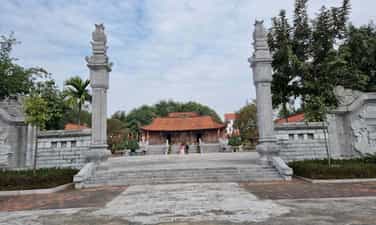
Khuc Thua Du Temple is located in Cuc Bo village, Kien Quoc commune, Ninh Giang district, worshiping 3 national heroes of the Khuc family (Khuc Thua Du, Khuc Thua Hao, Khuc Thua My). The temple was recognized by the state as a national historical relic in 2015. The temple is located adjacent to the Luoc River dyke, the temple's face faces south. From outside, enter the temple through the stone bridge, to the festival yard, with two reliefs made of large rocks. The motifs are elaborately carved, depicting the scene of people gathering to follow the Immortal Lord Khuc Thua Du to gain autonomy and live a peaceful, peaceful life. Khuc Thua Du is one of the national heroes who first built the country in the 10th century. Starting his career as a chief of Hong Chau land, now Cuc Bo village, Kien Quoc commune, Khuc Thua Du was the one who built the country. The initial foundations for the cause of independence, building the country's autonomy, ending the feudal yoke of the North in the early years of the 10th century. His children and grandchildren are Khuc Hao and Khuc Thua America continued to follow in his father's footsteps, consolidating independence and implementing government management at the village and commune levels. On July 23, 907, Khuc Thua Du passed away. To commemorate the merits of National Hero Khuc Thua Du, people in the Hong Chau area contributed to building Cuc Bo communal house on a large area of land in the south of the village, about 300 meters from the Luoc River dyke. In 2005, Hai Duong province started construction of Cuc Bo temple to worship three heroes of the Khuc family: Khuc Thua Du, Khuc Hao, Khuc Thua My, right next to the ancient communal house of Cuc Bo village. The project has a total area of more than 57,000 m2, using three main materials: green stone, ironwood and copper. The temple has unique architecture, including many cultural and artistic works such as: Tam Quan, Tien Te, Trung Tu and Harem. On both sides there are Ta Vu and Huu Vu houses, dragon eye wells, stone reliefs, Spirit beast statues, lotus ponds, stone bridges, four pillars... All built according to traditional architecture. The center of Khuc Thua Du temple is called Thuong Dien. Here, the altars are arranged according to standard regulations and have deeply meaningful content. The council board is placed in the middle, with a 4-word horizontal panel inscribed with the words: "Thien Nam Chinh Khi": translated as Khuc family is the righteousness of the Southern heaven. And on both sides is the "Dual Ban" altar, with 2 horizontal panels: on the right "Hero of Hong Chau", which translates to: Hero, hero of Hong Chau land. On the left, "Hung Phong due to": translated means: The heroic demeanor is still here. At Khuc Thua Du temple, there are also art paintings called "Khuc Hoan Ca", depicting peaceful scenes and the peaceful life of residents under the first autonomy; Next to that is the scene of "gathering the righteous" and forging soldiers. The content that this painting conveys is the expression of the martial spirit and desire for peace, stability and prosperity of the Vietnamese people. In the palace area of the temple, there are 3 large bronze statues: the statue of the First Lord Khuc Thua Du in the middle, the statue of the Middle Lord Khuc Hao on the right, and on the left is the statue of the Late Lord Khuc Thua My. The statue of the Immortal Lord Khuc Thua Du with a sword in hand represents the authority and intelligence of the "Lord of the world"... is a statue with depth of charisma, showing the nuances of an emperor, with majestic appearance, superior temperament. Khuc Thua Du Temple is a meaningful project honoring the great contributions of the national hero Khuc family in the pre-independence period. Along with the significance of spiritual culture and tourism, Khuc Thua Du Temple is also an attractive tourist, sightseeing, and historical research destination on Hai Duong land, contributing to educating patriotic traditions and love. National pride for generations to come. Source: Collection of Hai Duong electronic newspaper
Hai Phong
9695 view
Rating : National monument
Phuc Khanh Temple
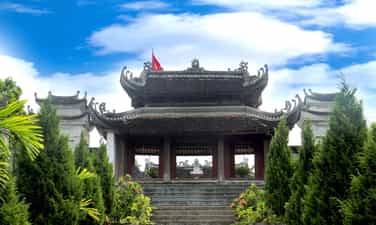
Phuc Khanh Temple was built at the end of the 16th century, on Tap hill, Pho Rang town, Bao Yen district, Lao Cai province, with an area of 2.4 hectares. Phuc Khanh Temple is located in the Nghi Lang Ancient Citadel relic complex, an architecture of the Le - Mac dynasties, a place to worship Bau lords and was recognized as a National Historical and Cultural Monument in December 2001. According to legend, during the time when the Mac dynasty replaced the Le dynasty, two brothers Vu Van Mat and Vu Van Uyen from Gia Loc district, Hai Duong province went to Bao Yen (Lao Cai) to escape the Mac dynasty and built a border guard base. Northwest boundary. At that time, Vu Van Mat realized that Bao Yen had a convenient transportation location and was the gateway to Lao Cai's trade routes, so he chose this place to build ramparts and recruit soldiers to fight against the Mac dynasty. protect the border and build Bao Yen into a prosperous region. After Vu Van Mat passed away, the people here built a temple to commemorate the merits of him and the Vu family for protecting the border, the land and the good people. Through many upheavals of time and history, the architecture of Phuc Khanh Temple has been much destroyed, leaving very few traces of the Temple. In 2006, the historical and cultural relic of Phuc Khanh Temple was restored and built on the old ground according to the architecture of the Le - Mac dynasties. The layout of the temple includes: main temple house; the two families: Left and Right; Tam Quan Ngoai, armpit gate and pillar at Tam Quan Ngoai. The altars for the Lady, the Uncle, the Son Than Temple and other sub-items such as: the lord's house, the temple house, the golden house, and the garden grounds. Phuc Khanh Temple has a convenient transportation location (75km northwest of Lao Cai city, nearly 280km from Hanoi along Highway 70), every year on the Dragon day in early January, the Phuc Khanh Temple Festival is held. held, attracting a large number of tourists from all over the country to offer incense to commemorate those who contributed to protecting the border and territory, and to visit the sights and explore the artistic and military architecture of Nghi Lang Ancient Citadel. as well as Phuc Khanh Temple. Source: Lao Cai province foreign affairs portal
Lao Cai
4219 view
Rating : National monument
Cao An Lac Temple
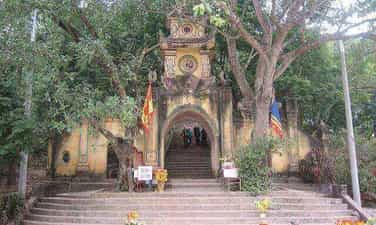
Cao Temple relic area is located in An Lac commune, Chi Linh city, Hai Duong province. The Cao Temple relic complex is a place to worship five generals of the Vuong family who made contributions in the resistance war against the invading Song army and pay tribute to King Le Dai Hanh, the village's tutelary god Duong Ton Linh. With the current status of relics and legends still circulating here and the festival activities preserved and maintained by the people, the Cao Temple festival is considered one of the typical traditional festivals of Hai Duong. The relic complex has 5 temples and 1 pagoda. The King's Temple worshiping King Le Dai Hanh is located on Table Mountain, exuding majesty and dignity. Cao Temple worships the quiet Vuong Duc Minh located on the top of Thien Bong mountain in the Voi mountain range at an altitude of 30 m, in the middle of an ancient ironwood forest hundreds of years old. Ben Trang Temple worshiping Vuong Duc Xuan is rich in traditional colors and exudes seriousness, located next to the soft Moon River. Ben Ca Temple worships Vuong Duc Hong - a bare temple (no roof) filled with sacred vestiges, considered the most special temple in the system of temple relics in our country. Ca Temple worships the parents of 5 saints and their 2 daughters, Vuong Thi Dao and Vuong Thi Lieu, quiet in the middle of lush, rich fields, located next to a peaceful river. The legends still preserved at Cao Temple, compiled by the Academy of Great Scholars Nguyen Binh in the first year of Hong Phuc, during the reign of King Le Anh Tong (1572), clearly recorded the stories and merits of the saints of Cao Temple. During the Dinh dynasty, in Thach Tuyen village, Nga Son district, Ha Trung district, Thanh Hoa road, there was a family named Vuong named Tinh, and his wife was a villager named Thanh. Grandparents are hard-working, hard-working, and love people, so they are admired by neighbors. But the problem is that the couple is old and has not yet had a child. One day, their grandparents floated on a small boat, going back to the magic gate to find a new place to live. They arrived at Trang Duoc Dau, Bang Chau land, Nam Sach district, Hai Duong town, and saw that the people here were pure and kind. With lush green grass and trees, my grandparents immediately asked to reside there. At that time, in Duoc Dau Trang, there was a family of Mr. Pham, whose name was Luoc. Mr. Pham's family situation was also relatively well off, so he immediately let his grandparents stay at Duoc Dau Trang. One night, Mrs. Thanh dreamed of five stars entering her mouth. When Mrs. Thanh went to the Nguyet Giang River to bathe, she suddenly saw a five-colored dragon emerging and wrapping tightly around her body three times, Mrs. Thanh was extremely frightened. From then on, Ms. Thanh felt a flutter in her heart and became pregnant. When the pregnancy reached full term, she gave birth to a bundle, released 5 eggs, and gave birth to 3 boys and 2 girls. The boy has a handsome, majestic appearance, with phoenix eyes and a dragon face. The girl has a flowery face and powdery skin. The first son's name is Vuong Duc Minh. Second son Vuong Duc Xuan. Third son Vuong Duc Hong. The fourth daughter is Vuong Thi Dao and the youngest daughter is Vuong Thi Lieu. At that time, the Song army led by Quach Tien invaded our country. When the king sent his troops to fight the enemy, when he passed through Duoc Dau Trang, he saw that the ground was dangerous and immediately set up a camp right in the small market (customarily called Dau market). The five Vuong brothers all came to pay their respects. The king immediately gave them a test of their talents. All five brothers showed off their talents and responded. Knowing that they were truly talented people, the king immediately took them under his wing and promoted them. At that time, the three men and two women brought troops by land. Two women pretended to be people selling betel and medicine and went to the enemy's headquarters. After clearly understanding the enemy's situation, our army attacked, but the enemy army lost greatly and fled back to the country. The Cao Temple relic area was formed and developed for more than 1,000 years. Although the scale of the temples is not large, they converge the spirit of heaven and earth. The temples were built very early, in the Early Le Dynasty, after 5 generals passed away. During the Nguyen Dynasty, the temple was restored with a triangle-shaped architecture and has maintained its current status to this day. The system of valuable antiques and worship objects such as stele, dragon sword, precious bowl, and throne is still kept quite intact, typically the great paintings and parallel sentences. In the temple's harem, the ordinations of the kings are still preserved. Cao Temple is a unique temple built in the twentieth century and restored many times. The main festival takes place from the 23rd to the 25th of the first lunar month (lunar calendar) with many folk games such as wrestling and tug of war. The ceremony includes: Procession of the throne and traditional offerings, attracting many tourists to visit. On March 2, 2018, the Ministry of Culture, Sports and Tourism decided to "classify the Cao Temple complex as a historical and architectural monument". Source: Collection of Hai Duong electronic newspaper
Hai Phong
4709 view
Rating : National monument

Thanh Mai Pagoda
Thanh Mai Pagoda (in Hoang Hoa Tham commune, Chi Linh City, Hai Duong). Thanh Mai Pagoda was built around 1329 on the slopes of Thanh Mai mountain, also known as Tam Ban mountain (meaning three interconnected mountain levels of the three provinces of Bac Giang-Hai Duong-Quang Ninh, belonging to the Dong Trieu arc). , about 200m high, now belongs to Hoang Hoa Tham commune, Chi Linh city. The pagoda is associated with the life and career of Zen Master Phap Loa, the second founder of the Truc Lam Yen Tu Zen sect. The main pagoda has Dinh-style architecture, with 7 front halls and 3 back halls. The pagoda's frame structure is made of ironwood with 12 main columns with a diameter of 50cm, 7.2m high and 16 military columns with a diameter of 42cm, 3.5m high, connected in a "stack of beams and eight poles" style, an architectural style of the Tran Dynasty. The pagoda's roof consists of 8 roofs, 8 knife heads, covered with funny nose tiles, on the roof is a bank, in the middle are embossed with four words "Thanh Mai Zen Tu". The pagoda started construction and was completed in 2005. Currently, Thanh Mai pagoda still preserves many valuable artifacts such as: Vien Thong Bao Thap built in 1334; Pho Quang Tower was built in the 23rd year of Chinh Hoa (1702); Linh Quang tower was built in the 24th year of Chinh Hoa (1703), along with 5 other towers. The pagoda also retains 6 steles of the Tran and Le dynasties, of which the Thanh Mai Vien Thong marble tower is recognized as a national treasure. The stele was carved in the 5th year of Dai Tri (1362) and tells about the life and career of the Second Patriarch of the Truc Lam Zen Sect. The stele also shows the contemporary political, religious, and land situation and the activities of Truc Lam's three ancestors: Tran Nhan Tong, Phap Loa, and Huyen Quang. Thanh Mai Pagoda Festival takes place on the first to third day of the third lunar month every year. In 1992, Thanh Mai Pagoda was recognized by the Ministry of Culture and Information as a national historical and cultural relic. At the end of autumn and into the winter days, the maple forest in Thanh Mai pagoda area has beautiful scenery. The forests during this time become brilliant with red, yellow colors... With an area of about 15 hectares, the maple forest in the Thanh Mai pagoda area is quite dense. The height of the maple tree is up to tens of meters, growing from the foot to the top of the mountain, including some trees with very large trunks, about 2-3 people can hug. And the most beautiful is the time when maple leaves change color, from green foliage to yellow, then to red. With its long-standing historical value, with many solemn rituals during the festival such as: preaching sutras, woodwork, holding the altar... and magnificent nature, Thanh Mai pagoda has been contributing to enriching cultural capital. Eastern origin. Source: Hai Duong province electronic information portal
Hai Phong
4441 view
Rating : National monument
Chu Van An Temple
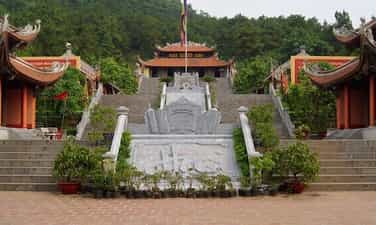
Master Chu Van An's temple is located on Phuong Hoang mountain, in Van An ward, Chi Linh town, Hai Duong province. This place with beautiful scenery is also where many people come to ask for letters every time Tet comes and spring, praying for a new year of good luck and passing exams. Master Chu Van An's name is Tieu An - his first name is Linh Triet, his last name is Van Trinh. Born on August 25, Nham Thin year, the 2nd Trung Hung year (1292) in Van village, Quang Liet commune, Thanh Tri district (now in Hanoi city). He was the first person to make great contributions in spreading and educating Confucian moral thought in Vietnam. He was invited by King Tran Minh Tong (1314 - 1329) to become a private citizen teaching for the Crown Prince. During the reign of King Tran Du Tong (1341 - 1369), because he could not stand the evil tyrants, he gave his official seal and went into hiding on Phuong Hoang Mountain, specializing in teaching, writing books, poetry, and medical research. medicine until death. After Master Chu Van An passed away (1370), a temple was built to worship him at the place where he worked as a teaching house. After 2 phases of restoration, in 2008 Chu Van An temple became a majestic and solemn architectural complex including: three inner gates, three outer gates, lower yard, middle yard, terrace, garden, two houses. dance ceremony, two stele houses, the main temple with bas-reliefs of Dragon and Phoenix playing with clouds and 112 stone steps leading to the main temple. The temple was ranked a national historical relic by the State in 1998. The main temple is located on high, wide ground. According to feng shui, this is the eye of the Phoenix bird. In front of the temple, there is Ngoc mountain as the front altar, behind it there is Phuong mountain as the back temple, on both sides are Ky Lan mountain and Phuong Hoang mountain flanking the temple. The temple was built in the shape of the letter Nhi (二), with 2 floors and 8 roofs, tiled roofs with 8 curved corners, including 5 pre-worship spaces and 1 back palace space. The decorative art in the temple follows the theme of the four sacred animals (Long, Ly, Quy, Phuong) and the four precious animals (Tung, Cuc, Truc, Plum). The painted and gilded robes are decorated with fine art in the image of "dragons flanking chrysanthemums". In front of the temple are a pair of stone dragons with the architectural style of the Tran Dynasty... Every year, at Chu Van An temple, the opening ceremony of spring writing takes place on January 6 with 4 Han Nom calligraphy words: Chinh - Hoc - Thuan - Practice, and 10 National language words: Tam - Duc - Chi - Nghia - Trung - Talent - Minh - Tri - Thanh - Vinh. This is a cultural beauty that has been preserved since teacher Chu Van An came here to open a teaching class. The autumn Chu Van An Temple Festival takes place from the 1st to the 25th of the 8th lunar month (the main festival is on the 25th). Source: Hai Duong province electronic information portal
Hai Phong
9050 view
Rating : National monument
Cluster of relics of Xua Temple - Giam Pagoda - Bia Temple
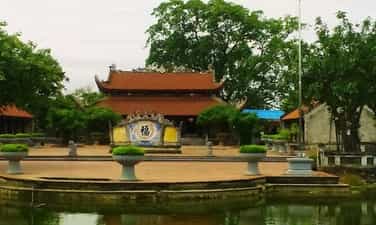
Xua Temple - Giam Pagoda - Stele Temple is a cluster of 3 relics located in 3 communes of Cam Son, Cam Vu and Cam Van of Cam Giang district. The three relics are very close to each other, worshiping the same founder, the famous Zen physician Tue Tinh, but each place has unique architectural works, creating its own mark and place in cultural and spiritual life. spirit of local people. In December 2017, the cluster of historical and architectural and artistic relics of Xua Temple - Giam Pagoda - Bia Temple was decided by the Prime Minister to be recognized as a special national monument. Giam Pagoda (Diem Quang Pagoda), built in the Ly Dynasty; In the late 17th and early 18th centuries, it was rebuilt on a large and beautiful architectural scale. The pagoda is located on a 2-hectare area of land. The pagoda has a "foreign domestic" style architecture with full works such as: Three gates, Tien Duong, Three jewels, Patriarch's house, corridor, Cuu product tower house, guest house, Sangha house, garden, Dharma garden. monk, teacher Giam. Architects and artisans have created on the pagoda's premises a continuity of items that exalt the ancient splendor and contain many layers of cultural wisdom. Giam Pagoda is a place associated with Tue Tinh's life since he was a child. According to historical documents, Tue Tinh was born around 1330, orphaned at the age of 6, and was raised and sent to school by monk Hai Trieu at Giam Pagoda. During his childhood and early knowledge of medicine, he was nurtured and attached to this temple. The most unique feature of Giam Pagoda is the nine-level lotus court placed in the yard behind the three jewels. The house is 8 m square, 3 floors high, 12 roofs, and has many architectural pieces that still retain the mark of the 17th century. Inside the nine-level house is a nine-level lotus flower court, over 6 meters high, shaped like a regular hexagon, with each side 1.24 meters long. On the nine levels there are 145 Buddha statues. The entire nine-grade structure is linked to a large ironwood pillar in the middle, this pillar is placed on a stone alley, like a ball bearing. On Buddha's day, with just two people pushing, the nine products can rotate gently. The nine-product lotus temple is a unique Buddhist architectural work only found in Vietnam. Currently, in the whole country there are only 3 nine-grade lotus temples that can be rotated, the remaining 2 are in But Thap Pagoda (Bac Ninh) and Dong Ngo Pagoda (Thanh Ha, Hai Duong). Xua Temple, is the official temple built to worship the great physician Tue Tinh in his hometown, now Nghia Phu village, Cam Vu commune, Cam Giang district. It is unclear what year the temple was built, but based on the existing architectural remains, it can be determined that in the 17th century there was a solid temple with delicate carvings. Currently, the relic still has about 50 valuable antiques such as bronze bells cast in the 8th year of Tu Duc (1855), ordained for Tue Tinh in the reigns of Thieu Tri, Tu Duc, Duy Tan, Khai Dinh, Bao Dai... These are evidence of Tue Tinh's illustrious medical career recorded in history. Beer Temple, located in the western field of Van Thai village (Cam Van commune), bordering Nghia Phu village (Cam Vu commune), hometown of the Great Physician Tue Tinh. The temple was built to worship the Great Physician Tue Tinh and the Stone Stele of the Le Dynasty, which is his commemorative relic, so it is called Stele Temple. The Stone Stele currently kept at the Imperial Palace of the Stele Temple is said to have been engraved by Dr. Nguyen Danh Nho according to the prototype of the stele placed on his grave in Jiangnan (China). Stele Temple is not the main place to worship Tue Tinh, but it is most visited by local people, because this place has become a prestigious herbal medicine center. On the occasion of the festival (April 1 of the lunar calendar), many visitors come here to cut herbal medicine as a way to pray for good health. Source: Hai Duong province electronic information portal
Hai Phong
9179 view
Rating : Special national monument

Mao Dien Temple of Literature
Mao Dien Temple of Literature is located in Mao village (also known as Mau Tai village), Cam Dien commune, Cam Giang district, Hai Duong province, located right on the new National Highway No. 5, 40km east of Hanoi capital and Hai Duong city. Duong to the west about 16km. The word Literature has a very broad meaning, including the entire field of social sciences; A shrine is a place of worship; Mao means grass, fragrant grass, yarrow; Dien means field. In the past, this place was a very large field with lots of fragrant grass and yarrow, people chose this place to be the Huong exam school of Hai Duong town. During the Tay Son period, the Temple of Literature was moved from Vinh Lai to merge with the exam school. Huong and took the local name to name the relic called Mao Dien Temple of Literature. The Temple of Literature is an architecture of Eastern countries influenced by Confucian culture. This is an architecture built to perform two religious and cultural functions. Regarding religious functions, the Temple of Literature is a place to worship the saints and sages of Confucianism; Regarding cultural function, the Temple of Literature is used as a school, to teach princes, princes and children of mandarins... In addition, the Temple of Literature is also a place to preserve stone steles, Enroll national or local university graduates (PhD or higher). The origin of Mao Dien Temple of Literature is the Temple of Literature in Hai Duong town, established between 1740 and 1800 under the Le and Tay Son dynasties on Van Dau land (Vinh Tuy, Vinh Lai, Binh Giang, Hai Duong). At that time, the Temple of Literature in Hai Duong town was one of the local Temples of Literature built early in the North. The Temple of Literature in Hai Duong town was moved to its present location and additional works were built, completed on July 26, Tan Dau year (1801). The location of the Temple of Literature is on the school grounds of the ancient Thuong Hong palace, located north of the headquarters of Hai Duong citadel, in the Mao Dien area. In the early 19th century, the Temple of Literature in Hai Duong town was restored and majorly repaired under the reign of King Gia Long, from the 6th day of the 10th month of the year of the Tiger (1806) to the 5th day of the 8th month of the year of the Dinh Mao (1807). wall. And 16 years later, the Temple of Literature continued to be majorly restored in the 4th year of Minh Mang's reign (1823). The worshiping arrangement at the relic was previously arranged according to the model of Hanoi's Temple of Literature. Outside the altar, there is a communal altar for scholars from far and near to worship. In the Harem there are 3 altars, the middle worships Confucius; The left side worships Nhan Hoi and Tu Tu; The right side worships Mencius and Zeng Tu - the four most trusted students of Confucius. In 2002, the worship arrangement in the relic changed, in addition to worshiping Confucius, it also worshiped 8 Vietnamese great men, including bronze statues of 5 famous people, Confucius and Tu Nghiep Quoc Tu. Director Chu Van An, Two Nations Poinsettia Mac Dinh Chi, National Hero, World Cultural Celebrity Nguyen Trai, Trinh Quoc Cong Nguyen Binh Khiem. The statues are placed in painted wooden caskets, ornately plated with gold. At the same time, 4 famous people were set up: Great Physician, Thai student Tue Tinh, Vietnamese Math Master Vu Huu, Pham Su Menh Pham Su Menh, Nghi Ai official Nguyen Thi Due. During the Nguyen Dynasty, the Temple of Literature in Hai Duong town was restored and embellished many times. In 1947, the public works of the Mao Dien Temple of Literature were still quite complete. Every year, in the Spring and Autumn periods, the Governor General from Hai Duong town (now Hai Duong city) came to worship very solemnly. In 1994, 1999, 2002, the Temple of Literature was continuously invested in restoration and repair. the entire relic area, returning the relic's original scale and appearance, commensurate with the historical and cultural values it carries, a mark of a piece of civilized Eastern land. Mao Dien Temple of Literature after many times of restoration, embellishment and expansion with a total area of nearly 1 hectare. With the above special values, the Prime Minister ranked Mao Dien Temple of Literature as a special national historical site on December 25, 2017. Source: Department of Cultural Heritage
Hai Phong
5529 view
Rating : Special national monument
An Phu - Kinh Chu - Nham Duong relic area
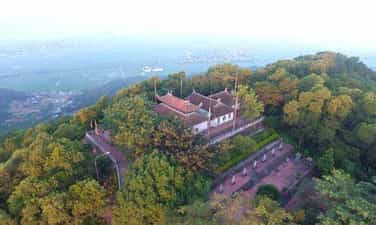
The An Phu - Kinh Chu - Nham Duong relic complex in Kinh Mon district, Hai Duong province has long been known for its rare historical, cultural and scenic values. On December 22, 2016, the Prime Minister signed a decision to classify the historical relics and scenic spots of An Phu - Kinh Chu - Nham Duong complex as a special national monument. Cao Temple, located on the highest peak of An Phu range, is the highlight of the An Phu - Kinh Chu - Nham Duong relic complex. Cao An Phu Temple belongs to An Sinh commune, built in the Tran dynasty (13th century), worshiping An Sinh Vuong Tran Lieu - father of Hung Dao Dai Vuong Tran Quoc Tuan. In the grounds of Cao An Phu temple, there is also Tuong Van pagoda worshiping Buddha and Emperor Tran Nhan Tong - founder of the Truc Lam Yen Tu Zen sect. About 50m lower than An Phu Temple and about 300m in front is the nearly 13m high stone statue of Hung Dao Dai Vuong Tran Quoc Tuan, standing with his sword in his hand, holding a book in his hand, eyes facing the northeastern border of Vietnam. Country. The project was built by the People's Committee of Hai Duong province in 1993 with General Vo Nguyen Giap laying the first stone. The monument area also has a terracotta bas-relief 45m long, 2.5m high, consisting of 265 pieces assembled, depicting the resistance war against the Mongols of the Dai Viet army and people by ceramic artists in Cay village, Binh Giang district (Hai Duong) participated in the production. Kinh Chu Cave has long been classified as one of the six beautiful caves of the Southern Heavens. Kinh Chu Cave is located in the Duong Nham limestone mountain range (Pham Menh commune) with towering lance-shaped rocks. The cave is located on the south side of the mountain, through 36 stone steps, opening up with 3 large cave doors. The cave space exposes wonderfully arranged stalactites created by nature. With a natural scene like the realm of bliss, the cave was created by ancient people into a temple to worship Buddha. On the left side of the cave, there are four big words "Van Thach book room" (Van Thach Bookstore) which is the reading place of Pham Su Manh, a famous mandarin during the Tran Dynasty. In Kinh Chu, there are also many unique caves such as Vang cave, Luon cave, Tien Su cave... with endless legendary stories. Kinh Chu is also attractive because of more than 40 unique Ma Nhai epitaphs carved into the cliffs. Notably, the horizontal rectangular stele on the roof of the cave is engraved with a poem by King Le Thanh Tong (1442 - 1497), the host of the Tao Dan festival when he visited this place. Nham Duong (Duy Tan commune) is a place of magnificent mountain landscapes with dozens of caves: Thanh Hoa cave, Tinh Niem cave, Chieng cave, Trong cave, Toi cave... These caves store artifacts of Prehistory attracts the attention of archaeologists. At Thanh Hoa cave behind the pagoda, in 2000, people found many fossil bones of elephants, rhinos, monkeys, wild boar, especially ape bones..., a total of 17 species of animals belonging to the Quaternary period, about us 3-5 thousand years. In addition, many human bones were discovered stuck to the cave walls covered by stalactites, belonging to the prehistoric period tens of thousands of years ago. There is also an ancient temple built during the Tran Dynasty (1225 - 1400), which is the ancestral home of the Taoist Zen sect, which contributed to the revival of Vietnamese Buddhism. The pagoda also preserves two stone towers of the Le Dynasty containing the relics of the first Zen Master Thuy Nguyet and the second Patriarch Tong Dien. Source: Hai Duong province electronic information portal
Hai Phong
4738 view
Rating : Special national monument

Con Son - Kiep Bac
Con Son - Kiep Bac relic is located in Chi Linh city, Hai Duong province, recognized as a special national relic in 2012. This place includes a complex of historical relics related to glorious victories. Three times, the army and people of the Tran Dynasty defeated the Yuan Mongol invaders in the 13th century and in the 10-year resistance war of the Lam Son insurgent army against the Ming army in the 15th century. This is a place associated with the lives and careers of national heroes Nguyen Trai and Tran Hung Dao along with many cultural celebrities of the nation: Tran Nguyen Dan, Phap Loa, Huyen Quang... Highlights of the relic site These relics are Con Son pagoda and Kiep Bac temple. Con Son Pagoda in Cong Hoa ward, Chi Linh city, is one of the Buddhist centers of the Truc Lam Dai Viet Zen sect founded by Dieu Ngu Giac Hoang Tran Nhan Tong in the 13th century. The pagoda's architecture is in the style of Gong script, including Tien Duong, Thieu Luong, and Upper Dien, which is a place to worship Buddha, including Buddha statues from the Le Dynasty up to 3 meters high. The road to Tam Quan is paved with bricks, running long under hundreds of years of weathered pine trees interspersed with lush, dark green lychee canopy. The three-entrance gate was renovated in 1995, in an ancient style, with 2 floors and 8 roofs with stylized floral and rattan motifs of the architectural art of the Le Dynasty. Nguyen Trai Temple, construction started on December 14, 2000, on a land area of nearly 10,000 square meters, at the foot of Ngu Nhac Mountain, located in the Thanh Hu Dong area and near the place where Mrs. Tran's temple used to be in the past. Thi Thai, Nguyen Trai's mother. On the right side is the Con Son stream flowing from North to South, winding from right to left, embracing the Temple area. The main temple leans back on To Son, on both sides leaning against the Ngu Nhac and Ky Lan mountain ranges, the left is Thanh Long and the right is White Tiger. In front there is a large lake, next is Truc Thon mountain opposite Phuong Hoang mountain. In the distance is the An Lac mountain range. Kiep Bac Temple is located in the two villages Duoc Son and Van Kiep, Hung Dao commune, Chi Linh city, and is the place to worship Hung Dao Dai Vuong Tran Quoc Tuan. Kiep Bac is the compound name of two regions: Van Yen (Kiep village) and Duoc Son (Bac village). This is an important relic in the Con Son - Kiep Bac relic area. The Kiep Bac temple area is a rich valley surrounded by the Dragon Mountains on three sides, and Luc Dau Giang on one side. Mountains form a posture of flanking dragons and tigers, and rivers form spacious halls. In front of the temple there is a large gate with three magnificent and massive doors. On the front of the gate, there are four words "Hung Thien Infinity", below there are 5 words "Tran Hung Dao Vuong tu". In the 13th century, this was where Hung Dao Dai Vuong Tran Quoc Tuan established a base, stored food, and trained soldiers in the resistance wars against the Mongols. In the 14th century, his temple was built here and was the place to organize annual festivals to offer incense to commemorate the hero of the Vietnamese nation, who had great contributions to the country and was revered by the people. is Saint Tran. Source: Hai Duong province electronic information portal
Hai Phong
5451 view
Rating : Special national monument