Relic point Vietnam
Việt Nam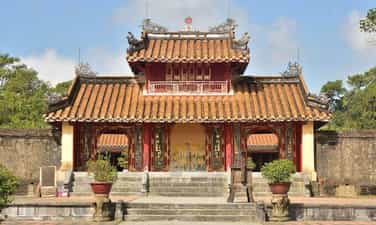
Minh Mang tomb
Minh Mang Tomb is located in Huong Tho Commune, Hue City, Thua Thien Hue Province. Minh Mang Tomb (Hieu Lang) is located on Cam Ke mountain about 14km from Hue city, near Bang Lang junction, where the source forms the Perfume River. Construction of the mausoleum began in September 1840 and was continued and completed by King Thieu Tri in 1843. Minh Mang Tomb is a large-scale architectural model of 40 large and small buildings, including palaces, temples and memorials... arranged on an axis along the 700m long Shinto road from Dai Hong gate outside. They reached the foot of the wall of La Citadel behind the king's tomb. The shape of the mausoleum resembles that of a person resting with his knees up on Kim Phung mountain, his legs stretched out to the river junction in front, the two halves of Trung Minh lake like naturally hanging arms. Shinto's opening is Dai Hong Mon (main gate to the Mausoleum), 9m high, 12m wide, this gate has three paths, the middle path only opens once to bring the king's coffin into the mausoleum and then closes tightly. There are also two side gates, Ta Hong Mon and Huu Hong Mon. Behind Dai Hong Mon is a 45m x 45m wide yard, on both sides there are two rows of statues of officials, elephants and horses. At the end of the yard is Bi communal house, on the stele there is the song "Thanh Duc Than Cong" (attributed to King Minh Mang). Next is the court yard; Hien Duc Mon opens the electric immersion area, which is limited to a square layer symbolizing the ground. Sung An Palace is located in the center, surrounded by the Left, Right, Phoi Dien (front) and Left Huu Tung rooms (back) which are also limited within the square wall. Hoang Trach Mon is the construction that ends the electrical impregnation area. Passing through three bridges across Trung Minh lake, you will reach Minh Lau. Minh Lau is the light tower, where the king meditates and is the place where the soul of the First Emperor goes. A moon-shaped lake named Tan Nguyet embraces Buu in a circle in the middle. This is the beginning of the boundless world, the King's resting place in the heart of a hill named Khai Trach Son. On both sides of the main axis of the mausoleum, there are many auxiliary works located symmetrically in pairs. Tomb of Minh Mang with two lakes and beautifully decorated architecture, is one of the most majestic and majestic tombs among the tombs of the Nguyen Dynasty kings. The work was recognized as a national monument on April 29, 1997. Source: Thua Thien Hue province electronic information portal
Hue
4998 view
Rating : National monument
Tomb of Tu Duc
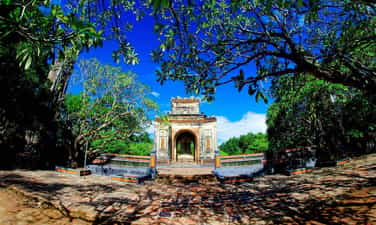
Tu Duc Tomb is located at Thuy Xuan Ward, Hue City, Thua Thien Hue Province. Tu Duc Tomb (Khiem Lang) was built in a narrow valley in Duong Xuan Thuong village (now Thuong Ba village, Thuy Xuan ward, Hue city). This is one of the most beautiful works of royal architecture of the Nguyen Dynasty. The mausoleum is located in the middle of a vast pine forest, 8km from Hue. The overall architecture of the Mausoleum is located in a La Thanh circle of about 12 hectares, including nearly 50 large and small architectural works spread out in clusters on high and low ground about 10 meters above each other. The layout of the mausoleum consists of two main parts, on two parallel axes, with Giang Khiem mountain in the front as the front court, Duong Xuan mountain as the back occipital, Luu Khiem lake as the Minh Duong element. The buildings in the mausoleum in both the palace and mausoleum areas all have the name Khiêm. The panorama of Tu Duc mausoleum looks like a large park. Through Vu Khiem gate, to Luu Khiem lake area, on the lake there are Pulse Khiem ta and Du Khiem ta, where the King often came to admire flowers, write poetry and read books. Continue on three clear stone steps leading to Khiem Cung Mon, then to Hoa Khiem Palace, this was originally the King's workplace but is now used to worship the King and Queen. After Hoa Khiem Palace comes Luong Khiem Palace, formerly the King's resting place and later becoming a place to worship the King's mother, Mrs. Tu Du. To the right of Luong Khiem Palace is On Khiem Hall, where royal belongings are stored. On the left side of Luong Khiem Palace, there is the Minh Khiem Theater for the King to watch. This is considered the oldest theater in Vietnam still preserved. Right behind the two rows of majestic statues of civil and military mandarins is the Bi Dinh (stele house), a large stone stele with the 4,935-word Khiêm Cung ky of King Tu Duc engraved about his life, royal career and mistakes. and your mistakes. On the hill across Tieu Khiem Tri semicircular lake is Buu Thanh built of bricks, in the middle is a small house built of clear stone, where the King rests. Tomb of Tu Duc is a masterpiece of poetry, a charming landscape painting. The work was recognized as a national monument on April 29, 1979. Source: Thua Thien Hue province electronic information portal
Hue
8463 view
Rating : National monument
Khai Dinh mausoleum
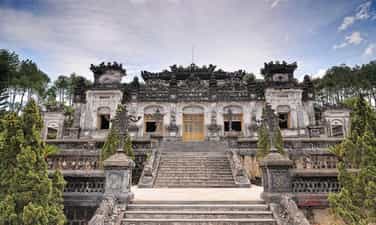
Khai Dinh Tomb, also known as Ung Lang, is located in Thuy Bang Commune, Hue City, Thua Thien Hue Province. King Khai Dinh (1916-1925) was the 12th king of the Nguyen Dynasty and the last person to build a mausoleum, preparing for the "departure" of a king. Khai Dinh Tomb was built on the slopes of Chau Chu mountain (also known as Chau E) 10km from Hue city center. Construction on the mausoleum began on September 4, 1920 and took 11 years to complete. King Khai Dinh sent people to France to buy iron, steel, cement, and tiles, and to China and Japan to buy porcelain and glass to build projects. Compared to the mausoleums in the mausoleum system in Hue, Khai Dinh mausoleum has a small area (117m 48.5m) but is very elaborate and time-consuming. It is the result of integration of many classical and modern Asian, European, and Vietnamese architectural lines. The entire mausoleum is a rectangular floating block rising up to 127 steps. The mountains, hills, and streams of a large area around the Mausoleum are used as feng shui elements: criminal record, post-occipital, left dragon fruit, right white tiger, clear road, water gathering, creating a natural outdoor environment for Khai Dinh mausoleum. majestic nature. Thien Dinh Palace is at the highest position and is the main structure of the Mausoleum. This work consists of 5 consecutive parts: On the left and right sides are rooms for soldiers guarding the mausoleum, in front is Khai Thanh palace - where the altar and portrait of King Khai Dinh are kept, in the middle is the Buu altar, the statue of King Khai Dinh. The king and his tomb are below, in the innermost is the altar with the tablet of the deceased king. The highest artistic value of the Mausoleum is the interior decoration of Thien Dinh Palace. The three middle rooms in the palace are all decorated with reliefs made of porcelain and colored glass. In particular, the Buu canopy on the bronze statue weighs 1 ton with soft, elegant curves that make the viewer feel like it is made of very gentle velvet. Below the canopy is a bronze statue of King Khai Dinh, cast in France in 1922 at the king's request. The person responsible for creating the artistic masterpieces in Khai Dinh mausoleum is artist Phan Van Tach, the author of the three largest "Cuu Long Van" murals in our country, decorated on the ceiling. three rooms in the middle of Thien Dinh Palace. Khai Dinh Tomb is the pinnacle of the art of shaping porcelain and glass, this is truly a work of artistic and architectural value. Khai Dinh Tomb was recognized as a national monument on April 29, 1979. Source: Thua Thien Hue province electronic information portal
Hue
4728 view
Rating : National monument
Hue Citadel
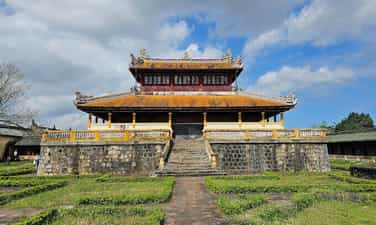
Hue Citadel is located at Street 23/8, Thuan Hoa Ward, Hue City, Thua Thien Hue Province, on the banks of the romantic Perfume River. Hue Citadel was built in the first half of the twentieth century, this is one of the relics recognized by UNESCO as a World cultural heritage since 1993. Hue Citadel is the place where people live and activities take place. of the Nguyen kings and the last feudal court of our country. Hue is a peaceful and poetic land, so King Gia Long chose this place to build the Hue Citadel in 1803. It took 30 years for this project to be officially completed. Hue Citadel was built with Hue royal architecture, so every line and decoration is very sophisticated. Hue Citadel has two main areas: the Imperial Citadel and the Forbidden City, each area includes many different works. The Imperial Citadel area includes Ngo Mon gate and Thai Hoa Palace. The Forbidden City is an area reserved for the king and royal family, including Dai Cung Mon, Ta Vu and Huu Vu, Can Chanh Palace, Thai Binh Lau, Dien Tho Palace... 1. Imperial Citadel area Ngo Mon Gate was built massively and majestically with extremely elaborate, sophisticated and solid patterns. Ngo Mon is not simply the entrance gate but also the representative face of the Hue Royal Citadel, so it is designed with many layers with a surrounding moat system. The Ngo Mon Gate of Hue Imperial Citadel looks south of the citadel and has 5 gates, the main gate in the middle is for the king, and the two side gates are for civil and martial mandarins. The remaining area of the two surrounding gates is for soldiers, elephants and horses to follow the king to protect and serve him. Thai Hoa Palace is a symbol of the power of the Nguyen Dynasty at that time. Thai Hoa Palace is the most important building in the overall Imperial Citadel of Hue. This place and Dai Trieu Nghi yard were once the place where court meetings of the Nguyen Dynasty took place, most of which were court meetings. important. Thai Hoa Palace uses ironwood as material. The roof, columns, etc. are carved with delicate, meticulous dragon shapes. In the middle of the palace is the king's throne placed in a solemn position, where the king sits during court meetings. 2. Forbidden City area Dai Cung Mon is the main door (south) into the Forbidden City, consisting of 5 compartments and 3 doors and was built during the reign of King Minh Mang, in 1833. The door in the middle compartment is only for the king to enter, the back on both sides has two corridors connecting Ta Vu and Huu Vu. Dai Cung Mon overlooks the front yard towards Thai Hoa Palace, built entirely of wood, topped with lapis lazuli tiles. Ta Vu and Huu Vu are two buildings right opposite Can Chanh palace, built in the early 19th century. Ta Vu building was built for literary mandarins, Huu Vu is a place for military mandarins in the court. These two buildings are the place to prepare for rituals before the court, where competitions or banquets are held. Can Chanh Palace is located directly with Thai Hoa Palace in the North-South direction, this is the place for the king to hold court. Can Chanh Palace is considered the largest and most beautiful wooden structure in the entire Forbidden City. The columns are made of ironwood, the upper frame is delicately and elaborately carved. Thai Binh Lau is located inside the Forbidden City of the Hue Citadel, this place will be used for the king to rest in his free time, read books, write literature or relax poetry. Thai Binh Lau was built in 1919 by King Khai Dinh and completed in 1921. Among the many palaces in the Imperial Citadel of Hue, Dien Tho Palace is considered the largest palace architectural system in Hue. This is the residence of the Queen Mother and the Queen Mother, powerful women next to the king. Hue Citadel is the largest scale project in Vietnam's history with a construction period lasting many years with tens of thousands of construction workers along with activities of filling rivers, digging trenches, building ramparts, besides Huge amounts of soil and rock amounting to millions of cubic meters. Visiting the Hue Citadel relic complex, you will admire hundreds of magnificent shrines, temples and palaces. With its magnificent beauty combined with unique architecture, it promises to be a destination that will bring you many interesting experiences. Source: Thua Thien Hue tourism information portal
Hue
8518 view
Rating : National monument
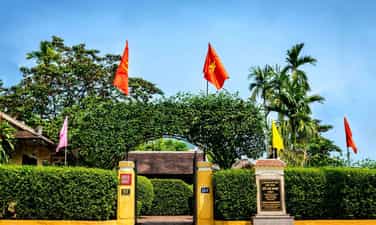
Memorial House of President Ho Chi Minh
Uncle Ho's Memorial House is at No. 112 (new number 158) Mai Thuc Loan, Thuan Loc Ward, Hue City, Thua Thien Hue Province. This is the house where President Ho Chi Minh lived when he followed his family to Hue for the first time from 1895 - 1901. In 1894, Mr. Nguyen Sinh Sac (father of President Ho Chi Minh) passed the Bachelor's exam at Huong Nghe An exam school. In 1895, he went to Hue to take the Ho Chi Minh exam but did not pass. To prepare for the next exam, he applied to study at Quoc Tu Giam School - Hue and was accepted. In order to have the conditions to take care of his children, and his family was also a source of support for him during his busy days, he returned to his hometown and, along with his wife, Hoang Thi Loan, brought his two sons, Nguyen Sinh Khiem and Nguyen Sinh Cung, to Hue. . Thanks to an acquaintance's introduction, he rented a small house on Dong Ba Street (a current relic house). In this house, Mr. Nguyen Sinh Cung (Uncle Ho's name as a child) lived happy years with his family: An exemplary but strict father, dedicated to taking care of the books day and night; a gentle, responsible mother, spending time at the loom and joy when welcoming baby Nguyen Sinh Xin into the world. But this house also imprinted in Nguyen Sinh Cung's soul the pain of losing his mother and the cry of his child thirsting for milk. And the love and care of the poor people of Hue. Those deep sentiments are the cultural values that contribute to the formation of moral personality and humanism. Ho Chi Minh - He spent his entire life striving for independence, freedom of the nation, and happiness of the people. Uncle Ho's memorial house at 112 Mai Thuc Loan is a wooden house with three rooms, four columns, architectural style of traditional Hue houses, with a tiled roof, walls surrounded by bricks, the front is the system of "upper bars, lower bars"; Connected to the main house is the kitchen, plastered walls, and thatched roof. The house is located in a complete house - yard - garden complex. In particular, this house is where Ms. Hoang Thi Loan gave birth to her fourth child, boy Nguyen Sinh Xin, and is also where she breathed her last breath at the age of 33 on December 22, the year of the Rat (February 10, 2019). 1901). * Uncle Ho's memorial house on Mai Thuc Loan street, the house was recognized by the Ministry of Culture and Information as a national historical relic on February 2, 1993. * On December 31, 2020, the Prime Minister issued a Decision to classify the President Ho Chi Minh relic system in Thua Thien Hue as a special national historical relic. (including 4 relics that were previously ranked as National: Uncle Ho's memorial house on Mai Thuc Loan street; Hue National School site; President Ho Chi Minh's childhood memorial house in Duong No village and Duong No village communal house). Source: Thua Thien Hue province electronic information portal
Hue
8746 view
Rating : Special national monument
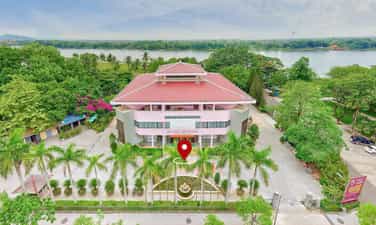
Ho chi minh museum
Ho Chi Minh Museum in Hue was established on September 16, 1980, under the direction of the Binh Tri Thien Provincial Party Committee, on the basis of an exhibition house about the life and career of President Ho Chi Minh. On June 30, 1982, Ho Chi Minh Museum Binh Tri Thien officially became a member of the system of President Ho Chi Minh Museums and memorial relics. Since 1989, after Binh Tri Thien province was separated into three provinces, Ho Chi Minh Museum of Binh Tri Thien changed to Ho Chi Minh Museum of Thua Thien Hue, its functions and tasks have not changed. On May 19, 1998, on the 108th birthday anniversary of President Ho Chi Minh, the Ho Chi Minh Museum in Thua Thien Hue was officially rebuilt and inaugurated on May 19, 2000. 2007 , Thua Thien Hue Ho Chi Minh Museum was ranked as a class II museum on September 27, 2007 by the People's Committee of Thua Thien Hue province. Ho Chi Minh Museum in Thua Thien Hue, after more than 40 years of establishment and development, has a spacious and modern facility. Thua Thien Hue, the land that nurtured President Ho Chi Minh's childhood during the years he and his family lived, studied and participated in patriotic activities during the period 1895 - 1901 and 1906 - 1909. This is the place where This contributed to molding and forming his patriotic thoughts, thereby motivating him to be determined to go out and find a way to save the country and the people. Ho Chi Minh's Heritage - Uncle Ho's years in Hue from the perspective of "objects", is the system of relics he left behind. Up to now, according to statistics in Thua Thien Hue, there are about 20 monuments and relic sites commemorating President Ho Chi Minh, of which 4 monuments are ranked by the Prime Minister as special national monuments: souvenir of President Ho Chi Minh at Mai Thuc Loan street (new number 158); Hue Quoc Hoc School; Memorial House of President Ho Chi Minh in Duong No village; Duong No village communal house and 5 provincial-level relics. Regarding "intangible" heritage, there are thousands of written and folk documents about him, talking about him, his own memories of his time in Hue and Uncle Ho's heart for Thua Thien Hue and Thua Thien Hue. with Uncle Ho. The legacy that President Ho Chi Minh and his family left behind on the land of Thua Thien Hue is a pride and priceless asset that the Ho Chi Minh Museum in Thua Thien Hue has the honor and responsibility to preserve. embellish and promote values, in order to contribute to gradually bringing Ho Chi Minh's ideology, ethics, and style into life, encouraging all classes of people to promote the cause of industrialization, modernization, and striving for the goal of rich people, strong country, democracy, fairness and civilization, building Thua Thien Hue economically rich, culturally beautiful, strong in national defense and security. Source: Ho Chi Minh Museum, Thua Thien Hue
Hue
4663 view
Rating : National monument

Hue Quoc Hoc School
Hue National School Relics is located at 12 Le Loi, Hue city, Thua Thien Hue province. Quoc Hoc Hue School is now Hue Quoc Hoc specialized high school. The school is the place to witness Uncle Ho's years of diligent study and vibrant activities in the patriotic movement of the early 20th century. Through many ups and downs of history, Hue National School is still a place to mold and nurture talents for the country and preserve within itself the tradition and enthusiasm of revolutionary geniuses. Quoc Hoc School was established according to the edict dated September 17, the 8th year of Thanh Thai (October 23, 1896) and the Decree dated November 18, 1896 of the Governor General of Indochina. This is the main French-Vietnamese school in the whole of Indochina. In May 1906, Mr. Nguyen Sinh Sac entered Hue capital to accept the position of Minister of Rites. Nguyen Tat Thanh and his brother Nguyen Tat Dat followed their father to Hue to live and study. His father sent him to Dong Ba French-Vietnamese Primary School, Nguyen Tat Thanh was smart, studious and good at studying. As an excellent student at the school, in the 1908 Primaire exam, Thanh was one of the ten best students at Dong Ba French-Vietnamese Primary School who passed the exam to enter the second high school class of Quoc Hoc School in the school year 1908 - 1909. . Studying at Quoc Hoc School, Nguyen Tat Thanh had the opportunity to absorb Western civilization more deeply, but he also better understood the demagogic nature of the slogan "Freedom - Equality - Fraternity" that French colonialists are preaching. In the early years of the 20th century, the patriotic movement initiated by Phan Boi Chau, Phan Chu Trinh, Luong Van Can... had a great impact on Nguyen Tat Thanh's awareness, he became a liaison. for patriotic organizations and mobilize classmates to support patriotic movements. These were the activities that marked the beginning of Nguyen Tat Thanh's patriotic struggle career, from which he decided to say goodbye to Quoc Hoc school, gradually go to the South, go abroad to find a way to save the country. In 1975, the South was completely liberated, the country was independent and unified, Quoc Hoc High School truly became a socialist school, a place to attract and train gifted students from Thua Thien Hue, contributing to the training of talented people. for country. In 1990, to celebrate the 100th birthday of President Ho Chi Minh, to commemorate the school's outstanding student, Ho Chi Minh Museum in Thua Thien Hue together with Quoc Hoc School built a statue of Mr. Nguyen Tat Thanh in Thua Thien Hue. Right in the center of the school. Quoc Hoc School is proud to have contributed to cultivating a great personality, a great bravery, and a genius leader for the nation: Ho Chi Minh. * Quoc Hoc School Relics was recognized by the Ministry of Culture, Sports and Tourism as a National Historical Relic on March 26, 1990, and ranked as a special National Relic by the Prime Minister on March 26, 1990. December 31, 2020. Source: Thua Thien Hue electronic information portal
Hue
8231 view
Rating : Special national monument
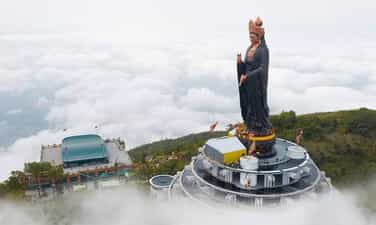
Mrs. Black Mountain
Ba Den Mountain is located in the northeast of Tay Ninh city, Tay Ninh province, 11km from the city center. This is the highest mountain in the South (986m), located in the historical, cultural, scenic and tourist relic complex of Ba Den Mountain, which has been recognized by the Prime Minister as a national tourist area. Ba Den Mountain is a famous landscape considered a symbol of Tay Ninh province. Looking down from Ba Den Mountain, you will see a vast plain covering the outskirts of Tay Ninh city. Seen from a distance, Ba Den Mountain is sometimes clearly visible against the blue sky, sometimes hidden in the mist. This place also attracts tourists by an architectural complex of temples, pagodas, shrines, towers... all bearing the characteristics of Buddhist culture and folk beliefs spreading from the foot of the mountain, the slopes, to the top. On Ba Den Mountain there are a number of pagodas such as: Buddha Pagoda, Hang Pagoda, Ha Pagoda, Trung Pagoda, Van Son Pagoda... In addition, there are many small caves here: Thanh Long Cave, Ba Co Cave, Ba Tuan Cave... The most impressive for tourists is probably Linh Son Tien Thach Pagoda, where Ba Den is worshiped, where there is a "good reputation" about the sacredness of Ba Den (in the minds of the people here, they always believe that she often The divine spirit blesses and helps people in the area during times of crop failure, famine or injustice). The pagoda was built in the 18th century and has undergone many restorations, most recently inaugurated in 1997. With an altitude of up to 986m, all year round the top of Ba Den Mountain is covered with mist and clouds, making it as beautiful as a fairyland. Currently, there are many beautiful trekking routes with many challenges that attract tourists such as pagoda roads, electric pole roads, climbing Ba Den mountain through water pipes... In addition, there are other roads to reach the top of the mountain. such as: Ma Thien Lanh road, Phung mountain road and white stone road. In general, these routes are quite difficult to follow and easy to get lost for those who have no climbing experience. Visitors can visit the temple by cable car or slide system. The pilgrimage process also gives visitors many emotions when admiring the majestic view of Ba Den Mountain with its eye-catching blue color, dotted with poetic ornamental flowers amidst the green mountains and forests. Experiencing the cable car system also brings an exciting feeling to visitors. The total length of the two cable lines is 3,057m with a total of 191 cabins. Ba Den cable car station is the largest in the world with an area of up to 10,959 square meters. Chua Hang Station is uniquely designed like an ancient temple, inspired by the architecture of Ba Den Pagoda and Hang Pagoda; The highlight of the statue of Shakyamuni Buddha meditating is designed to be invisible along both sides of the wall. Van Son Station is a miniature "Nordic fairy tale world"; Columns and interior walls are multicolored stereoscopic paintings inspired by the architecture of Tay Ninh Holy See. Every year, from around the full moon of the first lunar month to the end of the third lunar month, it is the most crowded occasion for tourists to make pilgrimages to worship and participate in Ba Den mountain festivals. This is an opportunity to admire the moment when nature transforms into the most brilliant spring. Visitors can participate in the Ba Den Ceremony and experience the statue bathing ritual on the 5th day of the 5th lunar month. Visitors can also choose to spend the night in the mountains to experience a Da Lat of the Southeast region; Experience the four seasons of spring, summer, fall, and winter in one day. Visitors will feel the wildness and tranquility of the Ma Thien Lanh area, be able to touch and take "check-in" photos at the 986m milestone, watch the brilliant sunrise at the top or watch the sea of floating clouds. Source: Vietnam National Tourism Administration
Tay Ninh
6882 view
Rating : National monument
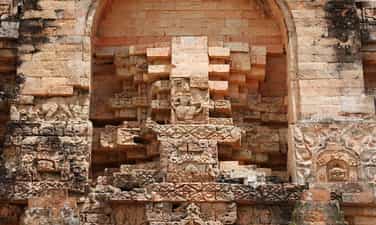
Chot Mat ancient tower
Chot Mat Tower Historical-Cultural Relic, located in Xom Thap hamlet, Tan Phong commune, Tan Bien district, Tay Ninh province, was recognized by the Ministry of Culture and Information (now the Ministry of Culture, Sports and Tourism) as historical - cultural relic on July 23, 1993. Also one of the last three ancient towers remaining in the South of our country. Having undergone many restorations in 1938, 2003 and most recently in 2013. Despite undergoing restorations, the Chot Mat ancient tower relic site has given itself a new look but still remains retains the spirit of ancient architecture. The entire Tower is built of brick and slate with the top of the tower tapering upward, from the ground to the highest point of the tower is estimated to be 10m. In addition, this ancient tower is located on a high mound in the middle of the field, so from a distance it looks like a pen rising gradually. In 2003, the People's Committee of Tay Ninh province decided to approve the investment project to restore, embellish and preserve Chot Mat tower relics and carried out the restoration, restoration, display and opening of the excavation pit in 2003. into use. On November 27, 2019, the Provincial People's Committee issued a Decision regulating the decentralization of management, protection and promotion of the value of historical and cultural relics and scenic spots in Tay Ninh province. Decision to assign the People's Committee of Tan Bien district to directly manage 4 relics, including the National Historical-Cultural relic Thap Chot Mat. In particular, the Chot Mat Tower Historical-Cultural Relic in Tan Phong commune, Tan Bien district was chosen to be part of the tourism development link of Tay Ninh Province. This is a tourist destination worth exploring, contributing to tourism development in Tan Phong commune in particular and Tan Bien district in general. Source: Tay Ninh province electronic information portal
Tay Ninh
12383 view
Rating : National monument
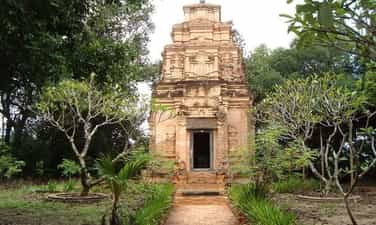
Binh Thanh Ancient Tower
Binh Thanh ancient tower is in Binh Phu hamlet, Binh Thanh commune, Trang Bang district, Tay Ninh province. Binh Thanh ancient tower is one of three typical architectures representing the remaining Oc Eo culture in the South that still exists today. The tower is located on the right bank of the Vam Co Dong River, about 50 km southeast of Tay Ninh city center. This is an ancient tower built in the 8th and 9th centuries, and is now more than a thousand years old. The entire Binh Thanh ancient tower area consists of three buildings, but only the main tower still retains its architectural integrity thanks to restoration in 1998. The other two towers have now collapsed, leaving only ruins above. square foundation. Binh Thanh ancient tower and Tay Ninh Chop Mat tower were officially discovered through archaeological reports at the Indochina archaeological research library in the early 20th century and were recognized as national historical relics in 1999. 1993. Binh Thanh ancient tower is a testament to many ups and downs of Vietnamese history over the past 1000 years. This is the only tower with stone walls that have remained almost intact since it was first discovered in 1886. It is also a rare architectural heritage of the Oc Eo culture that still retains its original construction design. . Besides, Binh Thanh ancient tower also contains many traditional cultural values, religions and beliefs of the ancient Funan people. Typically, the patterns and reliefs embossed on the tower, mostly images of stylized flowers, gods, vitality... are popular images in Hinduism, worshiped by Funan people. worshiped thousands of years ago. Through the architecture, construction techniques and ingenious sculpture shown on Binh Thanh ancient tower, it contributed to reflecting the peak development of Oc Eo culture at that time. This is a valuable document that researchers are constantly exploring to discover more unique cultural and historical values at this ancient relic site. Not only that, the discovery of an ancient tower more than 1,000 years old further confirms that Tay Ninh land since ancient times has been a focal point for trade and exchange of many great cultures, a place with a long history. before the Vietnamese set foot in Tay Ninh in the 17th century. The tower is built on a square ground with a total height of 10m and each side is 5m long. The four sides of the tower are built in the East - West - South - North directions and have a single main door facing East. The main door is designed to protrude outwards with a width of 1m and a height of about 2m. Below the main door are stone steps and above there is a large stone slab, embossed with many delicate patterns. In addition, the West, South, and North walls are all designed with fake doors and decorated with reliefs with elaborate patterns no less than the main door. The space inside the tower is not large, mainly used as a place to worship Linga and Yoni - a symbol of Shiva in Hinduism. Binh Thanh ancient tower carries a long history and sophisticated architecture in every detail... Source: Tay Ninh Tourism
Tay Ninh
5578 view
Rating : National monument