Relic point Vietnam
Việt Nam
Relics of French Fort and Lung Ho citadel wall
The French Fort relic and Lung Ho citadel wall are located in Lang Qua village, Lung Ho commune, Yen Minh district, Ha Giang province. The fortress and the city wall are two separate areas and are located about 2km apart, at an altitude of 742m above sea level. The French Fort and Lung Ho wall relics are 106km north of Ha Giang city. According to French documents, in 1907 Duong Thuong land belonged to Dong Minh canton, Yen Minh commune, Ha Giang province. During the inspection trip to the Dai Mien, Tieu Mien, Yen Minh, Yen Dinh, Du Gia, and Duong Thuong regions of Lieutenant Colonel Boifacy, commander of the 3rd military force, in report No. 1165, September 1913, this land " needs to be monitored and that is why there must be Duong Thuong post..." After this inspection trip, the work of planning to build a new post was gradually carried out. The old Duong Thuong post, now Lung Ho post, was built and completed in the years 1935 - 1940. The work of building the post was extremely difficult, they forced people in the surrounding area to work as laborers and servants. Carrying stones and water for construction, anyone who did not comply was beaten or shot to death. Citadel wall: The citadel wall is nearly 2km away from the fort and is arranged based on natural conditions along the mountain slopes on both sides of the unique road connecting Lung Ho and Yen Minh with the purpose of controlling goods, people and horses in this area, according to the report. The unit will contact the station about 2km away. The main material for building the wall is mountain stone, taken from the construction site and surrounding areas in many different sizes. The mortar used to build is mainly sand mixed with lime, without cement. . Lung Ho Fort: The fort was built on high, fairly flat land facing East - West. The length of the surrounding wall is nearly 200m and is equipped with firing positions. The firing positions all have observation holes on the outside. The main material for building the wall is mountain stone, taken from the construction site and surrounding areas in many different sizes. The mortar used to build is mainly sand mixed with lime, without cement. . The design of the station includes a horizontal block and a vertical row of houses on the west side; The area of vertical houses and watchtowers in the East; Between the East and West areas is a large area of land. In general, many construction items were dilapidated and damaged, and almost the entire roof of the vertical and horizontal rows of houses were dismantled. Militarily, Lung Ho Fort and wall are large-scale works with an important position blocking the road from Lung Ho to Duong Thuong, and at the same time preventing revolutionary propaganda activities in our Duong Thuong region during the period. this time. The work is evidence of a historical period of French occupation and activities in the remote, mountainous area of Ha Giang province. Under the control and enslavement of the French colonialists in the Duong Thuong area, people's lives fell into poverty. Implementing the leadership resolutions of the Northern Region Party Committee and the Cao - Bac - Lang Interprovincial Party Committee. “At the end of 1944, comrade Viet Hung carried out the task of opening up the communication route from Cao Bang - Bac Can - Ha Giang to Yunnan (China) to welcome officers and transport weapons from abroad to the country. Comrade Viet Hung came to Lung Ho, Duong Thuong built a base, using Duong Thuong as a base, wherever Viet Minh cadres went, they received support from their compatriots. On March 9, 1945, the Japanese fascists overthrew France. In Duong Thuong (Yen Minh), Colonel Dao Van At panicked and fled the station. Seizing that opportunity, Viet Minh officers in Duong Thuong held an emergency meeting, occupied Duong Thuong station, destroyed the warehouse, took corn and rice to distribute to the people and set up a guard station outside the base area, which was carried out very urgently. On March 16, 1945, we captured Duong Thuong station, owned and completely controlled the Duong Thuong area, from here Viet Minh cadres spread to the base to lead the movement. Along with Sung Chu Da relic site, Duong Thuong revolutionary base, Mau Long cave is recognized as a national scenic spot, Du Gia national park and Gau Tao, Long Tong, Moon Bridge, and Cap Sac Festivals. , Thuong Tho... Notably, the Tay People's Fish Festival is held in Mau Due commune. Along with the direction of the district and province in the coming time, the Lung Ho Fort and wall relics will continue to be attractive destinations for tourists when coming to Yen Minh. Source: Ha Giang Provincial Party Committee Propaganda Department
Tuyen Quang
9380 view
Rating : National monument

Sung Khanh Pagoda
Sung Khanh Pagoda is located in Lang Nung village, Dao Duc commune, Vi Xuyen district. The pagoda is located near Highway 2, 9 km from Ha Giang City. Construction of Sung Khanh Pagoda started from January of the year Binh Than under Thieu Phong (1356) until the full moon of April when it was completed. Through many events of time and history, the pagoda built in the Tran dynasty and later restored in the Le dynasty was ruined, the Buddha statue and worship objects were lost. There are only 2 stone stele and 1 bell that have survived the test of time, the most notable of which is the stele built during the reign of King Tran Du Tong in 1367. The stele is placed on a matching stone turtle, marked Uniquely, the stele's forehead is covered in a bow-shaped decorative tape divided into 3 panels: The middle panel is engraved with the image of Amitabha Buddha sitting on a 2-petalled lotus, with a disciple standing on each side with clasped hands. front chest; The two panels next to it are engraved with two identical dragons, seemingly symmetrical in a flying position, their heads raised high towards the lotus. According to researchers, this stele's forehead is a special decorative combination, never seen on any other stele currently known in our country. This stele is a unique original artifact that is still relatively intact, and is used to compare and contrast some Tran Dynasty characters when researching other documents. The stele not only confirms the birth of a Buddhist temple in a remote border area, but also has an important historical record that the Nguyen family's practice as administrative assistants here is tied to the temple. The stone stele of Sung Khanh Pagoda is an intact stele document, decorated with images of Buddha, dragons, flower strings... never seen on any known Tran Dynasty stele. The stele also helps provide additional documents for understanding place names, history, and writing during the Tran Dynasty, especially the appearance of Nom characters engraved in the stele. In addition, we also know that the Tutoring regime in the Tran Dynasty was widely implemented by the Central government. The stele is also evidence of the influence of Buddhism during the Tran Dynasty at that time. Furthermore, a historical consequence that we see is a strong manifestation of the Tran dynasty's central government's strict management of all border regions of the country. That's why this stele was recognized as a National Treasure in 2013. In 1705, the temple was restored. This restoration cast a bell and carved a stone stele recording the restoration event of the pagoda. The bell is 0.90m high, with a wide mouth diameter of 0.67m. Especially in the 4 zones of the bell, each zone has 2 embossed human-shaped reliefs (10cm high arranged at the corners of the zones) to protect and guard the 8 directions. After 1964, due to historical conditions and fierce war, Sung Khanh pagoda was not regularly cared for and protected and soon collapsed. By 1989 the temple was rebuilt; In 1993, Sung Khanh Pagoda was classified as a historical relic; In 1999, it was recognized as a national historical relic. Sung Khanh Pagoda is associated with the Long Tong festival here. From 1994 to present, the Long Tong festival (down to the fields) has been restored. The festival takes place on the 15th day of the first lunar month, held in the field in front of the temple gate. On this day, people in villages, communes and surrounding areas gather here to attend ceremonies and worship Buddha. Still following the ancient custom, the first ceremony is to offer thanks to the gods and pray for favorable weather, good harvests, and a peaceful and prosperous village. After that, people continue to offer offerings to the temple to worship Buddha. Following the ceremony is the festival with many traditional folk games, of which the most fun and crowded is the toss-up festival. Local people often believe that in the festival there must be someone who can toss a five-colored shuttlecock that penetrates the bull's eye for the village to have good business that year. The festival is held joyfully, jubilantly and excitedly, with the purpose of opening a new planting season, giving thanks to heaven, earth, the Nong God, Phuc Hy God, the Village Tutelary God..., and praying for a prosperous new year. peace and a peaceful, peaceful, happy life... Sung Khanh Pagoda is a spiritual tourist destination on the land of Vi Xuyen. Despite experiencing many ups and downs, this place still retains historical and cultural values from ancient times. Coming to Sung Khanh Pagoda, we have a peaceful, quiet space amidst the majestic mountains and forests, an opportunity to enjoy the peaceful, poetic natural beauty of Ha Giang. Source: Ha Giang Provincial Party Committee Propaganda Department
Tuyen Quang
4835 view
Rating : National monument
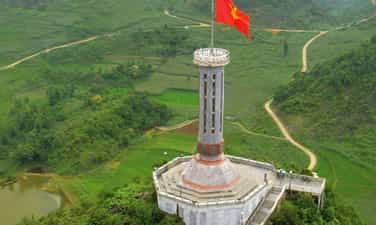
Lung Cu Flagpole
As the national flagpole, symbolizing the northernmost landmark of the Fatherland, Lung Cu flagpole is located at Lung Cu peak, also known as Dragon mountain peak (Long Son) in Dong Van district, Ha Giang province. This location is located at an altitude of about 1,470m above sea level. Lung Cu flagpole has a long history, having undergone many restorations and embellishments, the new octagonal flagpole with a height of over 30m was inaugurated on September 25, 2010. First built during the reign of Ly Thuong Kiet, the flagpole was initially made only of sa Moc tree. The column was rebuilt during the French colonial period in 1887. In the following years, such as 1992, 2000 and especially 2002, the flagpole continued to be restored and rebuilt many times with the size and scale increasing over time. In 2002, the flagpole was erected with a height of about 20m, the base and pedestal of the column are hexagonal shaped and at the base of the column are 6 reliefs depicting the surface of Dong Son bronze drums. According to the current design, the flagpole is built according to the Hanoi flagpole model but has a smaller size, height of 33.15m (10m more than the old flagpole) of which the base is 20.25m high, the outer diameter of the pole body is 20.25m high. 3.8m wide. The base and pedestal of the flagpole have 8 blue stone reliefs simulating the face pattern of the Dong Son bronze drum and motifs illustrating the stages through each period of the country's history, as well as its people. This location is also ranked as a national historical and scenic site, a symbol of affirming national sovereignty. Every year, Lung Cu flagpole welcomes a large number of tourists to explore. Source: Trang An Heritage
Tuyen Quang
5747 view
Rating : National monument

Trong Con sub-area
Trong Con Sub-area relic site in Bang Hanh commune, nearly 30 km from the center of Bac Quang district, has National Highway 279 running from Bac Quang district (Ha Giang) through Bang Hanh commune to Chiem Hoa district of Tuyen Quang province. . Since around 1939, the anti-imperialist movement has been rekindled here when comrade Pham Trung Ngu, a member of the Indochina Communist Party from Hoa An district, Cao Bang province, was assigned to Bang Hanh general, now in Bac Quang district (Ha Giang) to build a revolutionary base through teaching. In just a short time, comrade Pham Trung Ngu aroused the patriotism and revolutionary consciousness of the people in the region, denouncing French colonial rule. However, due to being discovered by the French colonialists, comrade Pham Trung Ngu had to withdraw from Bang Hanh to operate elsewhere. Implementing Comrade Ho Chi Minh's Directive, on June 1, 1945, comrade Le Quang Ba (aka Le Tam) and comrade Be Trieu (aka Hai Nam) commanded an armed propaganda team consisting of 54 soldiers. sent from Cao Bang to Bang Hanh district to propagate and build a revolutionary base. To ensure confidentiality and safety, comrades in the Command Committee were divided into groups to propagate and build the base. In just a short time, the armed propaganda team opened many short-term training classes, established guerrilla and self-defense teams, and national salvation organizations and named the area of operation "Zhong Con Sub-area". (name of hero Ly Tu Trong) includes Bang Hanh, Lien Hiep, Kim Ngoc, Vo Diem, Huu San communes. On June 24, 1945, representatives of the revolutionary government of communes in Trong Con Sub-area held a meeting at Thac Ve, Bang Hanh commune, to establish a revolutionary government and the general Viet Minh Front. Here, the people witnessed the revolutionary government burning with scarves and seals, eliminating the oppressive and exploitative regime of the feudal empire, organizing the people to produce, protecting order and security, build a new life. Since then, the revolutionary movement has grown stronger and quickly spread throughout Bac Quang district and surrounding areas. In August 1945, the revolutionary movement of ethnic people in Ha Giang province grew strong, together with the whole country rose up to seize the government and gain independence. 74 years have passed, the Thac Ve cliff is still there on the Lo river, engraved with the contributions of revolutionary soldiers and people of all ethnic groups on the left bank of the Lo river in Bac Quang district (Ha Giang) to the revolution. Together with the whole country, they rose up to seize power and gain independence. In 1996, the revolutionary historical relic site of Trong Con sub-area in Bac Quang district (Ha Giang) was recognized by the State as a national relic. Source: Vietnam News Agency
Tuyen Quang
5444 view
Rating : National monument

Cang Bac Me National Historical Relic Area
Bac Me Cang - a historical relic during the resistance war against the French, is located on the slopes of Dragon Mountain in Don Dien village, Yen Cuong commune, Bac Me district, Ha Giang province. Bac Me Cang was built by the French before 1938 during their occupation of Ha Giang. The French chose to build here because of its important strategic location, easy control over a large area, and convenient for French military activities during their occupation here. Bac Me Cang is built on the rugged, soaring rocky slopes. Behind is Dragon Mountain as a shield to protect this post, in front is the Gam River, making it easy to observe and cover the situation. Bac Me stretch was originally built by the French to control the arterial road connecting 3 northern mountainous provinces: Ha Giang, Tuyen Quang, and Cao Bang. When it was first built, it was used as a military camp to gather French soldiers and henchmen during the occupation of this area. The reason this place is called Cang Bac Me is because in French, Cang means "fort", and in the local language, Bac Me is "Pac Mia", which means hut door. Refers to the post where the troops were stationed as well as where the French colonial observation post was located. Bac Me stretch was built including a system of posts, information houses, and guard posts to serve their ruling purposes. From 1939 to 1942, Cang Bac Me was turned into a prisoner of war camp by the French to detain communist soldiers they captured. There are many of our patriotic revolutionary comrades detained here such as: comrades Xuan Thuy, Hoang Hui Nam, Hoang Bac Dung, Le Gian, Nguyen Hong, Dang Viet Chau... Taking advantage of the key terrain of the post built in the sacred forests and dangerous waters of this area. They arrested political prisoners and patriotic communist soldiers and imprisoned them here. Every day, those soldiers had to endure torture and labor in harsh and miserable conditions under their strict control in order to extinguish the patriotism and revolutionary will of their children. They are called Viet Cong. But all those hardships could not overcome the stubborn will of our people. The patriots turned pain into action, turning prisons into political schools. They established Party cells in prison, actively distributed leaflets and contacted people and soldiers outside. Faced with strong fighting activities of prisoners and people in the area, they were forced to change the place of detention with their communist comrades to other places. By 1992, Bac Me Cang was recognized as a national revolutionary historical relic. Over time this place has been greatly damaged. In 2003, the Department of Culture, Sports and Tourism of Ha Giang province coordinated with agencies in the province, along with Bac Me District, to restore a number of items of the relic such as: watchtower, prison, up and down road... Source: Ha Giang Department of Culture, Sports and Tourism
Tuyen Quang
8590 view
Rating : National monument

Ha Giang Ky Dai Relics
Ky Dai relic is located on March 26 Square in Nguyen Trai ward, Ha Giang city. Ky Dai is a place to commemorate the event of Uncle Ho visiting and talking with more than 16,800 ethnic minorities in Ha Giang province on March 27, 1961. On this occasion, Uncle Ho advised the people of all ethnic groups in Ha Giang province the following 8 main contents: First of all, all ethnic groups must unite closely, love and help each other like brothers. Second: People must strive to increase production, and practice thrift to make everyone warm, clothed, and fed. Third: To produce well, there must be enough water, lots of fertilizer and improved agricultural tools. Fourth: It is necessary to develop raising buffaloes, cows, pigs, chickens... which are a great source of profit and a source of fertilizer for upland fields. Fifth: Exploiting forest products, protecting forests and planting forest trees, growing fruit trees and medicinal trees. Sixth: People must pay attention to hygiene. To maintain health, they must eat and drink cleanly, wear clean clothes, and live cleanly. Health is good for productive labor. Seventh: People must try to eliminate illiteracy, must know how to read and write, then their business can progress. Eighth: The lives of the Cao Cao people are more difficult than those of people in other places. People at all levels and officials from the area to the district need to try their best to help the Cao Cao people overcome difficulties and build new life. Uncle Ho's advice penetrated deeply into the hearts of the people of Ha Giang ethnic groups in the cause of building and developing Ha Giang province in recent times. Ky Dai was recognized by the Ministry of Culture and Information (now the Ministry of Culture, Sports and Tourism) as a national monument in 1993. On March 30, 2001, the People's Committee of Ha Giang province started construction of the Square and cluster. The monument in front of Ky Dai's gate is named March 26 Square. The square includes the entire former stadium. In the middle of the square is a group of monuments called "Uncle Ho and his compatriots of all ethnic groups in Ha Giang". The statue model was created by sculptor Nguyen Phu Cuong and constructed by the Central Fine Arts Company. The project is over 11 meters high, includes 200 stone blocks, and weighs 600 tons. The image of Uncle Ho standing in the middle of a group of 7 characters, standing lovingly near him are two children of the Mong and Nung ethnic groups. Standing a little lower is a young girl of the Kinh and Dao ethnic groups. Behind are the images of a border guard soldier and a Tay officer, with radiant eyes as if wanting to record every teaching of Uncle Ho. The composition of the group of statues blends together, linked by a clear, vivid emotional thread. The formation of that rhythm is an intentional creative and symbolic treatment of the supporting block, giving viewers a feeling of the majestic space of Ha Giang's mountains and forests with layers of clouds flying and harmonizing with each other. with layers and layers of terraced fields.... With the advantage of the monument being placed in the square, the project has a monumental space with multi-directional, multi-dimensional perception. This is a cultural project - a gathering place for a large number of people to admire the majestic beauty of the project and conduct community activities. Ky Dai and March 26 Square have become places to visit for domestic and foreign tourists. It is a place for community cultural activities of people of all ethnic groups in Ha Giang. Source: Department of Culture, Sports and Tourism of Ha Giang Province
Tuyen Quang
8927 view
Rating : National monument

Nam Dan ancient stone beach
The Ancient Stone Beach relic is located in Nam Dan village, Nam Dan commune, Xin Man district. According to the local Nung language, "Nam Dan" means water source area. Nam Dan ancient stone field was ranked as a national relic by the Ministry of Culture, Sports and Tourism on February 21, 2008. Nam Dan ancient stone field was discovered in 2004 by scientists from the Institute of Archeology and Ha Giang Museum. The ancient stone relic site carved with drawings thousands of years ago is located in a wide valley. Unlike the ancient stone relics in Sa Pa (Lao Cai), Nam Dan ancient stone field is still little known, but the beauty of the drawings and the mysteries surrounding the stones are no less attractive and appealing. coil. These megalithic relics are located between the Tay Dan mountain range and the Nam Dan hill range, right next to the Nam Khoong stream. Many large sedimentary rocks lie along the stream banks with diverse and unique shapes. Some rocks are like a flat chess board, some are like a counter or a chair. On the surface and at the edges of the stone slab, the natural weathering state remains. People in the area call this area Na Lai (field of many words) because on some rocks there are engraved pictures and words. The engravings are very diverse, bringing their own beauty in the visual style of ancient art. In addition to more than 80 engravings and drawings, on the surface of the rock there are also about 80 holes, carved with an average diameter of 5 - 6cm, 1 - 2cm deep, the holes are mainly distributed at the western end of the rock. Each rock is a mystery, associated with thrilling stories bearing the mark of belief, demonstrating the effectiveness of praying to the gods of the ethnic minority people in the region. The stone field includes seven large stone slabs and two megaliths (extremely large rocks) engraved and painted with 79 shapes, including: six square inscriptions, two circular inscriptions, 40 circles, one square, Two rectangles, six chiseled parallel carvings similar to terraced fields, five images symbolizing women's vitality, the rest are human feet with dimensions equivalent to life size, with deeply engraved toes. On the rocks, the figure is in a position with both arms raised and legs spread... According to the village elders in Nam Dan: "There has been a long-standing custom of worshiping stones here, so no one dares to violate those mysterious ancient stones." Along with that, local people have also passed on to each other for many generations the legend that the ancient stone beach is the place where the gods keep "unrevealable heavenly secrets". The drawings on the rocks are considered by the people to be "heavenly temples" and this area is a "holy land" that no one here dares to take lightly. Up to now, in Vietnam, very few traces of prehistoric visual art have been found. According to scientists, the Nam Dan megalithic relic dates back about 2000 years. This may be the grave of a community leader or a sacred ground to worship gods, ancestors and prominent figures of the community. In addition, the Nam Dan megalithic relic is also likely related to the stone god worship of prehistoric residents. It can be said that Nam Dan ancient stone field has special value in culture, history, beliefs and high scientific research value. Source: Department of Culture, Information and Tourism of Ha Giang province
Tuyen Quang
5078 view
Rating : National monument
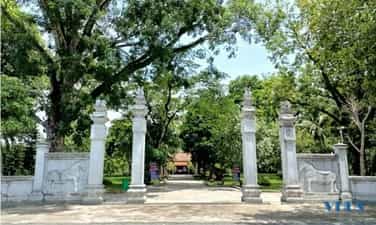
Le Hoan Temple
Le Hoan Temple in Trung Lap village, Xuan Lap commune, Tho Xuan district (Thanh Hoa) is a special national historical relic and is considered the oldest temple in Thanh Hoa. Le Hoan Temple is in a hundred-year-old village, where the founder of the glorious Early Le Dynasty in the nation's history was born - Emperor Le Dai Hanh. Currently, there is still a temple worshiping the King at the end of the village, known as one of the most ancient temples in Thanh Hoa and recognized as a special national historical site. According to history books, Le Hoan was born on July 15, Tan Suu year (941) at Ke Xop site, Di Phong Chau Ai district (now Trung Lap village, Xuan Lap commune, Tho Xuan district, Thanh Hoa province) in a family. poor farmers. Father is Le Mich, mother is Dang Thi. When he was 6 years old, Le Hoan lost both parents and became the adopted son of Mr. Le Dot in Ke Mia village (now Phong My village, Truong Xuan commune, Tho Xuan district, Thanh Hoa). When he grew up, Le Hoan joined the army to help Dinh Tien Hoang quell the rebellion of 12 military lands, achieved many merits and was awarded the title of General of the Ten Commandments. He wholeheartedly supported and contributed to King Dinh to bring peace to hundreds of families and a peaceful country. In the winter of October of the year Ky Mao (979), King Dinh Tien Hoang and his eldest son Nam Viet Vuong Dinh Lien were murdered by Do Thich. Le Hoan was appointed regent, helping the young lord of the Dinh dynasty keep the border and society in peace, suppressing internal rebellion, and was given the royal robe by Queen Mother Duong Van Nga. In the year of the Dragon 980, Le Hoan ascended the throne and took the reign name Thien Phuc. The king defeated the Song army, kept the land in peace, conquered Champa and gradually asserted the sovereignty of the country and nation, minting Thien Phu coins, focusing on the development of agriculture, handicrafts, transportation and trade. After that, Le Hoan died on March 8, At Ty year (1005) in the ancient capital of Hoa Lu - Ninh Binh province. Le Hoan's body was buried in Son Lang, Truong Yen district, on the throne for 24 years, at the age of 65. The temple's title is Dai Hanh Emperor. Source: Tho Xuan District electronic information portal
Thanh Hoa
6886 view
Rating : Special national monument

Archaeological site of Hang Con Moong
Con Moong Cave relic and surrounding relics in Thach Thanh district, Thanh Hoa province, have a total area of 4,999,180 m2, first excavated in 1976. In 2008 - 2009, Con Moong cave was inspected by the team. Overall research and survey of nearby relics. During the excavation of Con Moong cave (2010 - 2015), the Vietnamese - Russian archaeological team discovered additional relics such as Ly Chun cave, Bo Giao cave, Dau Voi mountain mound relics, Mang Chieng cave, Bo Giao cave. Diem, at the same time excavating 4 surrounding relics: Lai Cave (2010), Ly Chun Cave (2010), Mang Chieng Cave (2011 - 2012) and Diem Cave (2013 - 2014). Specifically: 1. Con Moong Cave: located in Upper Triassic limestone mountains of Dong Giao formation (Tađg), about 240 million years old. Con Moong Cave has an average strata thickness of 9.5m - including 10 layers with different structures. From layer 1 to layer 6 (depth from 1m - 6m), many working tools, animal bones, and mollusk shells were found. Grades 7 to 10 did not encounter any remains of flora or fauna, but there were many thin tools made of quartz, most concentrated in grade 10. According to initial research, Con Moong cave went through 4 stages of development. cultural development. Results of radiocarbon (C14) research on the upper layers, magnetic susceptibility, sedimentary set at Con Moong and cultural compatibility comparison with other archaeological sites show that the earliest age of Con Moong is expected. Guess 40,000 to 60,000 years ago. From the results of archaeological excavations, Con Moong cave is one of the very few archaeological sites with the thickest and best-preserved strata today in Vietnam and Southeast Asia. 2. Nearby monuments: - Hang Lai relic: located in the limestone mountain range in Thanh Trung village, Thanh Yen commune, Thach Thanh district. The cave is frog-shaped. - Ly Chun Cave Relics: The cave's interior is like a small stone roof, the door faces West - Southwest, the dome is 2m high and not flat with many frills and stalactites hanging down, the length is over 2m deep, the cave walls have stone seams spreading to the door. , there are many sedimentary blocks containing fossil animal bones and teeth. - Bo Giao Cave Relic: located in Yen Son 2 village, Thanh Yen commune, Thach Thanh district, Thanh Hoa province. The cave has two chambers, separated by large stalactite columns. - Dau Voi Mountain Earthen Monument (also known as Dau Voi Mountain's moat system, Dau Voi Mountain's earthen citadel, Ly Chun Citadel, Elephant Dau Fortress, Ly Chun Military Fort) is located close to (surrounding three sides) the mountain Elephant Head, in the buffer zone of Cuc Phuong National Park. - Diem Cave Relic: located in the buffer zone of Cuc Phuong National Park. The cave has a tubular shape over 50 meters long and an average width of 10 meters. - Mang Chieng Cave Relic (also known as Vang Chieng): located in the area of Cuc Phuong National Park, in front of the cave there are two large Vong trees so people also call it Cay Vong Cave. - Moc Long Cave and Moc Long Stone Roof Relics: located on one side of Chua Mountain in Thanh Minh commune. After the process of researching and excavating Con Moong cave and surrounding relics, scientists initially commented and evaluated the outstanding values: - The stratigraphic structure and cultural layer of Con Moong cave relic and surrounding relics show that this is a relic of residence and burial of residents of many periods. Con Moong Cave is one of the very rare archaeological sites, with the thickest and best-preserved stratigraphy today in Vietnam and Southeast Asia. - The relics excavated in Con Moong cave are authentic evidence of the tradition of residing in the cave, making and using stone tools with changes in the type and technique of making tools, thereby , it is possible to study the changes in behavior and behavior of ancient people in response to changes in paleoclimate and natural environment... - The outstanding historical and cultural value in Con Moong cave is the adaptation of humans to the environment for tens of thousands of years, from gathering and hunting, gradually moving to farming, animal husbandry... Excavation results shows that humans were present in Con Moong cave about 60,000 years ago, but not regularly. From about 25,000 - 20,000 years ago, the climate gradually warmed, with alternating warm and cold periods, and people lived in caves more often. After 20,000 years, there was a period of hot, humid and rainy weather, causing snails and mollusks to multiply, becoming a regular food source for humans, as evidenced by mollusc shells filling up the cave entrance, in some places up to 4m thick. From 11,400 years to 8,000 years was a period of heavy rain, and Prehistoric people continuously resided at the entrance of Con Moong cave. In this area, a very thick layer of snail shells and hundreds of working tools made of stone, bones, horns, mollusc shells, etc. were found in the strata, with the tool making industry developing from the Son Vi culture to the Son Vi culture. Hoa Binh - Bac Son. From 7,000 years ago today, when the sea receded and there was little rain, people began to leave the caves and gradually occupied the plains and coastal areas, establishing the first marine cultures in the Prehistoric period. Remains of the top cultural layer at Con Moong include ground axes and rudimentary hammered ceramics compatible with the earliest layer of the Da But culture, showing that the migration of Con Moong cave residents gradually moved down to the plain. along the coast, establishing the Da But culture. - In parallel with completing the excavation of Con Moong cave, scientists have surveyed, excavated and researched caves around the Con Moong cave area. This shows that Con Moong is the most ancient relic, with a certain relationship with surrounding relics at different levels. From Con Moong, over tens of thousands of years, due to changes in climate and weather leading to expanded living environments, and the increasingly advanced industry of making tools for work and living, primitive people have separated from each other. out in groups, moving to Mang Chieng cave, Diem cave, Lai cave, Moc Long cave, Moc Long rock roof, Bitter Cave (Ancient Man Cave), Bo Giao cave... These research results have contributed to Enhance the historical - cultural value of the relic - cave complex in the Con Moong cave area. With typical value, the archaeological relics of Con Moong cave and surrounding relics (Thach Thanh district, Thanh Hoa province) were ranked by the Prime Minister as special national relics on December 23, 2015. Source: Department of Cultural Heritage
Thanh Hoa
8080 view
Rating : Special national monument
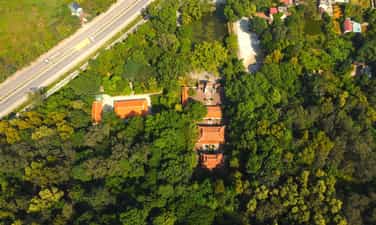
Historical and architectural artistic relics of Ba Trieu relic area
Mrs. Trieu (named Trieu Thi Trinh, also known as Trinh Nuong, or Trieu Au), was born in 226, from Quan Yen district (Quan Yen), Cuu Chan district. She has an outstanding appearance, is highly skilled in martial arts, loves to make friends, and has great ambitions expressed through her famous quote: "I want to ride strong winds, step on fierce waves, and kill giant whales in the East Sea." , expel the Ngo army, reclaim the country, take off the yoke of slavery, and refuse to bend down to be a concubine for others!" In 248, Ba Trieu and her brother Trieu Quoc Dat gathered young men in the area to rally against the Ngo Dynasty's domination. A short time later, Trieu Quoc Dat fell ill and passed away. She was honored by the generals as General. Faced with the strength of our army, the Wu army's hamlets in Cuu Chan were defeated one by one. The uprising developed and spread to Giao Chi areas, extending into Nhat Nam. Faced with that situation, Ngo King Ton Quyen had to appoint General Luc Dan as Governor to bring troops to suppress. After many fierce battles, the insurgents could not withstand the strong enemy. Ms. Trieu committed suicide on Mount Tung (now in Trieu Loc commune, Hau Loc, Thanh Hoa) on August 22, the year of Mau Thin (248), when she was just 23 years old. To commemorate the kindness of Ba Trieu and her generals, the people built a temple right at the place where she and her insurgents fought and sacrificed their lives heroically. Through the events of time and history, Ba Trieu temple at Tung Mountain is still preserved by the people and is a place to organize cultural and religious activities. Ba Trieu relic area was built, restored and embellished over many different periods, including locations: Ba Trieu temple and mausoleum, tombs of three generals of the Ly family, Ban swear temple, Phu Dien communal house, Fourth Temple. 1. Ba Trieu Temple: located to the North, including: Outer ritual gate, rectangular lotus pond, screen, middle ritual gate, lower courtyard, inner ritual gate, upper courtyard (both sides have left/right curtain), front yard. Street, terrace, Middle street, Thien province yard, Harem. 2. Ba Trieu's tomb area Ba Trieu's Tomb: located on the top of Tung Mountain, vertical cylinder (quadrilateral) gradually smaller towards the top, including 2 roof floors: with a height from the ground to the top of 5.8m. The mausoleum's roof is made in the style of a dragon's palanquin, and the top of the mausoleum is shaped like a wine bottle. The entire Mausoleum is crafted from monolithic green stone, inside is an incense bowl, the main side of the Mausoleum is a stone altar. Grave: built 0.50m higher than the foundation. The four-sided square tomb structure is 1.5m in size and 2.3m in height. The tomb has an arched door opening on all four sides, the roof is curved at the corners, and the top of the tomb is mounted with a round ball. Lord's Tower: four-sided square cylindrical structure made of monolithic stone, 1.45m high, tower base 0.5m high, four-sided square. 3. Tombs of three generals of the Ly family: located at the foot of Tung mountain, the three tombs are all 3m in size. Behind the tomb is a rectangular brick altar used as a place to place offerings. In addition to the grave, there is also a stone stele with the inscription "Commemorative stele" on the forehead. 4. Ban Oath Temple: Legend has it that this is where the three Ly brothers held an oath to follow Ba Trieu's insurgent army, in Dong Bang field, Phu Dien village. The current status of the temple is just an altar built of bricks, 2.04m long, 1.48m wide, 1.38m high. 5. Phu Dien communal house: built during the reign of the 33rd King Canh Hung (1772), located to the southwest, overlooking Tung mountain, including the following items: Ritual gate: four-pillar style, made of monolithic green stone, with 3 doors. The column has four large pillars, the base is made of kneeling style, the four sides are carved with four sacred animals, and the top of the column is mounted with a statue of a phoenix bird with flipped leaves. Dai Dinh Building: Dinh-shaped architecture, 18.40m long, 14.37m wide, the front has a 1.9m wide porch, table-style door. Front hall: has beautiful, harmonious architecture, the rafters are intricately carved in the style of filigree, embossed, embossed, and sunk with traditional decorative themes such as four sacred animals, carp turning into dragons, and lotus flowers. , apricot flowers, starlings, deer, roosters, especially the image of women and folk scenes. Harem: 3 rooms, 2 wings, trusses in the style of "gong rack stacked on beam, seven beams" with 4 rows of pillars, 4 wooden trusses. The harem has 3 doors, table-style doors, and round wooden frames on all components. The carvings are concentrated on the wooden dragon cot wall, on the spring flower system and the porch walls. 6. Fourth Temple: located near Eo mountain area, Phu Dien village, so people also call it Nghe Eo. At the relic, there are still 3 ordinations, including 1 copy of Canh Thinh's 5th year (1797). The temple consists of 2 vertical compartments, 6.12m long, 2.88m average width, 3.85m high, including the Rear Hall and Front Hall, built in a domed style, with ancient red tiled floors. Ba Trieu Temple, has 297 relics and antiques of many types and diverse materials such as paper, wood, copper, ceramic,... dating from the late 17th century to the early 20th century. These documents, Artifacts still preserved in relics have historical and cultural value, helping us learn about the origin, existence of the relic and local cultural traditions, beliefs and customs. The relic is where the people of Phu Dien village organize cultural and religious activities according to traditional customs (holidays, traditional New Year, death days of historical figures). Ba Trieu Temple Festival takes place for 3 days (from February 19 to 22 of the lunar calendar) including sacrificial ceremonies, palanquin processions, and folk performances with the large participation of the community in the region and attracting tens of thousands of tourists. Come visit and celebrate. With particularly typical values, historical relics and artistic architecture, Ba Trieu relic site (Hau Loc district, Thanh Hoa province) was ranked as a special national monument on December 31, 2014. Source: Department of Cultural Heritage
Thanh Hoa
8150 view
Rating : Special national monument