Relic point Vietnam
Việt Nam
Highway Arc
The historical site of the troop transfer location, the forward military medical station and the weapons cache on the Can Tho arc road is located in My Khanh commune, Phong Dien district, Can Tho city. Vong Cung Highway is nearly 30 km long, connecting National Highway 1A from Cai Rang bridge to Phong Dien district, mostly through communes: My Khanh, Nhon Ai, Tan Thoi, Giai Xuan and ending at Ba Se highway (Phuoc Thoi ward). , O Mon district). Right from the French colonial period, colonial henchmen suppressed and arrested people to work as road builders with a plot to build the road into a defensive belt to protect their headquarters in the inner city of Can Tho. Under the Saigon government regime, the Arc Highway continued to be built as a defensive fence to protect the tactical region IV nerve center, Tra Noc airport and US representative agencies in Can Tho. Tho is both a place to test all the most brutal tricks to wipe out revolutionary bases on the Arc Road, and at the same time serve as a springboard to attack our revolutionary forces at U Minh Base. For us, Vong Cung Highway is both a convenient gateway for roads and waterways, as well as a place to transport and supply food, weapons, necessities, and to house leaders. network for army units, creating a solid connection between the forces of the district, province and the Gathering Area to bring forces into the Arc, attacking the enemy's headquarters in Can city. Poem. During the resistance war against American imperialism, Lo Vong Cung was the place to transfer troops (My Nhon hamlet); Forward Military Medical Station (My Long hamlet); weapons hiding place (My Thuan hamlet) of revolutionary forces. Here, we organized the transportation of food, weapons, necessities to accommodate revolutionary cadres, army units and was a gathering place for revolutionary forces. Therefore, the US imperialists conducted many rounds of artillery strikes, bombarding and destroying the people's homes, fields and gardens, and spraying defoliants to destroy life, with the determination to knock the revolutionary force out of the Ring. Supply and cut communication lines between the revolutionary forces and the people here. Many battles between us and the enemy took place extremely fiercely, with countless blood and bones of soldiers and compatriots who fell on the land of the Arc. But with the tradition of patriotism and absolute belief in the revolution, the people here are not afraid of sacrifices and hardships, but are still determined to stand by, support, feed, and protect the officers and soldiers standing in the fight. fight until the day of national unification, contributing to beautifying the glorious pages of history about the revolutionary struggle tradition of the Party, army and people of Can Tho. Therefore, Can Tho Arc Road is not only a landmark but also has historical significance in Can Tho's resistance war against foreign invaders. In addition to the troop transfer location, the Forward Military Medical Station, and the place where the revolutionary forces' weapons were hidden, this place also left a deep mark of military and civil solidarity associated with the pain, loss, and sacrifice of the soldiers. compatriots and soldiers who have fallen for the Fatherland. On February 7, 2013, the Ministry of Culture, Sports and Tourism ranked the troop transfer location, the Forward Military Medical Station and the weapons hiding place on Can Tho Arc Road during the resistance war against the US as a Historical Relic. National level history. Source: Can Tho historical and cultural relics information page
Can Tho
5472 view
Rating : National monument

Can Tho Grand Examination
The Can Tho Grand Prison historical relic is currently located at No. 8, Ngo Gia Tu Street, Tan An Ward, Ninh Kieu District, Can Tho City. To serve the ruling apparatus in Can Tho, from 1876 to 1886, the French colonialists promoted the construction of many agencies and offices... including a prison named "Prison Provinciale". The prison was built on an area of 3,762 square meters, adjacent to the Governor's Palace, opposite the Administrative Building and separate from the residential area, people often call it Can Tho Grand Prison. When the Geneva Agreement was signed in 1954, the Saigon government changed the name of Can Tho province to Phong Dinh province, and the Can Tho Grand Prison was renamed the Correctional Center. But no matter what name it is called, Can Tho Grand Prison is essentially a hell on earth - a place where imperialist colonialists imprison and exile our revolutionary soldiers and patriotic compatriots. The Big Examination Gate has an arch shape, on the left of the gate is the office of the on-duty supervisor, on the right is the office and residence of the chief supervisor. The large prison is surrounded by a wall from 3.6m to 5m high, covered with pieces of bottles and barbed wire. At each corner of the wall is a 6m high watchtower with guards and floodlights at night to control prisoners. Inside the large prison, there are 21 collective cells and many solitary confinement cells. Between the prison rows is a large yard for prisoners to sunbathe. In this yard, the colonialists and imperialists also built pagodas and churches to show respect for the prisoners' beliefs and religion. Around 1963, two rows of buildings were built on the yard behind the temple, the ground floor had no walls - for a time it was used as a vocational guidance house for prisoners... The prescribed capacity in each collective cell is only about 30 to 40 people, but sometimes the number of prisoners reaches 70 to 80 people. Especially after the Southern Uprising, the enemy crazy used all tricks to terrorize and take revenge on our people. Many leaders, party members and the masses were imprisoned by the French colonialists at the Can Tho Grand Prison. In addition, the enemy also brought hundreds of people participating in the uprising and leading comrades in the provinces of Soc Trang, Bac Lieu, Ca Mau... here to detain and brutally torture them. Especially during the period when US imperialism used the "Law promulgated by the Republic of Vietnam regime on May 6, 1959 to terrorize and restrain our people, arresting all those suspected of being "Viet Cong", At this time, the number of prisoners in each room sometimes reached more than 100 people. Many prisoners could not endure the regime of imprisonment, torture, and harsh food and had to slowly die in this dark prison. The remaining people were infected with all kinds of diseases: scabies, malaria, typhoid, tuberculosis... For special political prisoners, the enemy was locked up in solitary confinement cells, tortured to the point of paralysis but still alive. loyalty to the Party and the people, keeping integrity until the last breath. Despite extreme torture, the Party comrades in prison still had Party Cells, Party Committees, study activities, and organized struggles with the enemy every hour and every minute, resolutely preserving revolutionary qualities. It is the indomitable fighting spirit and patriotism of political prisoners that has inspired and enlightened the revolution by many prison guards and guards, and they volunteered to be our internal base. Inform political prisoners of our situation and the enemy outside to take precautions or have strategies to fight the enemy in prison. The South was completely liberated, and Can Tho Grand Prison became a deeply engraved evidence of the indelible crimes of colonialism and imperialism. It is here that so many outstanding people from their hometown of Can Tho and neighboring provinces have fallen to contribute to writing the glorious and heroic history of the nation. On June 28, 1996, the Ministry of Culture and Information ranked Can Tho Grand Prison as a national historical relic. Source: Can Tho tourism information portal
Can Tho
8074 view
Rating : National monument
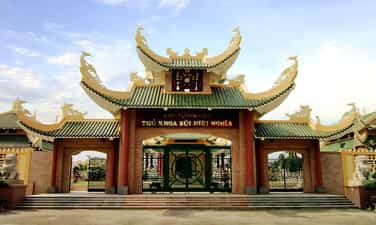
Bui Huu Nghia Valedictorian Memorial Area
Bui Huu Nghia Valedictorian Memorial Area is located at Huynh Man Dat Street, Bui Huu Nghia Ward, Binh Thuy District, Can Tho City. This is the resting place of Valedictorian Bui Huu Nghia - a patriotic poet, a pioneer author of Vietnamese opera theater, who was known as the four great heroes or one of the four Golden Dragons of the South. Bui Huu Nghia, nickname Nghi Chi, was born in Binh Thuy village, Vinh Dinh canton, Dinh Vien district, Vinh Tran palace (now Binh Thuy district, Can Tho city) into a poor fisherman family. In the year of the Goat (1835), he passed the Nguyen Prize (valedictorian) in the Huong Truong Gia Dinh exam, so people often called him Nghia Valedictorian. He was appointed by the Nguyen court as Tri Phuoc Chanh district, Phuoc Long district, Bien Hoa province (now Dong Nai province); then Tri district, Tra Vang district (now in Tra Vinh province). In 1848, because he defended the poor in the "Rach Lang The" case, he was falsely accused by mandarins and tycoons and sentenced to death by the court. His wife, Mrs. Nguyen Thi Ton, went to the capital Hue to appeal for her husband's injustice. Bui Huu Nghia was spared death but was exiled to guard the border of Vinh Thong (Chau Doc). In 1862, he returned from the mandarin to Long Tuyen - Can Tho to open a school to teach and treat diseases for poor people, then participated in the patriotic movement against the French colonialists. He died on January 21, 1872, at the age of 65. Valedictorian Bui Huu Nghia is a shining example of fairness, integrity, and devotion to the people and country. His famous opera Kim Thach Ky Duyen is considered the oldest in Vietnam, and has been performed all over the country. country and is also the first Vietnamese opera to be translated into French. He is one of the cultural celebrities of Can Tho who is trusted, loved and respected by the people. His name shines in the spirit of fighting against invasion, oppression, and injustice; His kindness and great contributions to the country's literature are the pride of not only the people of Can Tho but the entire Southern region. Admiring his talent and dignity, the people of Binh Thuy village took his image to worship in Binh Thuy communal house; Students set up a tablet to worship him at Nam Nha Pagoda. The Valedictorian's grave, built of laterite, has always been cared for by generations of Can Tho people and is regularly repaired and embellished. The memorial area has a campus of about 10,000 square meters with a total construction cost of more than 50 billion VND. The project was inaugurated on March 1, 2013 - the 141st anniversary of his death. The main architecture of the Relic Area is an antique style with columns about 1 meter in diameter painted reddish brown; Wooden partitions and altars are elaborately carved; Cool green tiled roof. The top of the roof is emphasized by the symbol of a pair of fish turning into a dragon, and the four corners of the roof are adorned with flying phoenix wings. Inside the memorial area there is a large, airy garden full of trees. The memorial area has four main works, including three large buildings, in which the middle is the church, the left is the exhibition house, the right is the guest house and a stele right at the entrance to summarize his talents and merits and a memorial. A number of other auxiliary works to serve tourists from near and far to visit and pay their respects. Source: Can Tho Tourism
Can Tho
5817 view
Rating : National monument

Nam Nha Pagoda
Nam Nha Pagoda or Nam Nha Duong, full name is Nam Nha Phat Duong, located at 612 Cach Mang Thang 8 Street, Bui Huu Nghia Ward, Binh Thuy District, Can Tho City. This is not only a place for religious activities of followers of Minh Su religion, but also a base for revolutionary activities of patriotic movements in Can Tho in particular and the South in general in the late 19th and early 19th centuries. twentieth century. The founder of Nam Nha Pagoda was Mr. Nguyen Giac Nguyen (1850-1919), alias Nguyen Phuong Thao, religious name Long Khe Tao Nhan, religious name Nguyen Dao Co. Around 1890, Mr. Nguyen Giac Nguyen began participating in the Dong Du movement. At first, he moved his house from Rach Sao to Binh Thuy market and set up Nam Nha Duong herbal medicine shop near Rach Mieu bridge as a communication base against the French. In 1895, Mr. Nguyen Giac Nguyen stopped working as a Chinese medicine shop and moved to Binh Thuy river to establish a small three-room pagoda also named Nam Nha Duong. In 1905, the pagoda was reconstructed on a larger scale with five rooms and two wings. Over time, the pagoda was damaged a lot. People in the religion wanted to rebuild it, but France did not allow it because the pagoda was still under surveillance. They had to lobby with the French authorities to be allowed to build. In 1917, the pagoda was rebuilt with bricks and tiles, many materials were ordered from France. Like many other temples, Nam Nha Pagoda was built near the riverbank so that visitors from all over could conveniently come and worship, because traffic in the past was mainly by waterway. Therefore, the temple gate also faces Binh Thuy canal. Many documents describe the temple gate as built of bricks and tiled. The pagoda's yard is paved with Chinese tiles, surrounded by a large garden stretching out to the banks of the Binh Thuy River. In the middle of the garden is a rockery over 2m high placed in a water tank built of bricks. In the garden, there are many pine trees, cypress trees and other ancient trees. The main hall is a solid brick house, consisting of 5 rooms, roofed with yin and yang tiles, and has a picture of two dragons and pearls on it. In particular, the main hall's facade has a combination of Asian and European architecture in the early twentieth century, and is quite different from the traditional pagoda style in the South. Inside the main hall, the central area is decorated very solemnly, used as a place to place the altar of the Three Teachings Saints (there are three bronze statues of Shakyamuni Buddha, Most Holy Confucius and Lao Tzu). Dao To). Behind the main hall is a long hallway with two reception rooms. To the right and left of the pagoda are two rows of tile-roofed houses called Can Dao Duong (Dong Lang row) for men and Khon Dao Duong (Tay Lang row) for women, connected to the kitchen. Currently, Nam Nha Pagoda also has many fields and gardens, especially behind the pagoda is a green garden of fruit trees and ornamental flowers, cooling the quiet space of the pagoda. In addition to religious activities, Nam Nha Pagoda is also a base for revolutionary activities. The pagoda is "the operational headquarters of the Dong Du movement in Can Tho. Here, in February 1913, after returning from France, patriot Cuong De and Mr. Nguyen Giac Nguyen discussed national affairs to mobilize the patriotic movement in the South, but were discovered by the French colonialists. The temple should be closed. However, this place continues to remain a secret base for revolutionary activities. In 1929, when the Special Committee of the Annam Communist Party of Hau Giang was established in Binh Thuy, Nam Nha pagoda was the contact base between the Special Committee of Hau Giang and the Southern Party Committee of revolutionaries, including comrade Ngo. Gia Tu, Secretary of the Provisional Party Committee of the Southern Party Committee. During the two resistance wars against the French and the Americans, Nam Nha Pagoda was always associated with the cause of national liberation. With such architectural and historical values, on January 25, 1991, Nam Nha Pagoda was ranked as a national historical relic by the Ministry of Culture, Sports and Tourism. Source: Can Tho Newspaper online
Can Tho
4995 view
Rating : National monument
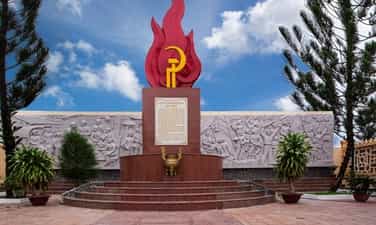
SPECIAL SECURITY COMMISSIONER OF THE SOUTH COMMUNIST PARTY HAU GIANG
Historical relic of the Special Committee of the Communist Party of the An Nam Communist Party. On the way to Long Hoa ward, Long Tuyen (Binh Thuy district, Can Tho city), on the right hand side is a house numbered 34/7 Bui Huu Nghia street, Binh Thuy ward. , Binh Thuy district used to be a house rented as an agency of the Special Committee of the An Nam Communist Party of Hau Giang Party. Historical relic of the Special Committee of the An Nam Communist Party of Hau Giang In the middle of September 1929, a very important event for the Hau Giang region's Party Committee took place here. That was the conference to establish the organization "Special Committee of the Annam Communist Party of Hau Giang" chaired by comrade Chau Van Liem and directed to elect the Executive Committee of the Special Committee including comrades: Ung Van Khiem, Ha Huy Giap, Nguyen Van Tay, Nguyen Van Tri... with comrade Ung Van Khiem as Secretary. After 5 months of operation, the Annam Communist Party Special Committee of Hau Giang Party has built Party bases throughout the Hau Giang region, making an important contribution to unifying the Party into a single Party organization, to lead the movement. Viet Nam's revolution. After February 3, 1930, the three party organizations were unified into the Communist Party of Vietnam, the Special Committee under the Southern Party Committee. Comrade Ung Van Khiem was assigned to be a Standing Member of the Southern Party Committee. Comrade Ha Huy Giap as Secretary of the Hau Giang Special Committee. In April 1930, due to the need to preserve the Special Committee, the Special Committee moved to Sa Dec province. The Annam Communist Party Special Committee has historical value, has laid the first foundation, and is an important premise in building and developing the Party Committee and revolutionary movement in Hau Giang provinces. Therefore, on January 25, 1991, the Ministry of Culture and Information recognized the An Nam Communist Party Special Committee of Hau Giang Party as a national historical relic. In 1995, the People's Committee of Can Tho City together with the people of Binh Thuy ward built a monument commemorating the Special Commissar of the An Nam Communist Party of Hau Giang, in Binh Thuy ward. Source: Can Tho tourism information portal
Can Tho
4940 view
Rating : National monument
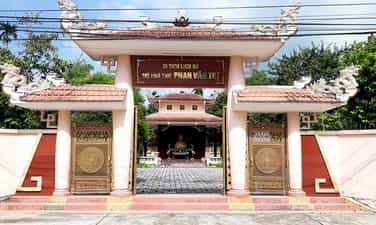
TOMB OF POET PHAN VAN TRI
The historical tomb of poet Phan Van Tri is located in Nhon Loc 1 hamlet, Phong Dien town, Phong Dien district, Can Tho city. This is the resting place of patriotic poet Bachelor Phan Van Tri, a Confucian scholar who used poetry as a weapon to fight for the survival and development of the nation throughout his life and was known by people as the poet - soldier. The grave site was recognized as a national monument in 1991. Previously, the poet's grave was only built of simple cement, located in the middle of a green lawn with a tombstone. In 1990, with the respect of the people, people joined hands to restore the tomb of poet Phan Van Tri with polished stone, the tomb went up the steps, with a splendid polished stone epitaph, with a fence, Having green grass creates a bit of poetry, beauty, and a bit of an edge like the courage of the pen and the temperament of the poet when he was alive. By 2005, the relic was restored on a larger scale, on an area of 2,060 m2. Includes items: Memorial house, Exhibition house, grave, books and stone steles (recorded with famous verses of Bachelor Phan Van Tri), lotus pond, ornamental plants, waiting room... . The most impressive thing on the grounds of the tomb is the stone stele, built based on inspiration from the poet's pen on the page. The pen's nib is facing up, in the middle are his famous poems. Right behind the memorial is a portrait statue of poet Phan Van Tri built full of soulfulness and sincerity. Poet Phan Van Tri was born in 1830 in Thanh Phu Dong commune, Giong Trom district, Ben Tre province, into a Confucian family, respectful of morality and rich in patriotic traditions. From a young age, he was famous for his intelligence and passed his bachelor's degree at the age of 20 at the Huong exam of Gia Dinh school in 1849. Although he was a scholar of Confucianism, he was faced with the policy of exploiting the people too heavily and the policy of banning religion and closing the door. The Nguyen Dynasty's court blockade brought the country to a point of weakness, making him extremely disappointed and he did not become an official but retired to enjoy teaching and poetry. In Gia Dinh, he participated in founding the group "Bach Mai Thi Xa". This is the place where scholars, scholars, and guests gather to recite poetic poems. In 1858, the French colonialists opened fire to attack Da Nang, starting the war of invasion of our country. At this time, Phan Van Tri moved to Binh Cach village, Tan An (now in Tien Giang province), then returned to Vinh Long to open a school to teach and collect medicine for poor people. In 1868, Phan Van Tri returned to Nhon Ai village, Phong Dien in Can Tho province to reside, continued to open a school to teach and compose poetry criticizing mandarins who "forever sought national glory", and at the same time praised the morale of the people. patriotic soldiers and scholars. Each line of his poetry is imprinted with a soul filled with patriotism, love for the people, and decisive distinction between friends and enemies. On May 16, Canh Tuat year (June 22, 1910 of the solar calendar), patriotic poet and bachelor Phan Van Tri rested in Nhon Ai village, Phong Dien in a simple thatched house with a pure heart. of him, leaving behind so much regret among the people. The resting place of Bachelor Phan Van Tri has always been restored and preserved by local people through generations. Currently, the Historic Tomb of Poet Phan Van Tri has become a place for sightseeing, studying, traditional activities, and cultural exchange. In particular, on June 22 of the solar calendar every year - on the occasion of the death of Bachelor Phan Van Tri, local authorities and people in the area organize a very solemn death anniversary ceremony and cultural and artistic activities to commemorate the death. remembering a poet - a soldier, creating an annual festival of the Monument in particular, of Phong Dien district and Can Tho city in general. Source: Can Tho tourism information portal
Can Tho
5260 view
Rating : National monument

Dien Khanh Temple of Literature
Dien Khanh Temple of Literature is located in Phu Loc Tay cluster, Dien Khanh town, Dien Khanh district, Khanh Hoa province. The Temple of Literature is a place to worship Confucius, the founder of Confucianism, and the sages who were his students; At the same time, it is also a place for activities of local scholars and scholars, honoring those who successfully passed the examinations. In 1803, King Gia Long issued an edict to establish a Temple of Literature in Phu Loc commune, Hoa Chau district - Binh Hoa town, now in Phu Loc Tay cluster - Dien Khanh town - Khanh Hoa province. The Temple of Literature was built on a large scale in 1853 and by the following year it was basically completed: in front there was a pavilion, in the middle there was a high and wide front hall and main hall, made of wood and surrounded by brick walls. The rafters are carved with beautiful and majestic gilded lacquer. Dien Khanh Temple of Literature was built on a large, flat area of land, with a total area of 1,500 square meters. When it was first built, the Temple of Literature had the following architectural works: Chinh temple and Khai Thanh temple, roofed with thatched grass. In 1849, the Temple of Literature had its roof system renovated, replacing thatched roofs with tiled roofs and building Ta Vu, Huu Vu, Khai Mieu, Quan Cu, Tu Mieu... with a very large and solid scale. In 1959, the Temple of Literature was rebuilt on the old foundation in Phu Loc village, but on a smaller scale, including: the outer gate and city walls; Internal Nghi Mon; stele house (Thach Bi communal house); temple yard; flag pole; Eastern and Western houses (Ta Vu - Huu Vu); Worshiping the road; Chief of soaking. Basically, the structures of Chanh Tam and Bai Duong compartments were transferred from Van Chi Phuoc Dien, and Ta Vu and Huu Vu were built in the style of a four-level, three-compartment house. The walls are built of bricks, there are no wings. The roof is covered with yin and yang tiles, later restored and replaced with Western tiles; The wooden door system is built in a plank style, replacing the ancient style of upper and lower sides; Do not rebuild Khai Mieu, Quan Cu and Tu Temple. Currently, the Temple of Literature only retains two stone steles from the Tu Duc 11 period (1858), which help us better understand the history, culture, and activities of the people of Khanh Hoa and the process of completing the Temple of Literature area in 1854. There is also an article in Bai Duong that speaks more clearly about the achievements of literary and martial arts scholars, scholars, notables, dignitaries and local students from the beginning of the Nguyen Dynasty to the Tu Duc period. With a rich history, the Temple of Literature area carries great value in the process of learning, receiving knowledge and expressing respect for teachers, enriching the treasure of national cultural heritage. Dien Khanh Temple of Literature relic was ranked a National Monument by the Ministry of Culture, Sports and Tourism on October 15, 1998. Source: Department of Culture and Sports of Khanh Hoa province
Khanh Hoa
8869 view
Rating : National monument

Dien Khanh ancient citadel
Dien Khanh ancient citadel is located on Ly Tu Trong street, Dong Mon cluster, Dien Khanh district, Khanh Hoa province. This is where many important historical events of our nation took place during the Nguyen Dynasty. Dien Khanh ancient citadel is located on an area of about 36,000 square meters; consists of 6 meandering wall sections running in a hexagonal shape, about 2,694m long, built about 3.5m high. Dien Khanh Citadel was built in 1793 under Lord Nguyen Phuc Anh. After the Tay Son dynasty weakened, Nguyen Anh, Vo Tanh and Nguyen Van Truong built Dien Khanh into a solid base. Prince Canh directly supervised the construction of the citadel with more than 3,000 workers from Binh Thuan and Thuan Thanh. After just over a month, the citadel was completed. When completed, Dien Khanh citadel was commanded and guarded by Prince Canh and Ba Da Loc. Previously, there was a royal palace in the citadel, on the left was Tuan Vu palace, behind was An Sat palace, further behind was Lanh Binh palace, below was Tham Tri palace, in addition there were warehouses and solid prisons. . Dien Khanh ancient citadel was built on an empty land, shaped like a turtle's back - a mascot symbolizing longevity and solidity. The citadel has a deep moat system outside and two steps inside used as a way up and down. The corners of the citadel are protruding outward for easy observation. Each corner has a large area of land used as a garrison with a mound about 2 meters high to place cannons, called a corner fortress - a prominent feature of the citadel. Military architecture in the Vauban style. The citadel is planted with many bamboo and thorn trees to increase its strength and form a defensive fence according to Vietnamese tradition. The trench system outside the citadel has a depth of 3m to 5m, uneven width and narrowness depending on the terrain. Under the trench there is often water and many obstacles. Outside the moat there is an outer moat. To enter the citadel, you must cross the bridge over the moat. Initially, Dien Khanh citadel had 6 gates (gates), but 2 left and right gates were filled in 1823, now there are only 4 gates East - West - Tien (South) - Hau (North). The gates of the citadel were built of burnt bricks and plastered with lime mortar, forming a cube about 15m long. The gates have a rolling arch in the middle, 2.88m wide and 2.44m high, with a walkway below. The outside of the gate is built vertically, the inside is built with a brick wall 1.7m high and 5m long. The path on the wall is 5.35m wide. On both sides of the gate, 3m wide steps were built to go up to the city gate. Above the city gate is a quadrilateral building with four doors in four directions. At the top is an ancient building with a curved roof covered with yin and yang tiles. The floor's neck is 4.1m high above the foundation. Both sides of the quadrangle floor have 0.85cm high railings. Connected to the four gates is a system of walls made of sloping earth on the inside and vertical on the outside. Nowadays, the earthen wall sections are no longer connected as seamlessly as before. The total length of the current earth wall is about 1,656m long, 3m high and 5m wide. Through more than 200 years of history, Dien Khanh Ancient Citadel has experienced many ups and downs. To preserve the historical and cultural value of this relic, on November 16, 1988, the Ministry of Culture decided to classify this place as a National historical-cultural relic. Experiencing destruction over time, Dien Khanh Citadel today has lost many sections of walls and moats. In 2003, Dien Khanh Citadel was restored, four gates were painted and areas where the walls were cracked due to rain were reinforced. In 2010, the province began repairing and protecting the surrounding areas. At the end of 2014, this place was built as a walking city and restored works of historical value to serve tourism. Source: Department of Culture and Sports of Khanh Hoa province
Khanh Hoa
5836 view
Rating : National monument

Temple of Tran Quy Cap
Tran Quy Cap Temple is located in group 5, Dien Khanh town, Dien Khanh district, Khanh Hoa province. Tran Quy Cap's name is Thich Phu, alias Thai Xuyen, born in 1870 in Thai La village, Bat Nhi village, Dien Ban district, Quang Nam province. When he was young, Tran Quy Cap was smart, good at studying, curious and had great ambition. Tran Quy Cap was born and raised in a turbulent Vietnamese social context. At the age of 13, he witnessed the funeral of Governor Hoang Dieu, when Thang Long citadel fell (1882); Three years later, he witnessed a huge political upheaval, which was the patriotic Can Vuong movement led by literati in his hometown and the people standing up to follow King Ham Nghi's Can Vuong ideology, calling on everyone to stand. to attack France. In 1904, he took the exam and passed the doctorate with Huynh Thuc Khang (currently there is a stele naming the doctorate at the Hue royal court). At this time in our country, Sinology was in decline, and New Studies was starting to take root. Tran Quy Cap often interacted with Mr. Phan Chau Trinh. Phan Boi Chau researched new books and newspapers, grasped progressive ideas, and he determined his responsibility to promote new learning through educational reform. education to raise people's knowledge, civil rights awareness, and national self-reliance. In Quang Nam, Phan Boi Chau together with his comrades including Tran Quy Cap founded the organization "Duy Tan Hoi" - a pre-revolutionary organization, which marked the division of the intellectual class. in Viet Nam. Duy Tan Association has selected many outstanding young people to send to study in China, Japan... to study in all fields: politics, economics, military... to become the core of the country's revolutionary movement. after that. In 1906, he was appointed as the Teacher of Tan Dinh district, Ninh Hoa prefecture (now Ninh Hoa district, Khanh Hoa province). He was a representative of revolutionary patriots in the Duy Tan movement, promoting the resistance movement against the French in the Central region. He and a number of people established agricultural associations, trade associations, schools... He is a person with strategic talent, good at mobilizing people, and is highly appreciated by everyone for his talent and virtue. Therefore, the French colonialists and feudal mandarins knew his important role among the intellectuals and the working masses. He opened New School classes and invited teachers to teach Vietnamese and French right at the Phu school. The mandarins here were very angry and tried every way to harm him. They arrested him while he was teaching and imprisoned him at Thanh Dien Khanh prison - at that time the capital of Khanh Hoa. On June 15, 1908, two months after being arrested, he was sentenced to be "beheaded" at Song Can Bridge (now Tran Quy Cap Bridge). The people of Khanh Hoa mourned him and admired his loyalty in responding to the fight to build a temple to worship Tran Quy Cap in 1970. Although Tran Quy Cap was not born and raised in Khanh Hoa, his life and career are tied to this land. The life and career of a famous man like him does not belong to just anyone, but he belongs to the Fatherland, to the heroic Vietnamese people! The temple was built within the campus of the Cultural - Sports Center and Tran Quy Cap Stadium of Dien Khanh district, to enhance the value of the monument, honor cultural traditions, and connect traditional cultural activities. with cultural and sports activities. Tran Quy Cap Temple was ranked as a National Monument by the Ministry of Culture, Sports and Tourism on August 30, 1991. Source: Department of Culture and Sports of Khanh Hoa province
Khanh Hoa
5765 view
Rating : National monument

Sovereignty stele of the Truong Sa archipelago at Song Tu Tay island and Nam Yet island
The two sovereignty steles on Song Tu Tay island and Nam Yet island are one of the ancient vestiges on the Truong Sa archipelago that are recognized as national historical relics. Along with the Hoang Sa archipelago, the Truong Sa archipelago is meaningful as a forward landmark in the East Sea of the Fatherland. Truong Sa is located in the southeast of the Hoang Sa archipelago, with more than 100 floating and submerged islands, rocks, sand dunes, corals and coral reefs, spread over a sea area from east to west about 800km. The archipelago occupies a sea area of about 160,000km2 to 180,000km2. The nearest island is Da Lat Island, located west of Truong Sa Island, nearly 250 nautical miles (450km east) from Cam Ranh Bay, and over 600 nautical miles from Hainan Island (China). The islands have an average height above sea level from 3 meters to 5 meters. The island with the largest area is Ba Binh island, about 0.6km wide, followed by Song Tu Tay, Truong Sa, Nam Yet, Sinh Ton islands... Previously, Truong Sa was called Dai Truong Sa, or Van Ly Truong Sa as recorded in the book Phu Bien Tap Luc - a famous book written by scientist Le Quy Don in 1776. The sovereignty stele of Song Tu Tay island belongs to Song Tu Tay commune, Truong Sa district, Khanh Hoa province. Nam Yet island sovereignty stele belongs to Sinh Ton commune, Truong Sa district, Khanh Hoa province. The words on the body of the stele are engraved inward, with the content written: "Truong Sa archipelago belongs to Phuoc Tuy province. A military inspection and research mission visited this archipelago on August 22, 1956 under the guidance of the Vietnam Navy. The words on the stele's body are engraved inward, with the content: "Truong Sa archipelago belongs to Phuoc Tuy province. Over time and the upheavals of history, up to now only Song Tu Tay island and Nam Yet island still have sovereignty stele and they are also the two oldest stele still preserved in the Truong Sa archipelago today. Currently, the sovereignty stele on Song Tu Tay island is still quite intact, including the tower and body of the stele; The sovereignty stele on Nam Yet island only has its body left. These two sovereignty steles were ranked provincial-level relics by the People's Committee of Khanh Hoa province on November 3, 2011. In 2012, the Department of Culture, Sports and Tourism of Khanh Hoa province sent a document requesting the Ministry of Culture, Sports and Tourism to recognize the above cluster of sovereignty steles as a national historical relic. Recognizing the typical historical values of the monument and contributing to asserting sovereignty in the Truong Sa archipelago, on June 13, 2014, the Ministry of Culture, Sports and Tourism ranked the monument as the Sovereignty Stele of the archipelago. Truong Sa at Song Tu Tay island and Nam Yet island are national historical relics. The recognition of two sovereignty steles on Truong Sa Island as national historical relics is not only an affirmation of Vietnam's sovereignty over the sea and islands, but these two steles are also valuable evidence in proving sovereignty. of our country to the world. Source: Khanh Hoa province electronic information portal
Khanh Hoa
7018 view
Rating : National monument