Relic point Vietnam
Việt Nam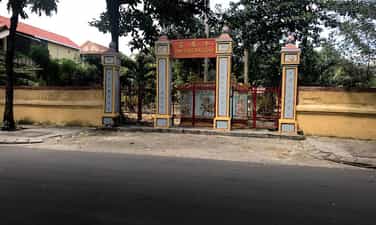
Phu Xuan Communal House
Phu Xuan Communal House belongs to Tay Loc Ward, (now Dong Ba Ward), Hue City, Thua Thien Hue Province. Phu Xuan Communal House was built around the beginning of the 15th century, is a historical architectural relic associated with the historical place of Phu Xuan, where Lord Nguyen chose to place the royal palace of Dang Trong, the capital of Phu Xuan under the reign of King Quang Trung. and the Nguyen Dynasty. The communal house includes the Tam Quan gate, a screen, the Meeting Pavilion and the Tet Communal House. The Tam Quan Gate has 4 square pillars, the two middle pillars are 4.10m high, 0.48m wide, the two side pillars are 3.60m high, 0.5m wide. 48m. The pillar is decorated with images of lotus buds, flowers, and parallel sentences. The screen is 2.90m high, 4m wide, 0.58m thick. Behind the screen is a 1.50m high incense burner built of bricks and cement. The communal house is a three-compartment, two-winged house, 17.80m long and 10.60m wide. The communal house has 8 large columns, 12 small columns, cross-terrain paths, and trusses decorated with stylized floral motifs, all made of ironwood and kien kien. The roof is tiled. The communal house is 10.50m long, 15.90m wide, built in the style of "upper river, lower village", the roads through the land, the three links are made of ironwood, carved with stylized flowers and leaves. The roof is tiled. The middle part worships those who started farming, the left part worships those who have contributed to the village and the family, the right part worships the Ancestors. Phu Xuan Communal House is a unique folk architecture, the only one in the Imperial City, proving the formation and development of the capital Phu Xuan. Phu Xuan communal house has been ranked by the state as a national historical, architectural, and artistic relic in Decision No. 2754/Decision No. 2754/Ministry of Culture and Information dated October 15, 1994. Source: Thua Thien Hue Electronic Information Portal.
Hue
5087 view
Rating : National monument.
Dinh Lai The
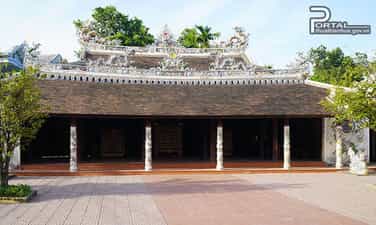
Lai The communal house is located in Phu Thuong commune, Phu Vang district (now Phu Thuong ward, Hue city), Thua Thien Hue province. The communal house was built in 1741, during the reign of King Le Hien Tong, the 2nd Canh Hung era. This is one of the ancient communal houses in Thua Thien Hue with historical and architectural and artistic value. Lai The Communal House consists of a three-compartment Dai Dinh building, two double wings, the middle room is 2.95m wide, the two side rooms are 2.90m wide, and the two wings are each 1.7m wide. The entire communal house has 54 columns, divided into 8 horizontal rows and 7 vertical rows, the communal house's architecture is in the style of "overlapping roofs", "stacked trusses" or "several stacks", which is typical of the architecture of the Nguyen Dynasty. The entire communal house The layout includes: The communal house, the courtyard, the communal house gate, and the row of pillars linked together along a vertical axis. The carved and decorative patterns in the communal house all have high artistic value build The building was repaired many times in 1780, 1845, 1891 and 1998. Lai The communal house still preserves many precious relics: 4 gilded lacquered lacquered panels with Chinese characters, a system of parallel sentences and 6 ordinations. The kings gifted them to openly cultivate, build and expand Lai The village. Every year, two main ceremonies usually take place at Lai The Communal House, which are: Spring Ceremony and Autumn Ceremony Offering sacrifices to the gods and ancestors to show gratitude to the villagers, these activities are still maintained and preserved by the villagers as a traditional beauty of Lai The villagers. With its architectural and artistic values, Lai The Communal House has been recognized as a national monument, according to Decision No. 04/2001 Decision - Ministry of Culture and Information dated January 19, 2001 of the Ministry of Culture. This information is from the Ministry of Culture, Sports and Tourism. Source: Thua Thien Hue Electronic Information Portal.
Hue
4532 view
Rating : National monument.
Thanh Duyen Pagoda
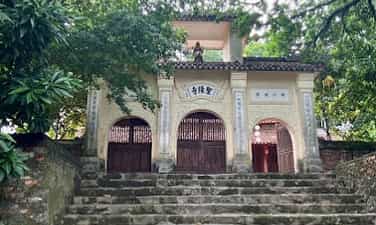
Thanh Duyen Pagoda is an ancient site located on My Am Mountain (later changed to Thuy Hoa and then Thuy Van but locals often call it Tuy Van), Vinh Hien commune, Phu Loc district, close to the northern bank of Cau Hai lagoon, near Tu Hien estuary, built during the reign of Lord Nguyen Phuc Chu (1691 - 1725), in 1830 was upgraded by King Minh Mang, built a series of architectural works and named "Holy Duyen Tu". During the Nguyen Dynasty, this was a national pagoda, which the royal court took care of and restored and appointed famous monks to serve as monks and presiding officers. Thanh Duyen Pagoda is an ancient site located on My Am Mountain (later changed to Thuy Hoa and then Thuy Van but locals often call it Tuy Van), Vinh Hien commune, Phu Loc district, close to the northern bank of Cau Hai lagoon, near Tu Hien estuary, built during the reign of Lord Nguyen Phuc Chu (1691 - 1725), in 1830 was upgraded by King Minh Mang, built a series of architectural works and named "Holy Duyen Tu". During the Nguyen Dynasty, this was a national pagoda, which the royal court took care of and restored and sent famous monks to act as monks and preside over it. The beautiful scene of Thuy Van mountain with the Thanh Duyen Tu relic was ranked by King Thieu Tri as the ninth among the twenty beautiful scenes of Than Kinh land with the article "Van Son's beautiful relic" accompanied by a panoramic painting of the floating Thanh Duyen Pagoda. amidst the charming scenery of Thuy Van mountain, Cau Hai lagoon and the East Sea. Currently, through many restorations, Thanh Duyen Pagoda is gradually restoring the shape of the ancient pagoda with a communal house engraved with the poem "Van Son's Triumph" by King Thieu Tri built at the foot of the mountain, with a two-story pagoda gate and The main hall with 3 compartments and 2 wings also preserves bronze statues of the Three Buddhas, Avalokiteshvara, 18 Arhats, and ten Minh Vuong palaces. On the right side of the front yard of the pagoda, there is a stone stele engraved with 4 poems written by King Minh Mang about Thuy Hoa Mountain and Thanh Duyen Pagoda. In particular, in the middle of the main shrine is a bronze dragon throne with the words "The reigning Emperor Minh Mang has no reigns". Going gradually to the top of the mountain is the 2-storey Dai Tu Cac surrounded by a ceremonial gate and a citadel. On the top of the mountain is the 3-storey Dieu Ngu tower, about 15m high and Tien Sang communal house behind the tower overlooking the East Sea. Around the pagoda, there are still many ancient pine trees standing firmly over time. Source: Thua Thien Hue Electronic Information Portal.
Hue
4973 view
Rating : National monument.
Giac Luong Pagoda
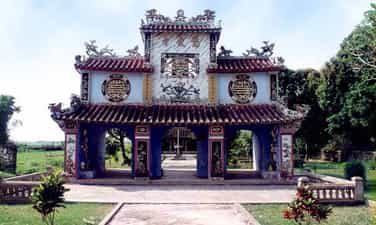
The location is in Hien Luong village, Phong Hien commune, Phong Dien district, Thua Thien Hue province, 21km northwest of Hue city center. Giac Luong Pagoda was built by Mrs. Hoang Thi Phieu and the patriarchs of the families in Hien Luong village during the reign of Le Trung Hung in Con Be, then moved to its current location. The pagoda is built facing south, rectangular in shape, 14.60m long, 11.48m wide, with a wooden roof, tiled roof, and includes 2 compartments and 4 wings. Next to the temple is the monk's house. The temple grounds are surrounded by rectangular walls, 79m long, 1.20m high, 0.50m thick. In front of the citadel, a pillar was built. The Tam Quan gate is massive, with an upper floor and three doors below, larger in scale than many national pagodas in Hue. In the pagoda, there are 7 Buddha statues, worshiping saints Quan Cong, Quan Binh, and Chau Xuong. The pagoda is descended from 12 ancestors of the families who publicly founded the Village. At the pagoda, there is still a large bell, cast in 1819, with the names of talented blacksmiths, mandarins and wealthy people who donated money to cast the bell and restore the pagoda. Giac Luong Pagoda contributes to the study of the history of the architectural style of Hue pagodas in the long mile of Vietnamese Buddhist architecture. Giac Luong Pagoda has been ranked as a national architectural and artistic relic according to Decision No. 776-Decision/Culture dated June 22, 1992 of the Ministry of Culture, Information and Sports (now the Ministry of Culture, Sports and Tourism). Sports and Tourism). Source: Thua Thien Hue Electronic Information Portal.
Hue
4881 view
Rating : National monument.

Dao Xa communal house
Dao Xa communal house is located in Dao Xa commune, Thanh Thuy district, Phu Tho province. Dao Xa is an ancient land, with a long-standing culture about 1,800 years ago in Khuat Dong Lieu land, originally called Dau Village, Leather Village, later renamed Dao Xa village. The communal house's origin was built very early in the reign of Le Trung Hung (17th century). In 1924, the communal house caught fire and partially damaged its architecture. In 1930, the temple was restored and embellished. Therefore, the current architecture of Dao Xa communal house bears the mark of the Later Le and Nguyen dynasties. This place worships Hung Hai Cong (the 19th brother of King Hung), who was instrumental in opening up land, teaching people how to manage water, cultivate, raise livestock, and build prosperous villages. This place also worships three water gods, the three sons of Hung Hai Cong. Dao Xa Communal House is made in a triangular style with 3 buildings: Front altar, middle altar and rear palace. The temple's foundation is made in the style of gradually increasing towards the apse, the foundations are 0.40m higher than each other and are separated by an open-air courtyard. The architectural frame is made in the style of four pillars inside a boat; The set is structured in the style of stacking beams, gong stands, and lower sevens. With its cultural and historical values and sophisticated sculpture art, Dao Xa Communal House was recognized as a National Historical Site in 1974 and is one of the oldest communal houses in the province still preserved to this day. now. SOURCE: PHU THO NEWSPAPER
Phu Tho
3898 view
Rating : National monument
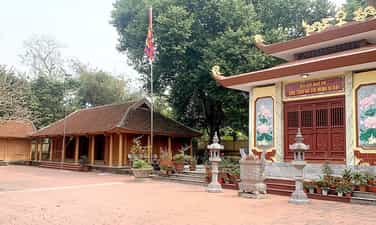
Memorial area of President Ho Chi Minh
The memorial area of President Ho Chi Minh is located on a flat land, shaded by green trees, in the middle of a charming midland countryside, in area 12, Van Xuan commune (formerly Co Tiet commune), Tam Nong district, province Phu Tho. The 2,780m2 memorial area includes works such as: welcome gate, memorial house, Mr. Hoang Van Nguyen's house - where Uncle Ho stayed from March 4 to March 17, 1947, on the way to the base. Viet Bac resistance war. The memorial house was started construction in 1994, and in 1995, it was recognized as a National Historical and Cultural Monument. The memorial area of President Ho Chi Minh in Van Xuan commune is a historical and cultural relic marking the image of Uncle Ho in the hearts of the people of the Ancestral Land of Phu Tho, and is a "red address" to educate patriotic traditions and hearts. national pride and sacred feelings of compatriots, comrades, and soldiers towards beloved Uncle Ho./. SOURCE: Central Agency of the Communist Party of Vietnam
Phu Tho
4285 view
Rating : National monument

Temple of King Ly Nam De
Temple of King Ly Nam De Located on spacious land with high terrain at Co Bong mound, Van Xuan commune, Tam Nong district, Phu Tho province, the relics of King Ly Nam De's temple includes many architectural items. such as: Ritual gate, temple, garden,... With a location not far from Hung Temple, this promises to be a unique spiritual tourist destination in Phu Tho. According to history, King Ly Nam De's real name was Ly Bi, and he was talented in literature and martial arts. From a young age, he proved to be an intelligent boy with unusual qualities. He was adopted by a Dharma Zen master and allowed him to study. Thanks to his excellent martial arts skills, Ly Bi was soon promoted to be the leader of a region. At one time, he was an official for the Luong Dynasty, but was very dissatisfied with the cruel colonial officials who exploited and oppressed the people, so he left the official position to recruit soldiers, and associated with many other talented heroes and chiefs to start a military campaign. rebellion against the Luong Dynasty's colonial rulers in Giao Chau. At the end of 541, Ly Bi officially started an army against the Liang dynasty. With the support of many people, Ly Bi's force grew stronger. In January 544, Ly Bi proclaimed himself Ly Nam De, ascended the throne, named the reign Thien Duc, established a hundred mandarins, named the country Van Xuan, and established the capital in O Dien (now Ha Mo commune, Dan Phuong, Hanoi), built Van Tho Palace as a meeting place. Relics worshiping Ly Nam De are currently scattered across the provinces: Thai Binh, Thai Nguyen, Hanoi, Vinh Phuc, Phu Tho... but only in Phu Tho is there a temple at the place where he died and a mausoleum of his family. king. SOURCE: People's Army Newspaper
Phu Tho
4251 view
Rating : National monument
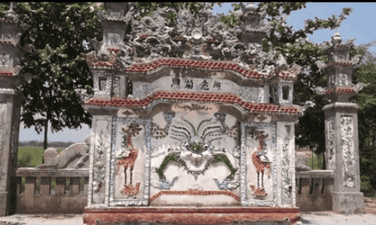
Hoa Phong communal house
Hoa Phong communal house is located in Thuy Tan commune, Huong Thuy town, Thua Thien Hue province, 15km southeast of Hue city center, 3km from Phu Bai airport. The people of Hoa Phong have a tradition of patriotism, courage and resilience. During the two resistance wars against French colonialism and American imperialism, Hoa Phong people made many contributions to the revolution. Hoa Phong Communal House is the place to witness important historical events of the homeland during the revolutionary struggle. The village communal house is the place to organize many fundraising activities to support the resistance war such as "Bronze Week" and "Golden Week". For many years, Hoa Phong Communal House has been the workplace of Provincial Party Committee leaders such as comrade Tu Minh, comrade Ha (Len), comrades Nguyen Hung, Hoang Lanh, Hoang Dac, Le Trong Bat... Especially In March 1947, comrade Nguyen Chi Thanh - Secretary of the Binh Tri Thien Party Committee held a meeting at Hoa Phong Communal House and identified Hoa Phong as a hidden base of the revolution, a contact point, within the system. lobby supply between the plain and the war zone. The people of Hoa Phong made many contributions to the resistance war against the US to save the country and Hoa Phong Communal House is the contact address between Huong Thuy district (now Huong Thuy town) and communes in the district. Hoa Phong communal house relic has been recognized by the State as a national revolutionary historical relic according to Decision No. 1460/Quyet Dinh -Van Hoa, dated June 28, 1996. Source: Thua Thien Hue Electronic Information Portal.
Hue
5692 view
Rating : National monument.
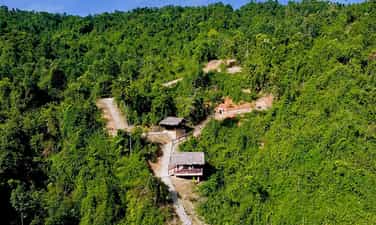
Tunnels of Tri Thien Hue Party Committee
Tri Thien Hue Party Committee Tunnels are located in the Khe Trai area, Huong Van ward, Huong Tra town, Thua Thien Hue province, about 25 km northwest of Hue city. During the resistance war against the US to save the country, the Tri Thien battlefield in general and Thua Thien Hue in particular were always hot spots. In mid-1967, our position and strength on the battlefield developed strongly. Grasping the opportunity, the Thua Thien Hue Provincial Party Committee advocates directing localities in the province, especially Hue city, to break the grip and develop revolutionary bases in the enemy's heart to create conditions for military and political activities. expanding the liberated area, gradually strengthening the direction of building revolutionary bases in adjacent areas and the tunnels of the Tri Thien Hue Party Committee were born in that situation. In August 1967, the tunnel began construction under the direct direction of comrade Tu Minh - Deputy Secretary of the Regional Party Committee, Secretary of the Hue City Party Committee, commanding the front, and comrade Dang Kinh - Deputy Commander of the military region. Standing member of the Regional Party Committee. The main force is the police protection team. The tunnel is the headquarters of the Tri Thien Party Committee, the Hue City Party Committee, directing all activities of the liberation army forces before and after the spring attack in 1968. In addition to its responsibility as the supreme command body in battle, Tri Thien Hue School, is also a bridge connecting the strategic intentions of the Party Central Committee and the Ministry of National Defense. At the tunnels, many important meetings took place to reach the right decisions, greatly contributing to the success of the Spring 68 campaign in Thua Thien Hue, along with victories on the battlefield. fatally forced the US imperialists and their lackeys to sit at the negotiating table in Paris. The historic victory of the Mau Than spring of 1968 delighted the country's compatriots and international friends, with the worthy contributions of the heroic Tri Thien Hue army and people. With the noble title awarded by the Party and State: "Attack, uprising, heroic, resilient". The tunnels of the Tri Thien Party Committee are eloquent evidence of strength, the people's war posture is a high-level promotion of the strength of three types of troops, in all three strategic regions, enriching the treasure of military theory. Vietnam, the art of people's war of our army. The war has passed but those valuable lessons are still valid... The Tri Thien Hue Party Committee Zone Tunnel Relic was recognized by the Ministry of Culture and Information as a national historical relic in Decision No. 310-Quyet/Ministry of Culture and Sports dated February 13, 1996. With tradition , the nation's ethic of drinking water, remembering its source, the tunnels of the Party Committee were invested in by the State to restore and renovate to be worthy of the historical value and stature of a national monument, becoming an attractive tourist destination. guide, serve domestic and international visitors. Source: Thua Thien Hue Electronic Information Portal.
Hue
4675 view
Rating : National monument.
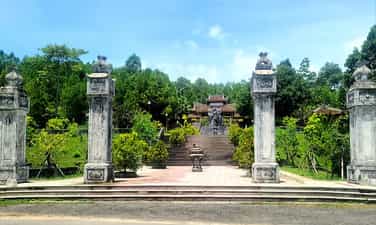
Nine Tunnels Historical Relic Area
Chin Ham relic site is located on the slopes of Thien Thai mountain, in Ngu Tay village, Thuy An commune (now An Tay ward), Hue city. The former Nine Ham Area (1941) was built by the French colonialists as a weapons warehouse. In 1945, after the Japanese coup d'etat over France (March 9, 1945), the Japanese fascists took all the weapons here, the Chin Ham area was left vacant. Under the Ngo Dinh Diem government, Ngo Dinh Can, as "Lord of the Central Region", converted Chin Ham into a place to imprison revolutionary soldiers and patriots. From here, Chin Ham Prison is associated with the barbaric crimes that the Ngo family committed against our people. These tunnels were converted by Ngo Dinh Can into semi-submerged, semi-floating rectangular concrete blocks. Among these, dungeon number 7 is a typical dungeon system. Can had them converted into tiger cage-style cells that could only fit one person (1.8m x 1.8m x 1.8m), under the hands of tyrant Ngo Dinh Can, using no means to subdued the revolutionary will and patriotic spirit of the soldiers. Their crimes are encapsulated in more than three thousand verses in the poetry collection "Living in the Grave" by author Nguyen Dan Trung (Nguyen Minh Van), a witness who survived from Nine Ham Prison, the real poetry collection. is a denunciation of the crimes of the Ngo family group, touching many people. It is a tribute to the loyal communist soldiers who devoted their lives to the Party, to the people, and to the cause of national liberation. A shining example for everyone to study. To commemorate the communist soldiers and patriots who fell at Chin Ham, and also to mark the crimes of the enemy, on December 16, 1993, the Ministry of Culture and Sports issued Decision No. 2015 -Decision/Ministry of Culture, Sports and Tourism recognizing Chin Ham relic as a national historical and cultural relic. Source: Thua Thien Hue Electronic Information Portal.
Hue
5205 view
Rating : National monument.